
The Fractal Architecture of Esoteric Systems: Decoding Hierarchical Complexity
Introduction
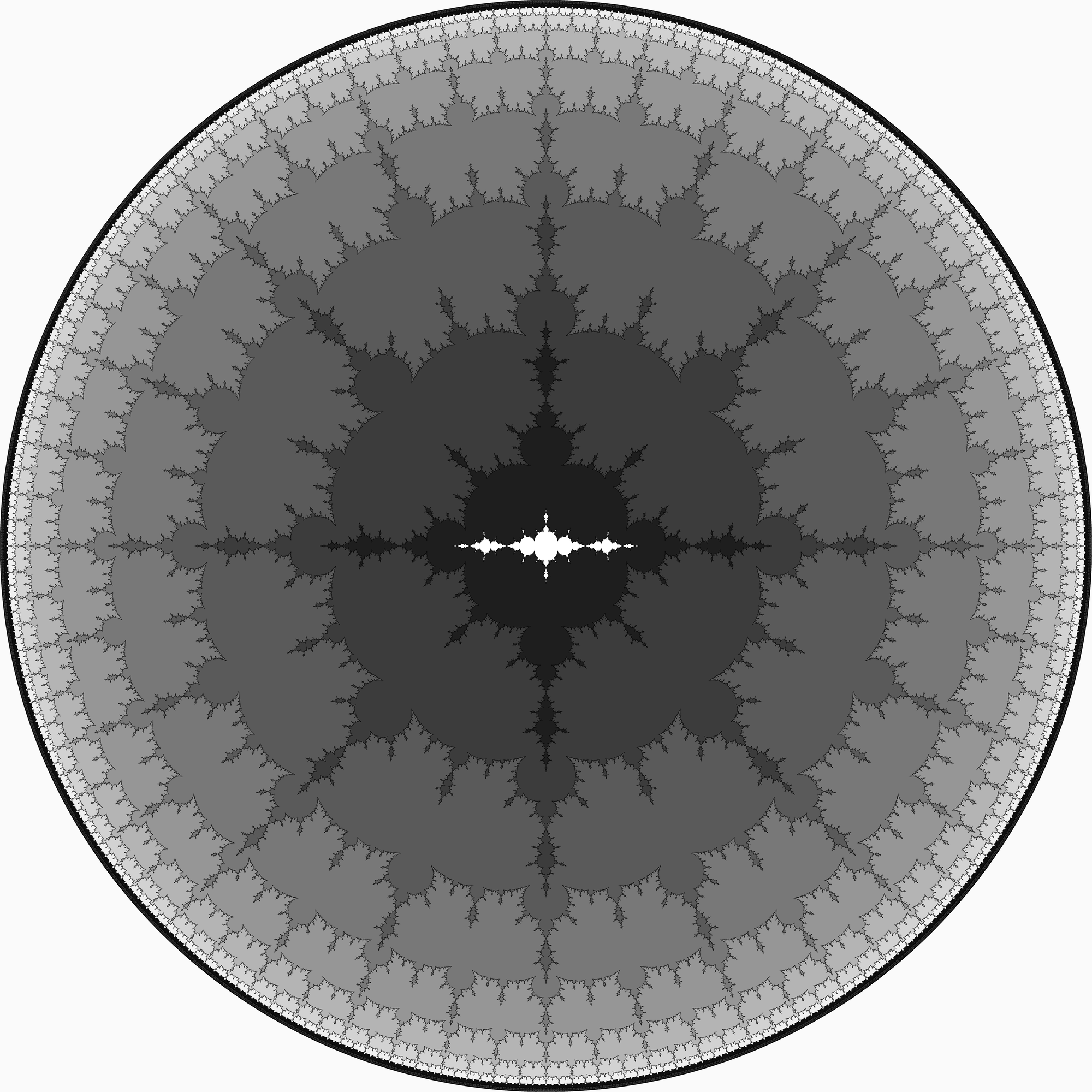
For centuries, esoteric traditions—from Hermeticism and Kabbalah to Eastern non-dualist philosophies—have relied on the axiom: “As above, so below.” While often dismissed as mere mysticism, this principle mirrors the fundamental discovery of modern mathematics: fractal geometry. A fractal is a complex, never-ending pattern that is self-similar across different scales. When we apply this lens to esoteric systems, we stop seeing hierarchy as a static ladder and start seeing it as a dynamic, recursive architecture.
Understanding esoteric systems through fractal geometry allows us to move beyond rigid, linear dogmas. Instead, we can model how macro-level cosmic structures reflect within the micro-level of human consciousness. By mastering the fractal nature of these systems, practitioners can better navigate complex belief structures and integrate abstract philosophical insights into practical, daily growth.
Key Concepts
To utilize fractal geometry as a structural model for esoteric study, we must first define three core mathematical concepts adapted for metaphysical application:
- Self-Similarity: The phenomenon where the part contains the information of the whole. In esoteric terms, this implies that the human psyche (the microcosm) is not just a separate entity from the universe (the macrocosm) but a recursive iteration of it.
- Recursion: The process of repeating a self-similar pattern at different levels of depth. In traditional hierarchies, this is seen in the “Chain of Being,” where each layer repeats the organizational logic of the layer above it, but with increased or decreased complexity.
- Scaling Symmetry: This refers to how a system remains functional and recognizable regardless of the “zoom level.” If you can understand the structural principles governing a single ritual or belief, you can predict the behavior of the entire system at scale.
By shifting from a linear perspective—which suggests that growth is an upward climb—to a fractal perspective, we realize that enlightenment is not about reaching the “top” of a hierarchy. It is about increasing the depth and resolution of our internal reflection of the whole.
Step-by-Step Guide: Mapping Hierarchical Systems via Fractals
- Identify the Iterative Seed: Locate the fundamental axiom or symbol of your esoteric system (e.g., the Sephirot in Kabbalah, the Yin-Yang in Taoism). This is your “seed.” It must contain the logic that will be repeated throughout the rest of the structure.
- Determine the Scaling Factor: Define how the system moves from one level to the next. In many traditions, this is the shift from the abstract (the Divine) to the concrete (the physical). Analyze how the core attributes of your “seed” are diluted or condensed as they transition between levels.
- Map the Feedback Loops: Esoteric systems are rarely unidirectional. Identify where the lower levels influence the higher levels. In fractal geometry, this is akin to a feedback loop where the output of one iteration becomes the input for the next. How does your personal action (the micro) inform the cosmic order (the macro)?
- Identify Structural Invariants: Determine what remains constant at every level of the hierarchy. If a principle is “true” at the divine level but absent at the human level, the system is likely not fractal. Look for the “Golden Thread” that binds every level together.
- Apply the Fractal Lens to Practice: Use the model to troubleshoot personal growth. If you feel “stuck,” you are likely experiencing a break in the recursive pattern. Return to the “seed” of your system and re-align your micro-action with the macro-principle.
Examples and Case Studies
The most robust real-world application of this model is the Tree of Life (Kabbalistic Etz Chayim). The Tree is a classic example of fractal recursion. Each of the ten Sephirot contains a miniature representation of all ten Sephirot within it. This means that at the level of *Keter* (Crown), there is a *Malkuth* (Kingdom). This structural model explains why esoteric adepts focus on mastery of the “small” before the “large”—because the “small” contains the mathematical signature of the entire universe.
Another example is found in Holographic Memory Models. In some esoteric schools, meditation techniques are taught that involve “contracting” the entire universe into a single point of consciousness. By focusing on the center, the practitioner accesses the data of the periphery. Mathematically, this is the fractal principle of *infinite complexity stored in finite space*. When a practitioner performs a focused meditation, they are not escaping reality; they are zooming into the fractal of their own consciousness to find the source code of the macro-world.
“The secret of the universe is not found in the vastness of the exterior, but in the recursive density of the interior. When you change the frequency of the part, you force the entire fractal iteration to recalibrate.”
Common Mistakes
- Over-Complicating the Hierarchy: A common mistake is assuming that more layers mean more truth. Fractals show us that beauty and complexity arise from simple rules repeated infinitely. You do not need a complex, multi-tiered belief system; you need a simple rule that is applied with high fidelity.
- Ignoring the Feedback Loop: Many students treat esoteric hierarchy as a top-down mandate. They attempt to “climb” toward divinity. Failing to recognize the feedback loop—that the Divine also experiences itself through the human—leads to a sterile, intellectualized practice that lacks transformative power.
- Confusing Complexity with Entropy: In fractal geometry, complexity is structured. Many esoteric students mistake chaos or lack of discipline for “higher” or “mysterious” states. A true fractal is highly ordered; if your practice feels scattered, it is not a fractal—it is just noise.
Advanced Tips
To deepen your engagement with these systems, begin to view your daily rituals as iterative iterations. If you practice a daily meditation, don’t view it as a standalone event. View it as a recursive function. The focus you bring to the first five minutes sets the “initial conditions” for the rest of the day. By treating your morning routine as a fractal seed, you can essentially “program” the complexity of your subsequent experiences.
Furthermore, look for the fractal edges in your life—the moments of transition or crisis. In mathematics, fractals are often most visible at the borders where order meets chaos. Similarly, in esoteric practice, your biggest breakthroughs in understanding will occur not in the center of your comfort zone, but at the edges of your paradigm, where your current “model” fails to explain the incoming data. This is where you must refine your “seed” principles.
Conclusion
Fractal geometry provides more than just a metaphor for esoteric systems; it provides a rigorous, structural framework for understanding how we interact with the infinite. By recognizing that we are recursive iterations of the macrocosm, we gain a sense of agency that linear hierarchies deny us. We are not merely subjects waiting for enlightenment to descend from above; we are the points through which the universe continuously calculates its own existence.
The actionable takeaway is simple: Simplify your principles, increase your fidelity in application, and observe the recursive patterns of your life. When you align your micro-actions with the structural logic of the greater system, you stop fighting the current and begin to master the fractal architecture of reality.



Leave a Reply