Assess the impact of virtual reality environments on the immersive practice of guidedvisualization and pathworking.
— by
Steven Haynes
Outline
Introduction: Bridging the gap between internal imagery and external sensory feedback.
Key Concepts: Defining Guided Visualization, Pathworking, and VR as a “sensory scaffold.”
The Mechanics of Impact: How VR stabilizes the “mental landscape.”
Step-by-Step Guide: Implementing VR into your meditative practice.
Case Studies: Practical applications (Architecture of the Mind, Emotional Processing, and Skill Rehearsal).
Common Mistakes: Over-stimulation, tech-dependency, and lack of integration.
Advanced Tips: Custom environment creation and photogrammetry.
Conclusion: Summarizing the shift from “imagining” to “experiencing.”
The Digital Sanctuary: Assessing the Impact of Virtual Reality on Guided Visualization and Pathworking
Introduction
For centuries, the human mind has served as the sole architect of its own internal landscapes. Through guided visualization and the esoteric practice of pathworking, individuals have cultivated the ability to traverse complex mental terrains to achieve healing, insight, or self-actualization. However, traditional techniques often face a formidable adversary: the distraction of the physical world.
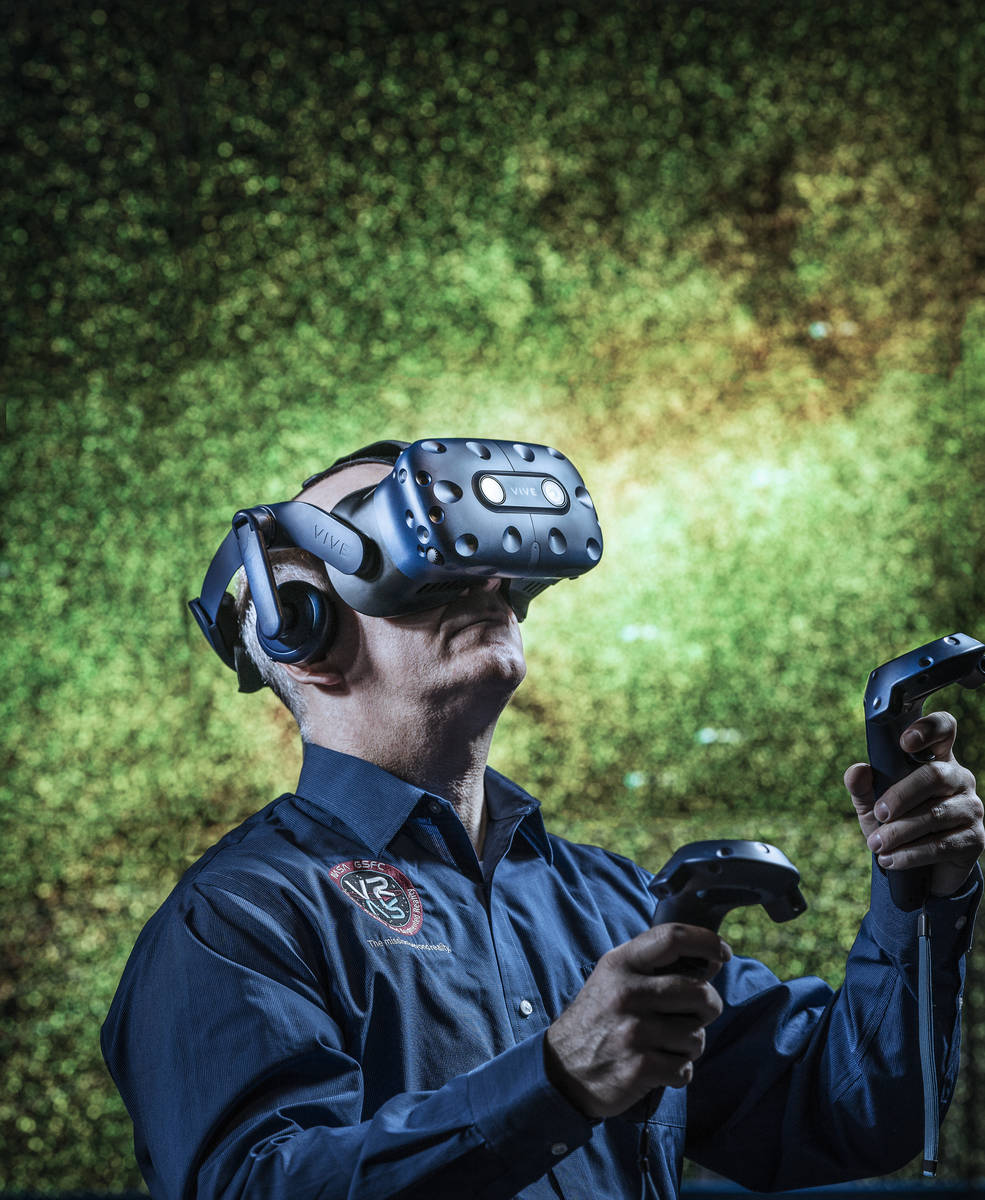
The emergence of Virtual Reality (VR) represents a paradigm shift in how we engage with our internal worlds. By providing a sensory scaffold, VR does not replace the imagination; rather, it offloads the cognitive labor required to “hold” a scene in the mind’s eye. This article explores how VR acts as a catalyst for deeper immersion, transforming abstract visualizations into tangible, experiential journeys.
Key Concepts
To understand the synergy between VR and meditation, we must clarify the foundational practices:
Guided Visualization is a technique where an external narrator or internal focus directs the mind to conjure specific images, colors, and sensations to evoke a desired emotional or physiological state. It is the primary tool for stress reduction and focus.
Pathworking is a more complex, structured form of visualization often rooted in occult or psychological traditions. It involves traversing an archetypal or symbolic “path” (such as a Tarot card or a mythological landscape) to interact with symbolic figures and internalize lessons.
VR as a Sensory Scaffold: In traditional practice, the practitioner must constantly exert effort to maintain the visual consistency of the “inner room.” In VR, the hardware handles the spatial consistency. When the brain receives consistent visual and auditory input from a headset, it experiences a state of “presence”—a psychological phenomenon where the brain accepts the virtual environment as a valid reality. This presence is the gold mine for practitioners of deep visualization.
The Mechanics of Impact
Why is VR superior to a simple mental image? The answer lies in cognitive bandwidth. When you are visualizing a forest in your mind, your brain is working hard to construct the trees, the light, and the rustling leaves. If a car honks outside your window, the mental model often collapses.
In a VR environment, the “render” is already done. Your brain is free to engage with the meaning of the space rather than the structure of the space. This offloading allows for:
Increased Alpha/Theta Wave Production: Studies indicate that immersive VR can lead to faster induction of deep meditative states compared to standard closed-eye meditation.
Spatial Anchoring: By walking through a virtual space, you engage the vestibular system, which helps encode the experience as a “memory” rather than a “fantasy,” making the insights gained feel more authentic.
Emotional Intensity: The inability to look away from a virtual environment forces a deeper confrontation with the archetypes or images being projected.
Step-by-Step Guide
Integrating VR into your meditative or pathworking practice requires a structured approach to ensure the technology serves the experience, not disrupts it.
Curate Your Environment: Do not use high-intensity games. Use platforms like VRChat (private instances), Nature Treks VR, or BRINK Traveler to find a space that matches the aesthetic requirements of your pathwork.
Optimize Physical Comfort: Ensure your headset is perfectly balanced and your play space is clear. If you are doing seated pathworking, use a chair that mirrors the “throne” or “seat” in your virtual environment to create physical-virtual symmetry.
Synchronize with Audio: Use spatial audio. If you are listening to a guided meditation, ensure the volume is layered over ambient environment sounds. The sound of a virtual stream should match the audio track of your guide.
The “Bridge” Transition: Spend the first five minutes simply existing in the space. Look at your hands, touch virtual objects (if haptics are available), and establish “presence.” Do not jump straight into the visualization.
Active Engagement: Do not be a passive observer. In your pathwork, if you encounter a symbol or figure, move toward it physically. Using your own body to explore the digital space reinforces the psychological intent of the work.
Examples and Case Studies
Case Study 1: Resolving Trauma via “The Inner Sanctum”
A practitioner used a custom-built, calm, minimalist white temple in VR. By performing a weekly “clearing” exercise—where they visually placed symbols of stress into a virtual basin and watched them dissolve—the practitioner reported a 40% reduction in physiological stress markers compared to traditional journaling or eyes-closed visualization. The visual permanence of the “basin” provided a sense of closure that abstract thought could not achieve.
Case Study 2: Pathworking through Mythological Landscapes
A student of esoteric traditions used a photogrammetric scan of an ancient ruin to practice pathworking. By walking the physical steps of the ruins in VR, the student was able to sustain a coherent narrative for over 60 minutes—a significant increase from their usual 15-minute limit—because the “environmental continuity” prevented the mind from wandering back to the physical world.
Common Mistakes
The “Gamer” Trap: Using hyper-stimulating or “loud” environments will prevent the brain from dropping into a meditative state. Choose environments that are static and serene.
Dependence on Tech: If you lose the ability to visualize without the headset, your practice has become a crutch. Use VR to “train” the mind, but practice periodically without it to test the strength of your internal imagery.
Ignoring Physical Discomfort: If the headset is pinching your face or the light bleed is distracting, you will never reach a deep state. Invest in a high-quality head strap and a face cover that blocks out all ambient light.
Over-Complicating the Script: Some users try to do too much. Keep the visualization simple. Let the virtual world provide the complexity so your mind can provide the simplicity of focus.
Advanced Tips
For those who wish to take their practice to the next level, consider these three approaches:
1. Photogrammetry and Personal Spaces: Use apps like Adobe Substance or Unity to build a 3D model of your “ideal” inner room. When the space is a digital replica of your specific meditative symbol set, the bridge between physical and mental becomes almost invisible.
2. Biofeedback Integration: Use devices like the Muse headband or heart-rate variability (HRV) sensors synced with your VR environment. You can program the virtual environment to change lighting or weather based on your heart rate, creating a feedback loop where the virtual world actively guides your nervous system back to balance.
3. The “Haptic Anchor”: Hold a physical object—a stone, a wand, or a talisman—while in VR. When you encounter a meaningful moment in your visualization, grip the object. Later, holding that same object in the physical world can act as a “trigger” to return to the headspace you cultivated in VR.
Conclusion
Virtual reality is not a replacement for the imagination, but a high-fidelity mirror for it. By offloading the mental work of environment creation to the headset, the practitioner is liberated to focus on the intent, the symbolism, and the emotional processing that constitutes true pathworking.
The goal of all pathworking is to make the internal external and the external internal. VR is the most powerful tool currently available to harmonize these two states.
Start small, prioritize comfort, and treat your virtual environment as a sacred space. As you blur the lines between the digital and the psychological, you will find that the landscapes of your mind become not just visible, but truly traversable.


Leave a Reply