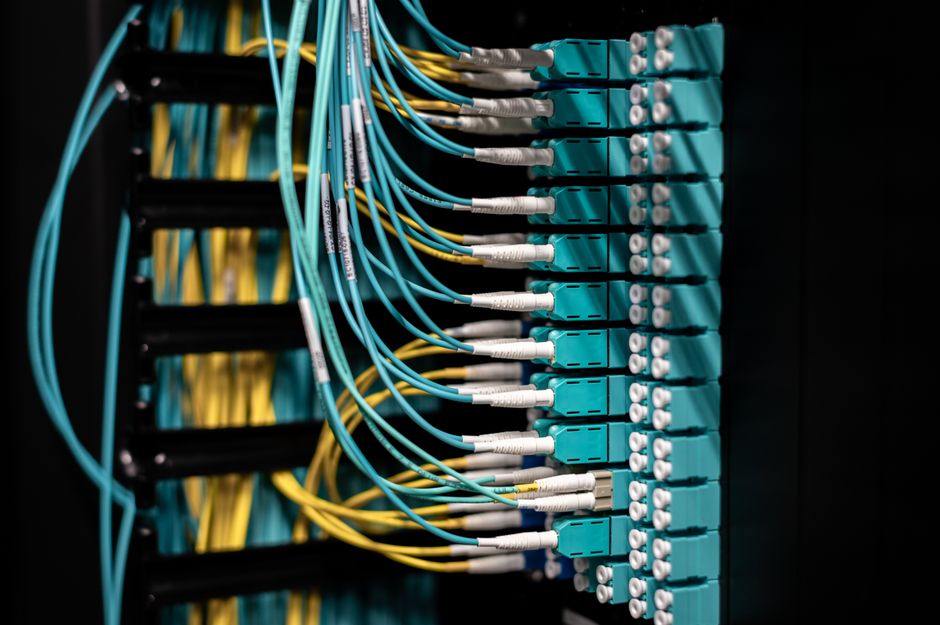
The most common failure in modern organizational architecture is not a lack of vision, but a fundamental misunderstanding of throughput. Leaders often mistake capacity for availability. They treat their infrastructure—whether digital, human, or algorithmic—as a static resource rather than a dynamic flow. If your systems are stalling, the problem is rarely the volume of data; it is the inefficiency of the protocol managing that data.
Bandwidth optimization algorithms are the unsung heroes of high-performance architecture. By prioritizing packets, compressing signals, and smoothing out jitter, these protocols ensure that critical information arrives first, every time. The same logic applies to executive presence and operational decision-making: you must ruthlessly prioritize what occupies your signal path.
The Mechanics of Prioritization
At the core of bandwidth optimization lies the principle of traffic shaping. In networking, this involves controlling the volume of traffic being sent or received in a given time window. If you leave this to chance, the network defaults to a “best effort” delivery model, which inevitably leads to congestion and packet loss.
In a high-stakes business environment, “best effort” is a synonym for failure. Effective leaders employ a form of mental traffic shaping. They categorize incoming signals into three distinct buckets:
Real-time critical: Information requiring immediate execution or response.
Latency-sensitive: Data that is vital but can afford a minor delay for the sake of batch processing.
Background tasks: Everything else—the noise that consumes bandwidth without contributing to strategic strategic planning.
Just as an algorithm drops non-essential packets during periods of peak congestion to maintain the integrity of the stream, a high-performance leader must be willing to drop non-essential projects to maintain the integrity of the mission.
Deduplication and Redundancy
One of the most effective ways to optimize bandwidth is through data deduplication—identifying repeated patterns and replacing them with a single reference point. In corporate operations, redundancy is the silent killer of agility.
When multiple teams report the same metrics, attend the same meetings, or duplicate the same analytical efforts, they are effectively spamming the organization’s bandwidth. This creates “collisions” in the communication flow. By centralizing the truth and automating the transmission of common data, you free up massive amounts of cognitive space. This is where artificial intelligence serves as the ultimate optimizer; it identifies the repetitive patterns in your workflow that humans are too close to see, allowing you to streamline the signal.
Compression vs. Lossy Strategy
In data transmission, compression is essential. You cannot send the entire raw file; you send the most vital data points, allowing the receiver to reconstruct the message. This is the essence of high-level communication.
Leaders who insist on “total transparency” often suffer from information bloat. They provide too much context, too much raw data, and too little insight. This overwhelms the receiver and degrades the quality of the decision-making process. True optimization requires lossy strategy: stripping away the extraneous context while retaining the core intent. If your team cannot grasp the objective within the first few minutes of a brief, your communication protocol is too heavy.
Maintaining Flow Under Pressure
Bandwidth optimization algorithms often use “congestion avoidance” techniques, such as the Additive Increase/Multiplicative Decrease (AIMD) algorithm used in TCP. When the network is clear, it increases throughput; when congestion is detected, it immediately scales back to prevent a total system crash.
The most resilient organizations operate on a similar feedback loop. They scale their operational excellence efforts during periods of stability but possess the discipline to aggressively scale back and simplify when the environment turns volatile. The danger lies in “persistent growth” mandates—the urge to push more data through the pipe than the pipe can support. This leads to bufferbloat, where queues become so large that latency spikes, and the system becomes unresponsive.
Do not confuse speed with throughput. You can move fast and still be inefficient. Optimization is about finding the maximum rate of data transfer that the system can sustain without collapsing. It is about knowing exactly when to throttle, when to prioritize, and when to clear the path for the data that actually matters.