
Uncategorized
-
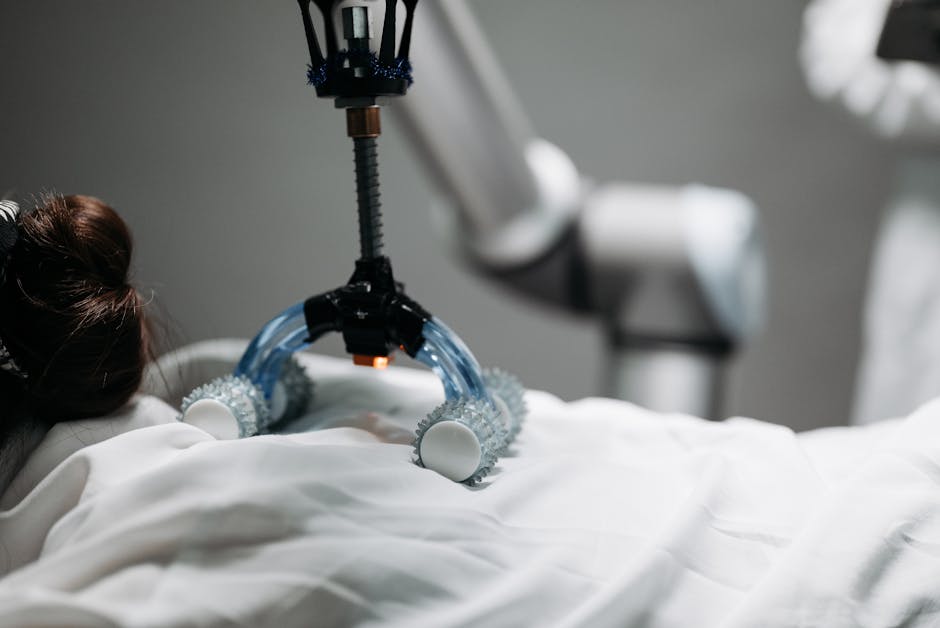
Energy-Aware Soft Robotics Control Policy for AR/VR/XR: Bridging the Gap Between Immersion and Efficiency
Introduction The promise of Extended Reality (XR)—encompassing Augmented, Virtual, and Mixed Reality—has always been tethered to the physical limitations of hardware. While visual and auditory fidelity have reached breathtaking levels, the “haptic gap” remains the final frontier. Soft robotics, which utilizes flexible, compliant materials to provide naturalistic touch feedback, is the solution. However, these systems…
-

The Future of Robotics: Federated Embodied Intelligence Benchmarks for Edge/IoT
Introduction For decades, robotics and artificial intelligence evolved in silos—heavy, centralized servers processing data from isolated machines. Today, that paradigm is shifting. We are entering the era of Embodied Intelligence, where robots and IoT devices don’t just process data; they sense, act, and learn within physical environments. However, scaling this intelligence across millions of heterogeneous…
-

Privacy-Preserving Connectomics: The Future of Autonomous Vehicle Perception
Introduction The evolution of autonomous vehicles (AVs) hinges on one fundamental capability: the ability to perceive and interpret the world with human-like nuance. While traditional computer vision relies on pixel-based object detection, the frontier of AI research is shifting toward connectomics—the mapping of complex neural-like pathways and relational structures within sensory data to achieve higher-level…
-

The Future of Neuro-Adaptive Health: Continual-Learning Brain-Computer Interfaces
Introduction For decades, Brain-Computer Interfaces (BCIs) were confined to the realm of static clinical trials—systems designed to perform a single, fixed task, such as moving a cursor or triggering a prosthetic limb. Once calibrated, these systems often became obsolete as the user’s brain signals shifted due to neuroplasticity, fatigue, or changing health conditions. The breakthrough…
-

The Few-Shot On-Orbit Manufacturing Compiler: Revolutionizing Space Supply Chains
Introduction For decades, the space industry has been tethered to the tyranny of the rocket equation. Every bolt, circuit board, and spare gasket required for a mission must be launched from Earth, adding immense mass and cost to every kilogram sent into orbit. However, we are currently witnessing a paradigm shift: the transition from “launch-to-supply”…
-

Zero-Shot In-Situ Resource Utilization (ISRU) Simulators: The Future of Urban Circularity
Introduction As global urbanization accelerates, cities are facing a dual crisis: dwindling natural resources and an unsustainable accumulation of waste. For decades, urban planning has relied on linear “take-make-waste” models. However, the next frontier in sustainable development lies in In-Situ Resource Utilization (ISRU)—a concept borrowed from aerospace engineering, where resources are extracted and processed directly…
-

Safety-Aligned Metamaterials: The Future of Geoengineering and Climate Stability
Introduction As the global climate crisis intensifies, the conversation around geoengineering has shifted from speculative science fiction to urgent engineering reality. Traditional approaches—such as stratospheric aerosol injection—carry significant risks of unintended ecological consequences. Enter Safety-Aligned Metamaterials: a paradigm shift in how we interact with the Earth’s radiative balance. By designing synthetic, sub-wavelength structures that manipulate…
-

Human-In-The-Loop 2D Materials: Bridging the Gap Between Neuroscience and Ethics
Introduction We are currently witnessing the convergence of two transformative fields: advanced materials science and neurotechnology. At the center of this intersection lies the development of 2D materials—such as graphene, transition metal dichalcogenides (TMDs), and hexagonal boron nitride—which are being engineered to interface directly with biological neural tissue. These materials offer unprecedented electrical conductivity, flexibility,…
-

Self-Evolving High-Entropy Alloys: The Future of Adaptive Bioelectronics
Introduction For decades, bioelectronics—the marriage of biology and electronic hardware—has been hindered by the “rigidity gap.” Traditional medical implants, made of stiff metals like titanium or stainless steel, inevitably clash with the soft, dynamic nature of human tissue. This mismatch often leads to chronic inflammation, signal degradation, and eventual device failure. However, a revolutionary frontier…
-

Self-Evolving High-Entropy Alloys: The Future of Adaptive Bioelectronics
Introduction For decades, the field of bioelectronics has been constrained by a fundamental mismatch: the rigidity of synthetic hardware versus the dynamic, soft nature of biological tissues. Traditional implants—made of gold, platinum, or silicon—are static. Once inserted, they remain fixed in their properties, often leading to inflammatory responses, signal degradation, or mechanical failure as the…