
Uncategorized
-

The Death of the ‘Grand Project’: Why Urban Mobility Needs a Micro-Scale Pivot
For decades, urban planners have been obsessed with the ‘Grand Project’—multibillion-dollar subway expansions or light rail systems that take twenty years to complete. As we look at the Morgantown PRT, we see that its primary failure wasn’t its engineering; it was its monolithic scope. It was an island of innovation trapped by the limitations of…
-

Beyond Speed: Why ‘Strategic Patience’ is the Real Engine of ULTra Execution
In our previous exploration of the ULTra (Unified Latency Transformation) paradigm, we identified that the primary killer of growth is organizational latency—the gap between a decision made and the reality manifested in the market. While the mandate for speed is clear, a dangerous misconception has taken root among high-growth leaders: the belief that ULTra is…
-

Beyond the Fountain: Why ‘Orbital Sovereignty’ is the Real Business Moat
While the engineering community remains fixated on the physics of the Space Fountain—debating velocity, projectile stability, and energy throughput—the business world is missing the real disruption. The Space Fountain is not just a transit system; it is the infrastructure for a new geopolitical and economic paradigm: Orbital Sovereignty. The Fallacy of the “Global” Space Economy…
-
The Hypersonic Bottleneck: Why Orbital Velocity Is Less Important Than Thermal Management
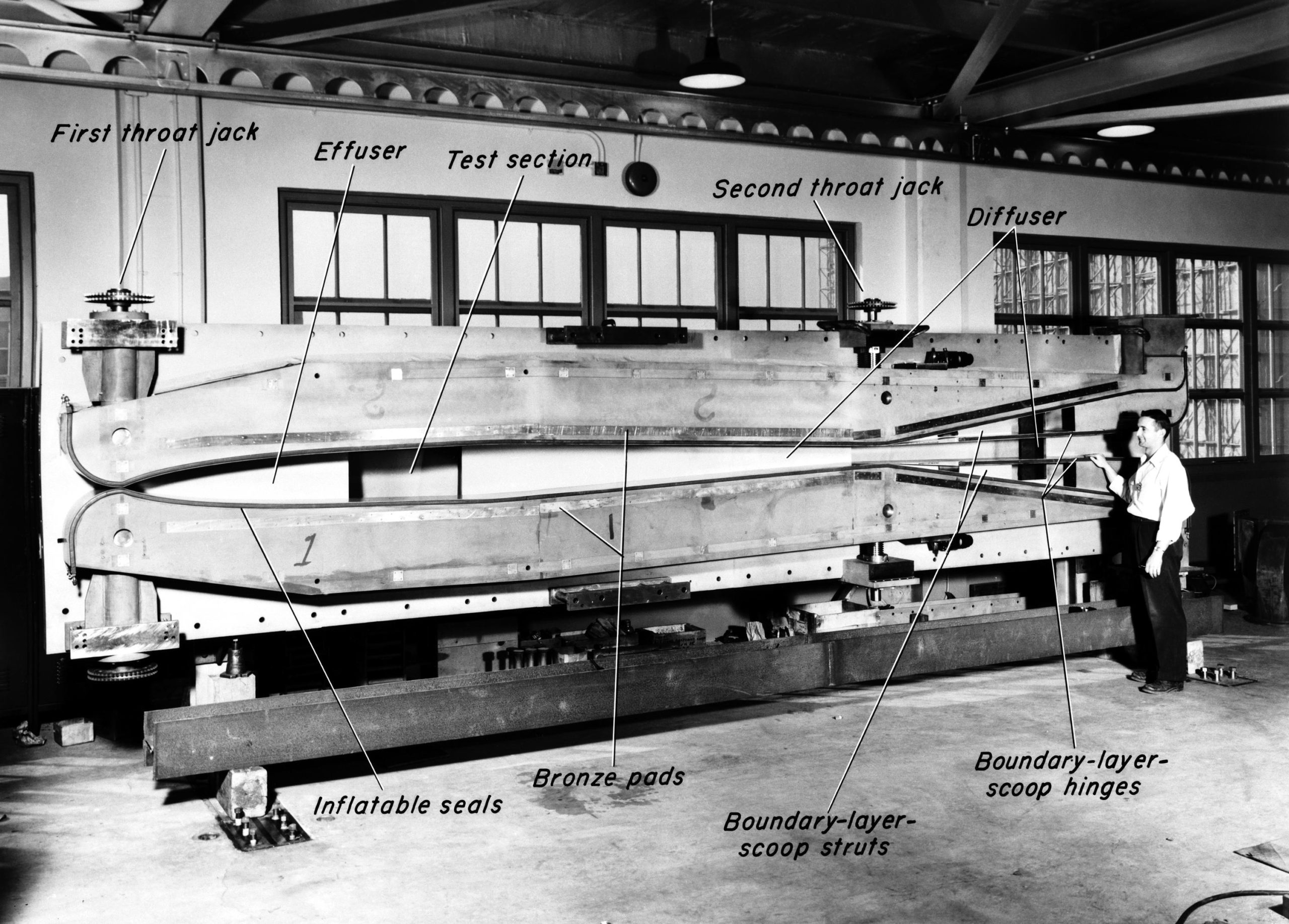
In the pursuit of the hypersonic era, the industry remains fixated on a singular metric: speed. We obsess over Mach numbers, orbital injection velocities, and the promise of sub-four-hour global transit. However, from a capital efficiency standpoint, this fixation is a trap. If the first generation of spaceflight was defined by thrust-to-weight ratios, the next…
-

The Danger of the Digital Echo Chamber: Why Your ‘Artificial Passenger’ Needs a Devil’s Advocate
In the quest to optimize executive performance, the emergence of the Artificial Passenger—an agentic, AI-driven layer between the leader and their data—is a structural necessity. But as we move from human-in-the-loop to human-on-the-loop, we are inadvertently introducing a catastrophic risk: the algorithmic confirmation bias. If you build an Artificial Passenger that is perfectly aligned with…
-

The Ghost in the Machine: Why Urban Automation Risks Creating ‘Stagnation Loops’
We have spent years discussing Intelligent Transportation Systems (ITS) as the holy grail of urban efficiency—a seamless, algorithmic flow that solves the gridlock of the 20th century. But as we move from theory to implementation, a contrarian reality is emerging: optimization without human unpredictability creates systemic fragility. The Efficiency Paradox Proponents of ITS argue that…
-

The Antifragile Advantage: Why Strategic Decoupling Beats Vertical Integration
In the high-stakes world of enterprise growth, we are often told to ‘own the stack.’ We are taught that vertical integration—controlling every component from manufacture to distribution—is the ultimate defensive moat. However, a rigid adherence to this philosophy is exactly what creates the brittle architectures that shatter during market volatility. While Dependence Logic teaches us…
-
The Fallacy of Algorithmic Certainty: Why Over-Optimization is the Modern Executive’s Trap
In the pursuit of replacing fallible human intuition with rigorous algorithmic logic, a new, equally dangerous bias has emerged in the C-suite: Algorithmic Fundamentalism. While the original premise—that we must move beyond gut feelings to survive in data-saturated markets—is undeniably correct, the industry has swung the pendulum too far. We are witnessing the rise of…
-

Beyond the Spreadsheet: Why Synthesis is the CEO’s Greatest Competitive Moat
In the modern enterprise, the Chief Executive is often masquerading as a Chief Analyst. We are taught that if we measure enough variables, if we segment our customers into enough micro-cohorts, and if we build enough predictive models, clarity will eventually emerge. We treat the market like a complex clock: if we take it apart,…
-
The Fallacy of Balance: Why High-Performance Teams Should Seek ‘Strategic Asymmetry’
In the world of high-stakes leadership, we are often told that the key to mastering strategic antinomies is ‘balance.’ We are encouraged to find a state of equilibrium between innovation and execution, centralization and autonomy, or cost-cutting and value creation. But as a content strategist for The Boss Mind, I propose a more contrarian, and…