
Uncategorized
-
The Bioshelter Talent War: Why Resilience is Your Best Recruitment Strategy
In the previous analysis of the Bioshelter Paradigm, we identified infrastructure as a critical vulnerability for the modern enterprise. But shifting the conversation from facility management to talent retention reveals an even more pressing reality: The bioshelter is no longer just a hedge against grid failure—it is the ultimate competitive advantage in the war for…
-

The Agri-Tech Paradox: Why Vertical Farming Is Failing Where Seawater Greenhouses Will Succeed
In the last five years, venture capital has poured billions into the ‘vertical farming’ craze—a movement characterized by LED-drenched, climate-controlled warehouses in urban industrial parks. The promise was total control: absolute predictability, zero pesticides, and ultra-short supply chains. Yet, as bankruptcy filings mount for industry giants, the model is proving to be a cautionary tale…
-
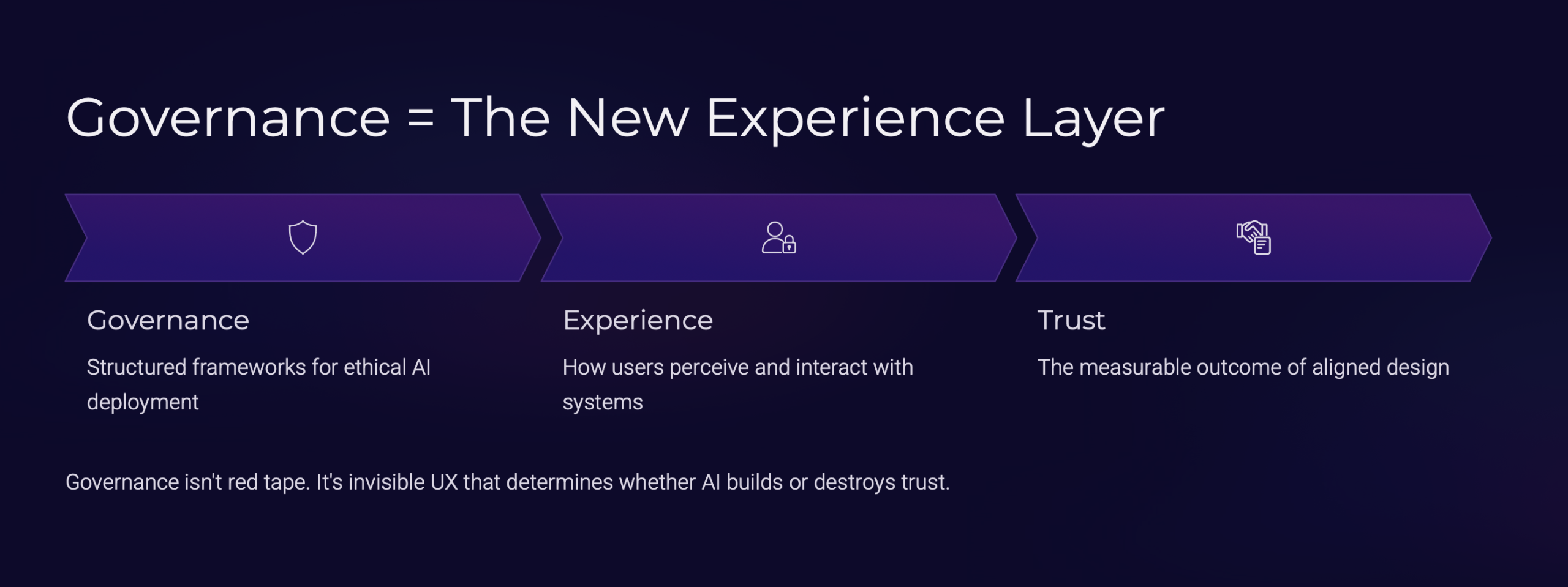
The Governance Trap: Why Friction is Actually a Feature of Resilient Systems
In our current race toward frictionless, real-time e-democracy, we risk falling into a dangerous optimization trap. While the argument for reducing ‘governance latency’ is compelling for the sake of efficiency, we must confront a contrarian truth: institutional resilience often depends on the very friction we are so eager to eliminate. The Danger of Low-Latency Governance…
-
The Optical Bottleneck: Why the Space-Ground Link is the Next Cybersecurity Frontier
While much has been written about the throughput advantages of laser communication, the industry is missing a vital realization: The transition to optical space links isn’t just an infrastructure upgrade; it is the most significant security pivot in the history of telecommunications. For decades, we have operated under the assumption that space-based data is inherently…
-

The Invisible Siege: Why Your Corporate Wireless Security Strategy is Decades Outdated
In the modern enterprise, the CISO spends millions on firewalls, endpoint detection, and encrypted tunnels. Yet, the physical layer—the very air surrounding your office building—remains a wide-open vector for data exfiltration and denial-of-service attacks. While your IT team is busy patching vulnerabilities in the application layer, adversaries are using inexpensive Software-Defined Radio (SDR) kits to…
-

Beyond Silicon: Why the Future of Compute is Stochastic, Not Binary
For decades, the engineering mandate has been clear: force the world into a binary box. We built our entire digital civilization on the reliability of the 0 and the 1, treating noise as an enemy to be filtered out and variability as a defect to be engineered away. As we push against the physical limits…
-

Beyond the Walled Garden: Why AI Infrastructure Must Become ‘Invisible’ to Survive
In the wake of the cloud gaming shakeout, the tech industry is sprinting toward a new frontier: the commoditization of high-compute AI agents and LLMs. As businesses rush to deploy proprietary models, a dangerous parallel is emerging. Executives are repeating the ‘Stadia mistake’—attempting to build rigid, closed-loop ecosystems that demand total customer migration, while ignoring…
-

The Spatial Paradox: Why Immersive Tech Might Make Your Decisions Worse
In the race to adopt spatial computing, enterprise leaders are falling into a seductive trap: the belief that more context is always better. While the previous paradigm—the 2D “screen gap”—undeniably created a cognitive bottleneck, the move toward total immersion introduces a new, more dangerous risk: The Paradox of Over-Presence. The Cognitive Overload Myth We assume…
-

Beyond the Surface: Why ‘Style Drift’ is the Real Metric for AI Maturity
In the rush to adopt generative models like StyleGAN, most enterprises are obsessed with the output: the perfect avatar, the seamless product mock-up, the hyper-realistic synthetic face. But for the serious business architect, focusing on a single high-quality frame is a tactical error. The real competitive advantage in the AI era isn’t the ability to…
-
Beyond the Hallucination: Why Your AI Strategy Needs ‘Interpretability Governance’
In the early days of AI, we were captivated by the psychedelic “hallucinations” of DeepDream. It was a digital parlor trick that revealed something profound: our machines were seeing the world in a fundamentally different, alien way. But while technologists spent years debating the aesthetics of these neural glitches, a more pressing crisis emerged in…