
Uncategorized
-
The Post-Digital Liability: Why DNA Archival is a Geopolitical Necessity
For decades, enterprise data strategy has been governed by the relentless pursuit of speed. We optimized for millisecond latency, IOPS, and throughput. But as we cross the threshold into the zettabyte era, we are discovering a painful truth: speed is the enemy of permanence. While early discussions around DNA data storage focus on the technical…
-

The Ghost in the Machine: Why Your Competitive Advantage is Hiding in Ambient Data
In our previous exploration of digital olfaction, we identified the electronic nose as the final frontier for industrial sensory intelligence. But while the industry focuses on the utility of e-noses—detecting spoilage, gas leaks, or quality deviations—the true strategic opportunity lies elsewhere: in the hidden layer of ambient data that we’ve been ignoring for decades. The…
-

Beyond the Von Neumann Wall: Why We Need a ‘Compute-Centric’ Memory Shift
In the ongoing race to scale AI, hardware engineers have historically treated memory as a static repository—a passive shelf from which processors fetch data. But as we discussed in our exploration of the ‘Memory Wall,’ that paradigm is failing. The real breakthrough in the next decade of AI isn’t just about faster chips; it’s about…
-
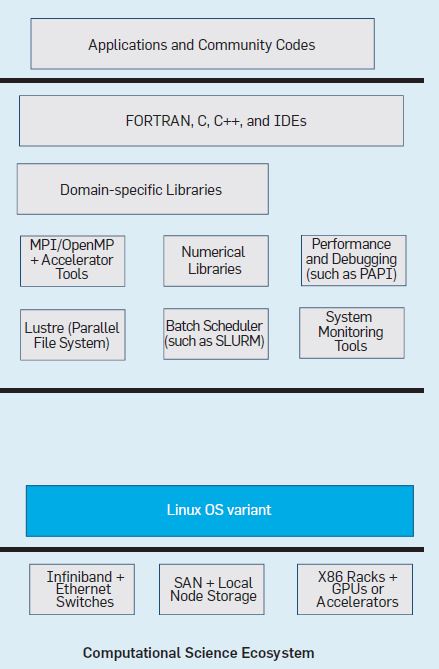
The Exascale Trap: Why Raw Compute Power Without Human Synthesis is a Liability
We have entered the era of exascale computing, where the ability to process a quintillion operations per second is being heralded as the ultimate competitive advantage. While the technical promise of full-fidelity digital twins and physics-informed AI is undeniably revolutionary, there is a dangerous undercurrent to this narrative: the belief that if you have enough…
-

The Danger of the Outsourced Mind: Why Your Exocortex Might Be Making You Stupider
In the quest to optimize our cognitive bandwidth, the ‘Exocortex’ has become the ultimate status symbol of the high-performance professional. We treat our knowledge graphs like digital temples, meticulously pruning, tagging, and feeding them into LLMs. But there is a hidden, dangerous irony in this pursuit: the more we rely on external cognitive architectures to…
-
The Silicon Trap: Why Archival Cloud Storage Is a Debt-Loading Strategy
In the digital age, we have been conditioned to view cloud storage as a utility—infinite, reliable, and invisible. However, as enterprise data volumes explode toward the 600-zettabyte mark, the CTO’s office is beginning to realize that the cloud is not an asset; it is a recurring tax. While proponents argue that cloud elasticity is the…
-

The Panopticon Trap: Why Visual Intelligence Must Prioritize Privacy by Design
While Machine Vision (MV) is rapidly becoming the ultimate moat for the modern enterprise, it introduces a friction point that most executives are dangerously underestimating: The Trust Tax. As businesses transition from “dark” physical spaces to hyper-visible, data-rich environments, the technology that promises operational transparency can quickly mutate into a culture-killing surveillance state. The Cultural…
-

Beyond the Chip: Why the Future of AI isn’t Silicon, It’s Interconnects
We are currently witnessing a desperate, frantic scramble to pack more transistors into a smaller footprint. We call this the ‘AI arms race,’ but beneath the marketing jargon, it is a war against the physical limitations of copper wire. As we push toward the next generation of LLMs and autonomous agents, the bottleneck is no…
-

The Spatial Fallacy: Why Your Digital Twin Strategy Will Fail Without ‘Data Liquidity’
In the wake of the ‘Metaverse’ hype cycle, the corporate world has pivoted en masse toward Digital Twins. From manufacturing floors to urban planning, the promise is seductive: map your physical reality into a 3D environment, simulate outcomes, and watch the ROI roll in. But there is a dangerous undercurrent to this enthusiasm that most…
-

The Post-Hardware Era: Why Nanoradio Demands a New Data Strategy
In the transition toward nanoradio technology, most leadership discourse is fixated on the physics of the transducer—how we shrink the antenna or capture signals at the terahertz scale. But for the CTO or Chief Data Officer at thebossmind.com, the physical hurdle is merely the precursor to a much larger, more daunting problem: the impending data…