
Uncategorized
-

The Causal Trap: Why Your Best Data is Lying to You
In the world of high-stakes business, we are obsessed with the dashboard. We treat KPIs like religious icons, believing that if we just nudge the right metrics—improving click-through rates, boosting daily active users, or shaving milliseconds off load times—we are pulling the levers of destiny. But here is the uncomfortable truth: Most of your strategic…
-

The Tyranny of Transparency: Why Decentralized Governance Needs Friction to Survive
We have spent the last decade fetishizing transparency. In the blockchain and decentralized governance discourse, the prevailing logic is that if a process is visible, verifiable, and on-chain, it is inherently trustworthy. We trade the ‘black box’ of centralized authority for the ‘glass house’ of distributed consensus. But as we transition from theoretical frameworks to…
-

The Strategic Antidote: Building ‘Ideological Agnosticism’ into Your Corporate Operating System
In our previous analysis, we identified how ideological inertia acts as a silent, invisible tax on organizational agility. But acknowledging the problem is only the first step. For the modern leader at thebossmind.com, the challenge is not just to identify these currents, but to build an organizational architecture that is ideologically agnostic—a framework where strategic…
-
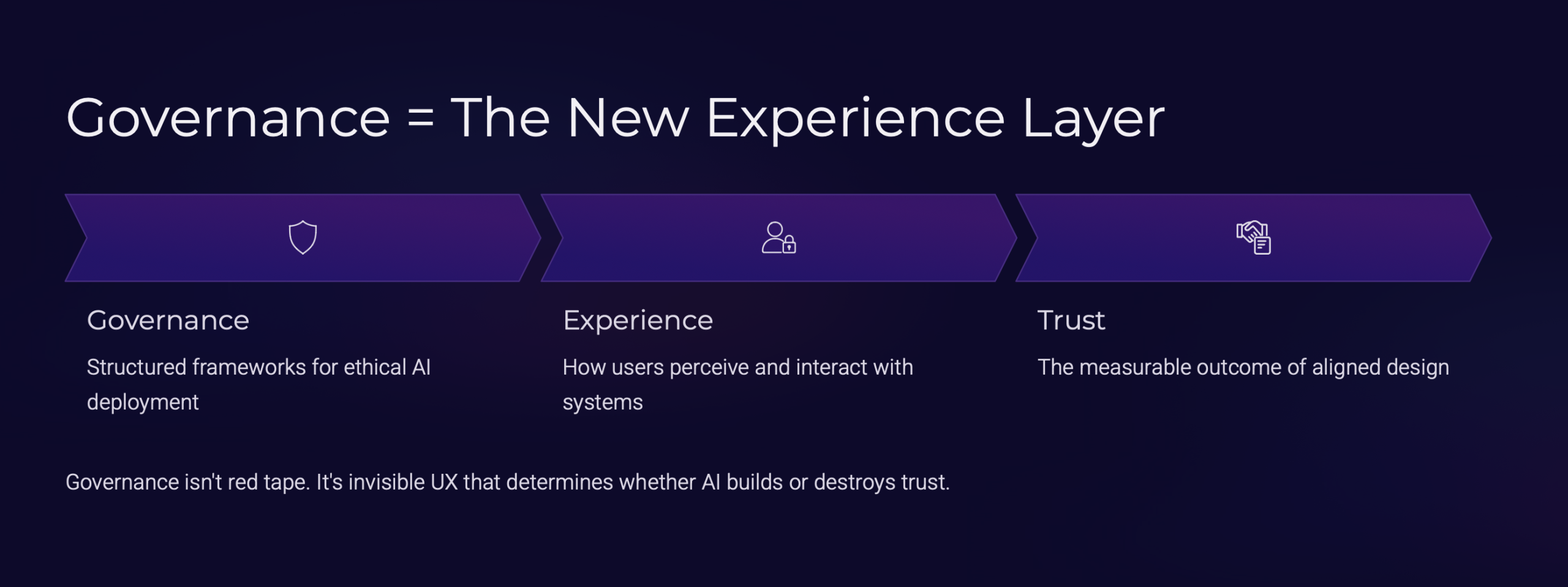
The Governance Trap: Why Your ‘Agile’ Transformation is Failing Leaders
In the quest for agility, many organizations have fallen for a seductive, yet ultimately hollow, promise: that if you flatten the structure, the performance will follow. We’ve seen the rise of squads, tribes, and autonomous units. Yet, for many, the result isn’t a leaner, faster organization—it’s a chaotic, fragmented one. The Governance Mirage Multi-level governance…
-

The Tyranny of the Default: Why Political Systems Stifle Innovation and How to Hedge Against It
The Innovation Trap: When Stability Becomes Stagnation In our previous analysis, we explored how electoral architectures act as the ‘operating system’ of a nation. But there is a dangerous corollary to this reality that investors and business leaders often overlook: the Innovation Trap. While we prioritize stability as a virtue, in the context of electoral…
-

The Death of the ‘Developing Market’ Label: Why Strategy Must Shift from Charity to Commodity
For decades, the global business lexicon has been haunted by the term “emerging markets.” It carries with it an implicit, lingering scent of development studies—a belief that these regions are simply laggards on a linear path toward Western-style capitalism. If you are a leader at thebossmind.com, it is time to perform a necessary exorcism: stop…
-

Beyond Globalism: Why ‘Micro-Regionalism’ Is Your New Operational Hedge
For years, the strategic mandate for the modern enterprise was simple: scale globally, centralize operations, and pursue the lowest-cost geography. But as the geopolitical landscape fragments, that model has transformed from an asset into a liability. While conventional wisdom suggests hedging against geopolitical risk through diversification, the smartest leaders at The Boss Mind are pivoting…
-
The Localization Paradox: Why ‘Global’ Expertise is Sabotaging Your Expansion
In the world of C-suite strategy, there is a pervasive myth: the ‘Global Expert.’ We hire consultants who have ‘seen it all’—individuals who can speak to the macroeconomic trends of BRICS nations or the supply chain logistics of the G7. We treat geopolitical intelligence as a standardized skill set that can be applied from a…
-

The Resilient Edge: Why Hyper-Localization is the New Global Strategy
For the last three decades, the boardroom mantra for global expansion was clear: standardize, scale, and centralize. We treated the world as a singular, flattened marketplace, believing that efficiency was the only competitive advantage that mattered. We built global supply chains optimized for the microsecond and consumer experiences designed to be identical in New York,…
-

Institutional Arbitrage: How to Profit from the ‘Best Practice’ Trap
In our previous exploration of Institutional Theory, we identified the “Invisible Currents” that pull organizations toward homogenized strategies. We know that mimetic isomorphism—the drive to copy market leaders—often leads to a sea of sameness. But for the high-performance leader at The Boss Mind, simply identifying these currents is not enough. The true strategic advantage lies…