
Uncategorized
-

The legal distinction between “property” and “person” will likely become the central tension of the next century.
The Personhood Paradox: Why the Property-Person Divide Will Define the 21st Century Introduction For centuries, the legal landscape of modern civilization has rested on a binary foundation: there are subjects (persons) who hold rights, and there are objects (property) that are subject to ownership. This duality—the divide between “who” we are and “what” we own—has…
-

Educational systems struggle to keep pace with the rapid obsolescence of technical skills.
The Skills Half-Life: Why Educational Systems Are Failing to Keep Pace Introduction There was a time when a university degree was a lifetime guarantee of professional relevance. You spent four years mastering a discipline, and that knowledge served as the bedrock of your career for decades. Today, that model is effectively obsolete. In the world…
-
This merger creates a new ontological category that defies current legal and religious classifications.
Outline Introduction: Defining the emergence of trans-ontological entities (AI-human synthesis, digital consciousness, and decentralized autonomous organizations). Key Concepts: Defining the intersection of legal personhood, spiritual essence, and objective reality. Step-by-Step Guide: How to categorize and interact with non-binary entities in professional/legal environments. Examples: AI-augmented legal personas, synthetic corporate entities, and hybrid digital estates. Common Mistakes:…
-

Reliable high-speed internet infrastructure becomes a prerequisite for participation in modern markets.
The Digital Divide: Why High-Speed Internet is the New Foundation of Economic Participation Introduction For decades, infrastructure was measured in steel, concrete, and asphalt. We judged the prosperity of a region by its access to highways, railways, and power grids. Today, the geography of economic opportunity has shifted. High-speed internet is no longer a luxury…
-

Transhumanist thought suggests merging human consciousness with AI to transcend current limitations.
Outline Introduction: The Evolution of Human Biology through Technology. Key Concepts: Understanding Transhumanism, Neural Interfaces, and Cognitive Offloading. The Practical Roadmap: How to participate in the “Human-AI Integration” era today. Real-World Applications: From medical prosthetics to AI-augmented decision-making. Common Mistakes: Over-reliance, privacy negligence, and the “Silicon Valley hype” trap. Advanced Tips: Optimizing the man-machine feedback…
-

Digital inequality widens as access to advanced computational resources remains geographically concentrated.
The Great Compute Divide: Why Geographic Concentration of Power Threatens Digital Equality Introduction We live in an era where artificial intelligence and high-performance computing (HPC) are marketed as democratizing forces—tools that can solve climate change, optimize logistics, and personalize education. However, a silent crisis is brewing beneath the surface of this digital promise. The hardware…
-
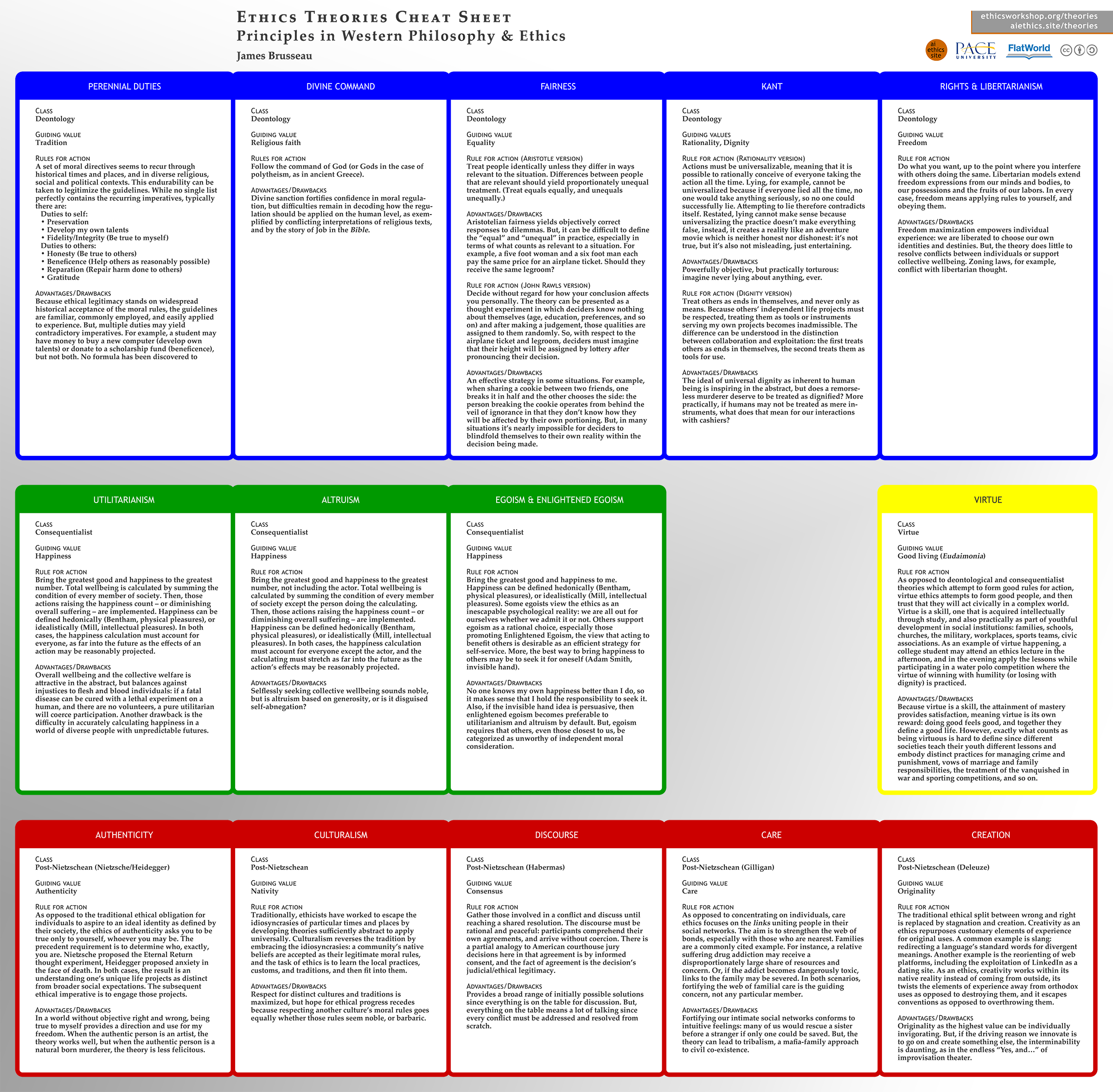
Utilitarianism would demand we weigh the welfare of synthetic minds against biological counterparts.
### Article Outline 1. Introduction: The shifting landscape of moral status, the challenge of silicon-based consciousness, and the utilitarian mandate. 2. Key Concepts: Understanding Act vs. Rule Utilitarianism, the concept of “sentience as the primary currency” (Bentham’s utilitarianism), and the “substrate independence” argument. 3. Step-by-Step Guide: Evaluating the Moral Weight of AI: How to construct…
-

An AI acting on algorithms may lack the “free will” typically associated with moralresponsibility.
Outline Introduction: The shift from human error to algorithmic agency and the crisis of accountability. Key Concepts: Defining agency, moral responsibility, and the “black box” problem in AI. The Ethical Gap: Why processing power is not the same as moral choice. Practical Framework: A step-by-step approach for organizations to manage algorithmic accountability. Real-World Applications: Autonomous…
-

The shift necessitates a fundamental redesign of vocational training and higher education curricula.
Outline Introduction: The obsolescence of traditional degrees in the age of AI and rapid technological disruption. Key Concepts: The shift from “degree-based” to “skill-based” education; the role of micro-credentials and lifelong learning. Step-by-Step Guide: Implementing agile curriculum design (industry-led partnerships, modular content). Case Studies: How companies like Google and trade unions are bridging the gap…
-
Moral agency requires the capacity to distinguish between right and wrong with intentionality.
The Architecture of Accountability: Why Moral Agency Demands Intentionality Introduction We often treat “being a good person” as a matter of habit or personality. Yet, true moral agency—the ability to act as a responsible individual in an ethical framework—is not a passive trait. It is an active, cognitive, and intentional process. Without the capacity to…