
Uncategorized
-

Graph-Based Digital Twins: Orchestrating Cognitive Control
Learn how to build graph-based digital twins for cognitive science. Discover how to use control policies to model mental states and optimize cognitive outcomes.
-

Topology-Aware Geo-Spatial Intelligence for Economic Policy
Discover how Topology-Aware Geo-Spatial Intelligence (TAGI) transforms economic policy by mapping connectivity and network structures over traditional geography.
-

Quantum-Enhanced Explainability: Bridging Math Logic Gaps
Discover the Quantum-Enhanced Explainability toolchain. Learn how quantum logic bridges the gap between complex neural network outputs and verifiable mathematics.
-

Bio-Inspired Alignment: Architecting Value-Aligned AI Systems
Discover how Bio-Inspired Alignment (BIA) and Value Learning (VL) redefine AI safety by mirroring biological homeostasis and hierarchical goal prioritization.
-

Securing BCI: Symbol-Grounded Neurostimulation Compiler Guide
Learn how symbol-grounded neurostimulation compilers protect brain-computer interfaces from cyber-physical attacks by mapping intent to secure hardware protocols.
-

Bioelectronic Simulators for Climate Tech: A Practical Guide
Learn how Multimodal Bioelectronic Medicine Simulators (MBS) are revolutionizing climate tech through predictive physiological modeling and adaptive agriculture.
-

Uncertainty-Quantified Molecular Machines: Robotics at Nanoscale
Explore how uncertainty-quantified frameworks enable resilient molecular machines to navigate nanoscale stochasticity for breakthroughs in medicine and materials.
-

Adaptive Nano-fabrication: The Future of Neural Interfaces
Discover how adaptive nano-fabrication bridges the gap between silicon and synapse to create long-term, high-fidelity neural interfaces for medical restoration.
-
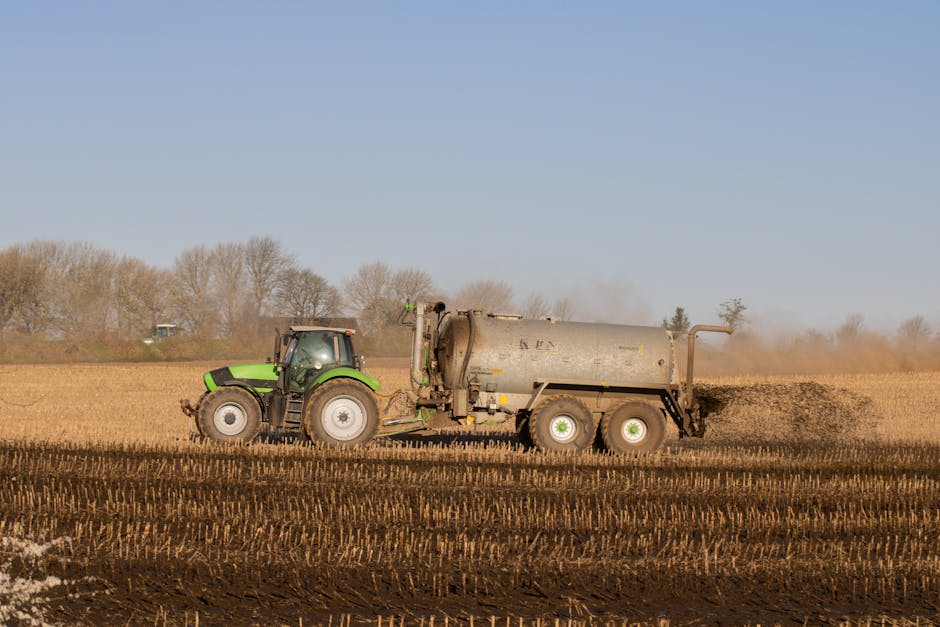
Explainable Synthetic Fertilizers: Sustainable Space Agriculture
Discover how Explainable Synthetic Fertilizers (ESF) and AI digital twins are revolutionizing sustainable off-world food production for long-duration missions.
-

Building Robust AI Models for Precision Agriculture Success
Learn to build robust AI models for precision agriculture by overcoming distribution shift, concept drift, and data non-stationarity for scalable field results.