
Sports
-

Concept Activation Vectors quantify the sensitivity of a model to higher-level human concepts.
Outline Introduction: The black box problem in AI and the need for human-interpretable explanations. Key Concepts: Understanding Concept Activation Vectors (CAVs) and Testing with CAVs (TCAVs). Step-by-Step Guide: The mathematical and practical pipeline of training a concept classifier and measuring sensitivity. Examples: Medical imaging (e.g., detecting “stripe” patterns in tumors) and autonomous driving. Common Mistakes:…
-
Saliency maps identify spatial areas in image data that most influence classification results.
Decoding the “Black Box”: How Saliency Maps Reveal AI Decision-Making Introduction In the world of deep learning, image classification models are often criticized for being “black boxes.” When an algorithm correctly identifies a tumor in an X-ray or a stop sign on a busy street, we know the output, but we rarely understand the why.…
-

Feature permutation importance measures performance degradation when specific datacolumns are shuffled randomly.
Decoding Feature Importance: How Permutation Methods Reveal Model Insights Introduction In the landscape of machine learning, the “black box” problem remains a significant hurdle. Whether you are building complex neural networks or gradient-boosted trees, knowing which features drive your model’s predictions is as important as the accuracy metrics themselves. Stakeholders rarely accept a model that…
-

Concept Activation Vectors quantify the sensitivity of a model to higher-level human concepts.
Contents 1. Introduction: The “Black Box” problem in AI and why interpretability matters for trust. 2. Key Concepts: What is a Concept Activation Vector (CAV)? Defining the intersection of human language and neural vector spaces. 3. Step-by-Step Guide: How to implement TCAV (Testing with Concept Activation Vectors). 4. Examples: Real-world use cases in healthcare, finance,…
-
Saliency maps identify spatial areas in image data that most influence classification results.
Visualizing Intelligence: How Saliency Maps Reveal the “Why” Behind AI Decisions Introduction Deep learning models have long been criticized as “black boxes.” When a convolutional neural network (CNN) correctly identifies an image of a golden retriever, it often feels like magic. However, understanding why the model made that decision is critical for safety, debugging, and…
-

Sentiment analysis of user prompts can trigger more detailed explanatory support.
Contents 1. Introduction: The paradigm shift from “command-based” to “empathetic” prompting. 2. Key Concepts: Understanding sentiment layers (intent vs. emotion) and the “Supportive Feedback Loop.” 3. Step-by-Step Guide: How to build a sentiment-triggered response architecture. 4. Real-World Applications: Customer service, educational AI, and professional coaching. 5. Common Mistakes: Over-correction, false positives, and the “anthropomorphic trap.”…
-
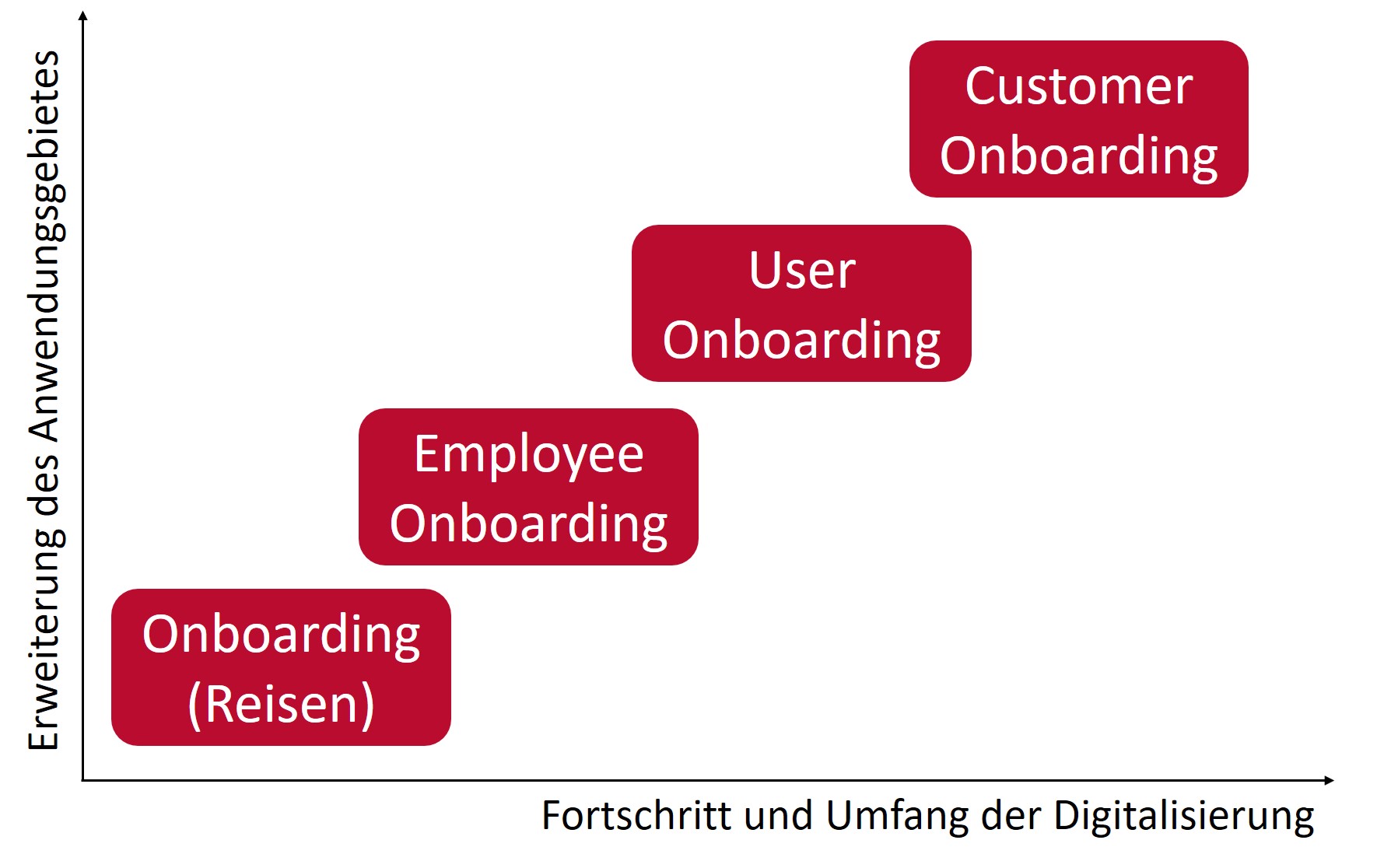
Onboarding tutorials establish a baseline understanding of model limitations.
Contents 1. Introduction: Why the “Magic” of AI creates a trust gap and how onboarding bridges it. 2. Key Concepts: Defining “Mental Models” and “Model Alignment” through user education. 3. Step-by-Step Guide: Designing an onboarding flow that prioritizes limitation transparency without overwhelming the user. 4. Examples: Contrasting successful onboarding (e.g., coding assistants) versus poor onboarding.…
-
Saliency maps provide intuitive visual cues for image-based algorithmic decision-making.
Saliency Maps: Decoding the “Black Box” of AI Decision-Making Introduction As machine learning models become the architects of modern decision-making, we face a recurring crisis: the “black box” problem. When an algorithm denies a loan, flags a security threat, or diagnoses a medical condition, the lack of transparency is more than a technical hurdle—it is…
-

Clarity in XAI necessitates a shift from raw model outputs to human-interpretable narratives.
The Narrative Turn: Why Explainable AI Needs Stories, Not Just Statistics Introduction In the current landscape of artificial intelligence, we are suffering from a crisis of transparency. When an algorithmic model denies a loan, flags a security threat, or recommends a medical diagnosis, it often spits out a confidence score—a raw percentage or a weight-based…
-

Cross-functional review boards should approve the XAI documentation before it is exposed to external stakeholders.
The Case for Cross-Functional Review Boards in XAI Documentation Introduction Artificial Intelligence is no longer a “black box” experiment; it is the engine powering critical decisions in healthcare, finance, and criminal justice. As organizations deploy AI, the demand for Explainable AI (XAI) documentation—materials that detail why a model made a specific prediction—has surged. However, these…