
Health & Wellness
-

Physics-Informed Supply Chain Resilience for Neuroethics: Engineering Moral Stability
Introduction The convergence of neurotechnology and global supply chains has created a precarious frontier. As brain-computer interfaces (BCIs), neuro-prosthetics, and cognitive enhancement pharmaceuticals move from experimental labs to commercial markets, the supply chains supporting them face unprecedented ethical risks. A disruption in the supply of biocompatible sensors or specialized neuro-pharmaceutical precursors is not merely an…
-

The Future of Off-World Survival: Continual-Learning Gene Editing Platforms for Space Systems
Introduction As humanity pushes toward long-duration missions to Mars and beyond, we face a biological bottleneck: the human body is evolved for Earth’s gravity, radiation environment, and ecosystem. Conventional medicine, which relies on resupply missions from Earth, will be insufficient for deep-space colonization. To survive, we must transition from reactive medicine to proactive biological resilience.…
-

Fault-Tolerant Bioelectronic Medicine Protocols for Human-Computer Interaction
Introduction The convergence of biology and technology has moved beyond the realm of science fiction. Today, bioelectronic medicine—the practice of using electrical impulses to modulate the nervous system—is transforming from a clinical treatment for chronic disease into a sophisticated interface for Human-Computer Interaction (HCI). As we integrate digital systems with biological neural networks, the demand…
-

Adaptive Complex Network Control Systems: The Future of Neurological Intervention
Introduction The human brain is arguably the most complex network in the known universe, consisting of approximately 86 billion neurons interconnected by trillions of synapses. For decades, neuroscience has struggled to map these connections; today, we are moving beyond mere mapping toward active management. The emerging field of adaptive complex network control systems provides a…
-
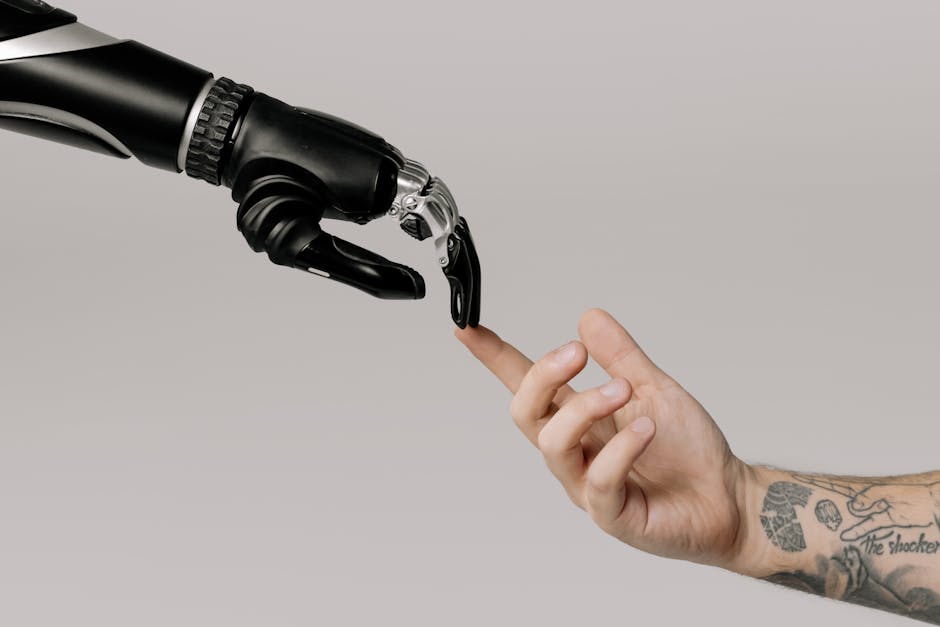
Human-In-The-Loop Embodied Intelligence: The Future of Neuroethical Governance
Introduction We are currently witnessing the convergence of two transformative fields: embodied artificial intelligence (AI)—systems that interact physically with the world through robotics—and the burgeoning discipline of neuroethics. As AI systems move from digital interfaces into our physical spaces, they are increasingly equipped with sophisticated sensory processing and autonomous decision-making capabilities. This transition raises profound…
-

The Future of Care: Explainable Autonomous Logistics in Healthcare Systems
Introduction In the high-stakes environment of a modern hospital, seconds often define the difference between life and death. While autonomous mobile robots (AMRs) are already navigating corridors to deliver linens, pharmaceuticals, and lab samples, a critical friction point remains: the “black box” problem. When a robot stops in a hallway or bypasses a delivery, hospital…
-

Building Resilience: The Robust-to-Distribution-Shift Hospital-at-Home Compiler for Supply Chain
Introduction The traditional hospital model is undergoing a seismic shift. As healthcare systems push to treat patients in their own homes, the logistics supporting this transition—the “Hospital-at-Home” supply chain—are facing unprecedented volatility. Unlike a centralized hospital warehouse, a decentralized home-care supply chain is subject to erratic demand, shifting patient acuity levels, and unpredictable logistics environments.…
-

Bridging the Gap: Low-Latency Explainability Platforms for Bioelectronics
Introduction Bioelectronic medicine represents a seismic shift in how we treat chronic conditions. By interfacing directly with the nervous system to modulate electrical signals, devices like vagus nerve stimulators, retinal implants, and closed-loop insulin pumps are moving beyond palliative care into the realm of curative precision. However, as these devices become more autonomous, they face…
-

Designing Interpretable Hospital-at-Home Interfaces: Bridging Clinical Trust and Patient Care
Introduction The shift from traditional inpatient facilities to “Hospital-at-Home” (HaH) models represents one of the most significant evolutions in modern medicine. By leveraging remote monitoring technologies, healthcare systems can now treat acute conditions in the comfort of a patient’s living room. However, the success of these programs hinges on a critical, often overlooked factor: the…
-

Continual-Learning Adaptive Autonomy: The Future of Intelligent Healthcare Systems
Introduction Healthcare systems are currently facing an unprecedented data deluge. From real-time telemetry in intensive care units to the vast datasets generated by electronic health records (EHRs), clinicians are overwhelmed by information. Traditional static software—tools that function exactly the same way today as they did at installation—is no longer sufficient to manage this complexity. The…