Risk management strategies must account for the evolving nature of AI-related legal liabilities.
— by
Steven Haynes
Outline
Introduction: The shift from static software risks to dynamic AI liability.
Key Concepts: Defining “Black Box” liability, algorithmic bias, and shifting regulatory frameworks (EU AI Act, NIST AI RMF).
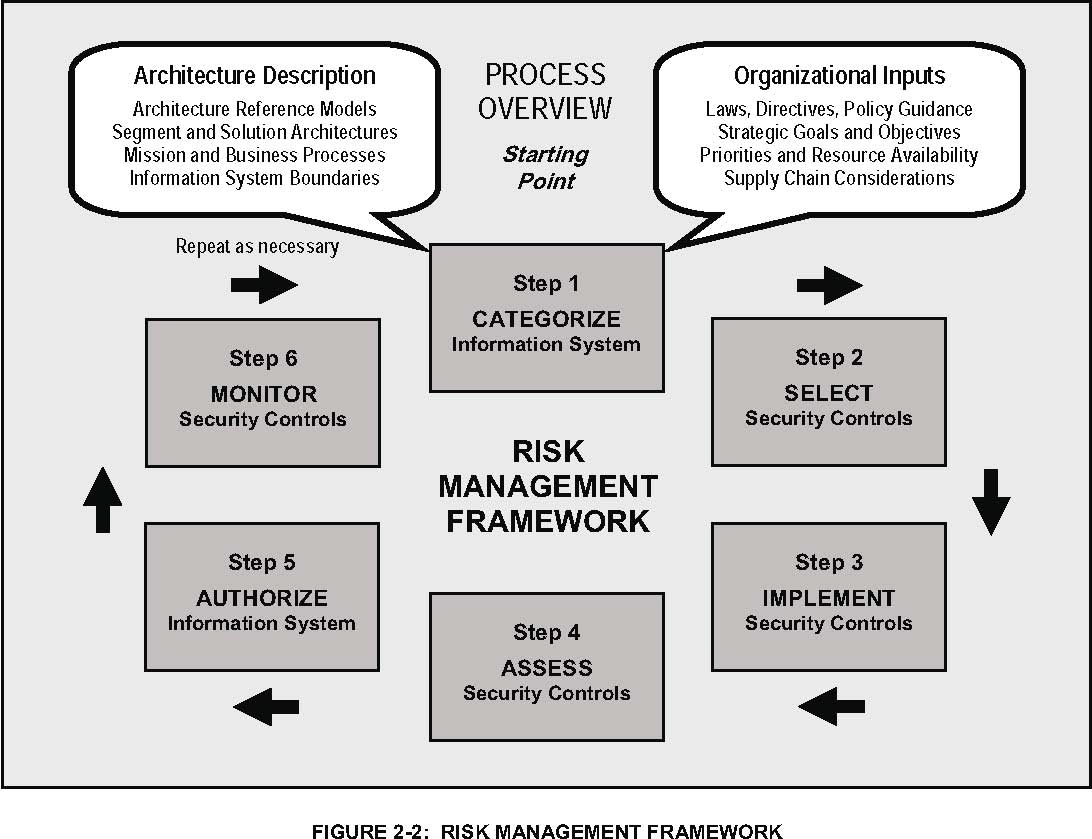
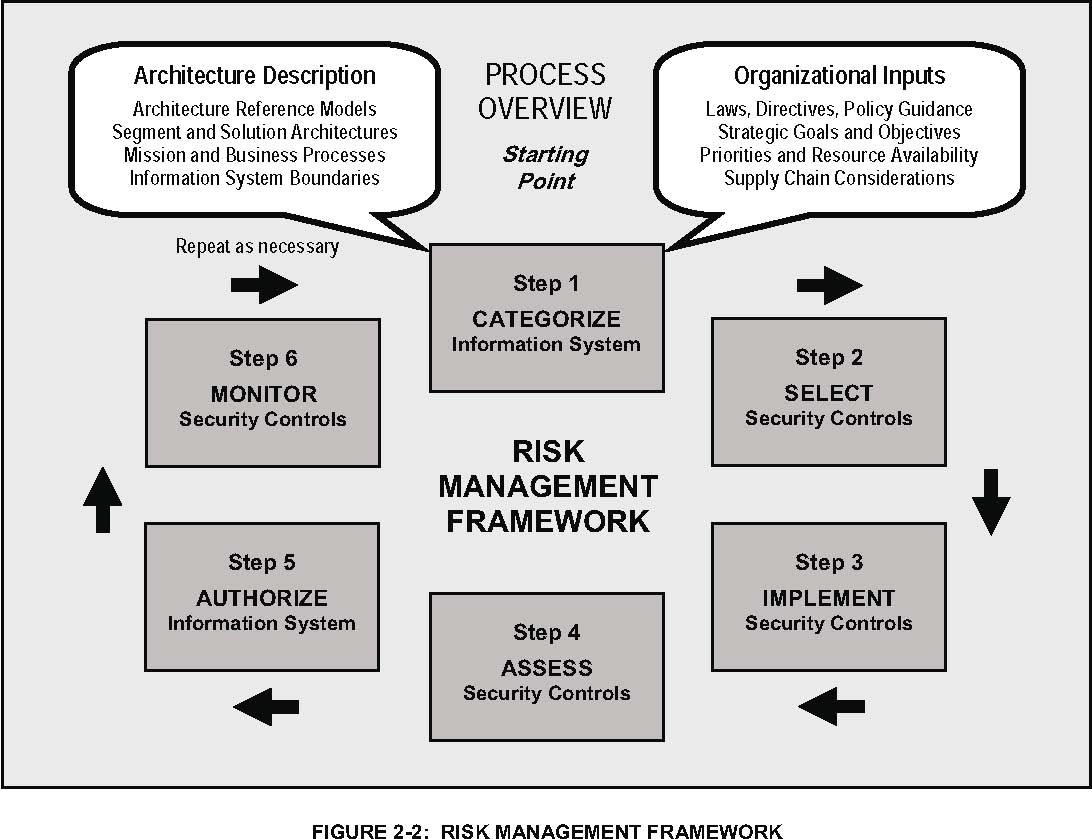
Step-by-Step Guide: Building a resilient AI governance framework.
Real-World Applications: Examining generative AI copyright disputes and automated decision-making failures.
Common Mistakes: Over-reliance on vendor indemnification and “set-it-and-forget-it” model monitoring.
Advanced Tips: Implementing “Human-in-the-Loop” (HITL) auditing and algorithmic impact assessments.
Conclusion: Final summary on future-proofing operations.
The New Frontier of Liability: Managing Risk in the Age of Evolving AI
Introduction
For decades, enterprise risk management was defined by static compliance: check a box, sign a contract, and ensure your software performed the same way every time. Artificial Intelligence has shattered that paradigm. Unlike traditional code, AI systems are probabilistic, adaptive, and often opaque. When an algorithm makes a decision—whether it is denying a loan, misdiagnosing a patient, or infringing on intellectual property—the path to accountability is rarely clear.
As regulatory bodies globally scramble to draft legislation, organizations find themselves in a dangerous “liability gap.” You are no longer just responsible for what your systems are programmed to do; you are increasingly responsible for what they learn to do. This article explores how to pivot your risk management strategy to account for the unpredictable, evolving nature of AI-related legal liabilities.
Key Concepts
To manage AI risk, we must first understand why it is fundamentally different from standard IT risk. Traditional risk management relies on predictability. AI, specifically Machine Learning (ML), relies on pattern recognition within datasets that may change over time.
The Black Box Problem
Many deep learning models operate as “black boxes.” They take inputs and produce outputs, but the internal logic is often indecipherable even to the engineers who built them. If a model denies a job applicant based on a biased internal weight, explaining that decision in a court of law becomes an evidentiary nightmare.
Algorithmic Bias and Discrimination
Liability often stems from unintended discrimination. If your AI model is trained on historical data that contains human bias, the AI will inevitably codify that bias. In many jurisdictions, the intent behind the discrimination is irrelevant; the outcome alone can trigger significant legal penalties under existing civil rights frameworks.
Regulatory Divergence
The legal landscape is fragmented. The EU’s AI Act categorizes AI systems by risk level, imposing stringent transparency requirements on “high-risk” applications. In the US, the approach is currently a patchwork of Executive Orders and agency-specific guidelines (such as those from the EEOC or FTC). Navigating this requires a strategy that adheres to the strictest common denominator.
Step-by-Step Guide: Building a Resilient AI Governance Framework
Risk management for AI cannot be an IT silo; it must be a cross-functional mandate involving legal, data science, and business operations.
Conduct an AI Inventory: Document every AI model in use within your organization. Determine its purpose, the data it consumes, and the level of human intervention currently in place. You cannot manage what you do not document.
Establish a “Human-in-the-Loop” (HITL) Requirement: For any model that impacts legal, financial, or employment outcomes, design a workflow that requires human review before an action is finalized. This acts as a circuit breaker for automated errors.
Implement Algorithmic Impact Assessments (AIAs): Before deploying a new model, perform an AIA. This involves simulating potential failures, checking for bias against protected classes, and documenting the “why” behind the model’s intended use.
Draft “AI-Specific” Procurement Contracts: Do not rely on standard software licenses. Include clauses that require vendors to disclose the provenance of their training data, provide evidence of bias testing, and offer ongoing indemnification against third-party copyright claims.
Continuous Monitoring and Red Teaming: An AI model is never “finished.” Implement automated monitoring to detect “model drift”—where the model’s accuracy degrades over time as the real-world environment changes. Use “red teams” to actively try to force the AI to produce harmful or biased output to expose vulnerabilities.
Examples and Real-World Applications
Case Study 1: The Generative AI Copyright Trap. A marketing firm used a generative AI platform to create social media imagery. The tool produced an image that was a near-replica of a copyrighted photograph. Because the firm failed to verify the “fair use” status of the tool’s training data, they were sued for infringement. Lesson: Ownership of AI-generated assets is legally ambiguous; businesses must maintain a strict verification layer for AI-generated creative work.
Case Study 2: Automated Hiring Bias. A large firm implemented an AI-based resume scanner to streamline recruitment. The tool began penalizing resumes containing the word “women’s” (e.g., “women’s chess club”) because the historical training data favored male candidates. Lesson: By failing to audit the training set for historical bias, the firm faced a class-action lawsuit. This highlights the need for continuous, bias-specific auditing.
Common Mistakes
Over-reliance on Vendor Indemnification: Many companies assume that if they use an enterprise AI tool, the vendor holds all the liability. In many court cases, the user (the company deploying the tool) is held responsible for how the tool is applied to their specific business processes.
Ignoring Data Lineage: If you do not know where your training data came from—or if it contains PII (Personally Identifiable Information)—you are vulnerable to GDPR or CCPA violations, even if the AI performs perfectly.
Treating AI Like Static Code: Testing an AI model once during the QA phase is insufficient. The environmental data that the model consumes will change, and the model’s behavior will drift. Failure to monitor for this drift is a form of professional negligence.
Advanced Tips
To achieve true risk maturity, focus on Explainability (XAI). Invest in tools that provide “feature importance” metrics, which show exactly which variables in a dataset most strongly influenced a specific decision. When you can explain the “why” behind an AI’s decision, you gain a massive legal advantage during audits or litigation.
Furthermore, adopt an internal “AI Bill of Rights.” Set hard constraints on what AI is allowed to do. For example, mandate that no AI may handle sensitive medical or financial data without explicit, encrypted sandboxing. By limiting the scope of what your AI can access, you inherently limit your liability footprint.
Conclusion
The evolution of AI legal liability is moving from “negligence in creation” to “negligence in oversight.” As AI systems become more autonomous, the defense of “I didn’t know the computer did that” will hold no weight in a court of law.
To succeed, businesses must treat AI governance as a living process rather than a static policy. By inventorying your models, implementing rigorous human-in-the-loop oversight, and continuously testing for bias and drift, you transform AI from a liability vector into a defensible competitive advantage. The future belongs to those who do not just innovate with AI, but who govern it with the precision the technology demands.




Leave a Reply