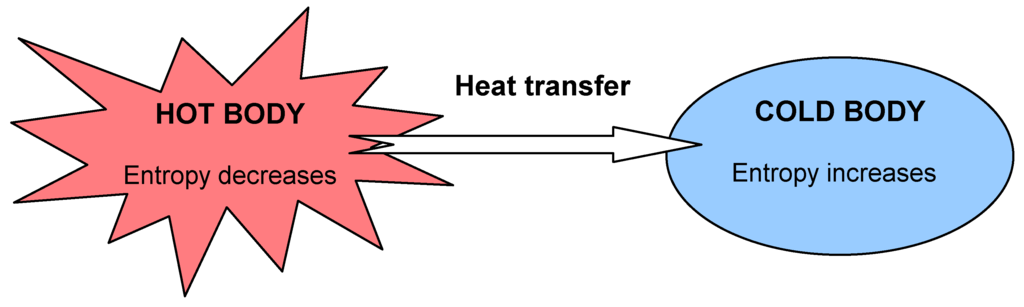
In the modern venture ecosystem, we worship at the altar of scale. We are told that if a business model isn’t designed to 10x, it is failing. We equate growth with health and friction with incompetence. However, looking at the Solomonic traditions—specifically the archetypal energy of Karsael—we find a contrarian truth: Infinite expansion without structural containment is not growth; it is entropy.
The Myth of Frictionless Growth
Silicon Valley culture treats friction as a bug to be patched out. Whether through automation, AI-driven workflows, or massive capital injections, the goal is always to remove the barriers that slow us down. Yet, the Karsael archetype reminds us that boundaries are not merely limitations—they are the conditions of existence. Without a vessel, water is just a puddle; without constraints, a company is just a collection of competing agendas.
When you attempt to remove all friction from your organization, you lose the ability to focus pressure. You end up with a team that is “agile” in name, but lacks the structural integrity to hold a specific intent over a long period. This is why high-growth startups often implode during their first major pivot—they have built a company that can move fast, but they haven’t built one that can hold its shape.
Strategic Enclosure: The Art of the “Closed System”
To lead effectively, you must learn to practice Strategic Enclosure. This is the application of the Karsael principle in a world that demands you be everything to everyone. Strategic Enclosure is the intentional act of creating a “magic circle” around a project, team, or objective, where you explicitly state what is not allowed to enter.
Most leaders are terrified of saying no to opportunities. They fear that a closed system means stagnation. The opposite is true: A closed system allows for intensity. If your product team is distracted by three different market segments simultaneously, they aren’t working; they are dispersing energy. By enforcing a boundary, you create a vacuum that demands higher-quality output within that specific, protected space.
The “Containment” Audit
If you want to move away from the fragility of modern scaling and toward the robustness of ancient systems, perform a Containment Audit on your current operations:
Define the Wall: What are you refusing to do this quarter? If you cannot name three high-value activities you are actively ignoring, you are not focused—you are merely distracted.
Identify the Leakage: Where is your team’s focus “bleeding” into low-impact administrative tasks? These are the cracks in your structure where potential energy turns into burnout.
Ritualize the Boundary: How do you guard your team’s cognitive bandwidth? Use communication “blackouts” or rigid, intent-bound meeting protocols to keep the external noise from eroding your internal structural integrity.
The Contrarian Conclusion
The smartest CEOs are not those who grow the fastest; they are the ones who build the most resilient containers. By embracing the Karsael archetype—the intelligence of the boundary—you stop trying to be a fire that consumes everything it touches and start being a furnace. A fire is chaotic and eventually burns itself out. A furnace uses a boundary to concentrate heat, turning raw material into something far more valuable than the sum of its parts. Stop scaling your reach and start tightening your structure. Your next growth phase won’t come from doing more; it will come from guarding your intent.
“title”: “The Gerontocracy Trap: Why History Favors Younger Leaders”, “meta_description”: “Explore the historical impact of aging on leadership effectiveness. Understand…
Discover how to redefine your personal identity and worth beyond economic utility as society shifts toward a post-scarcity future driven by AI and automation.
The Celestial Cycle: Analyzing Planetary Influence on Economic Market Trends Introduction For centuries, the intersection of finance and celestial mechanics…
In a post-scarcity economy dominated by AI, human-made artifacts gain value through prestige scarcity. Learn how to pivot your brand toward human-centric output.