In my previous analysis of the Suriel archetype, we explored the ‘Watcher’—the necessary tension between radical innovation and the rigid oversight required to scale. But if the Watcher is the mechanism of governance, it is not the source of power. Many leaders mistake ‘oversight’ for ‘leadership,’ leading to a sterile, compliance-heavy culture that fails to produce true market disruption.
The contrarian truth? Governance without architectural sovereignty is merely bureaucracy by another name. If the Watcher observes the system, the Sovereign defines the system’s underlying reality.
The Illusion of the Regulatory Perimeter
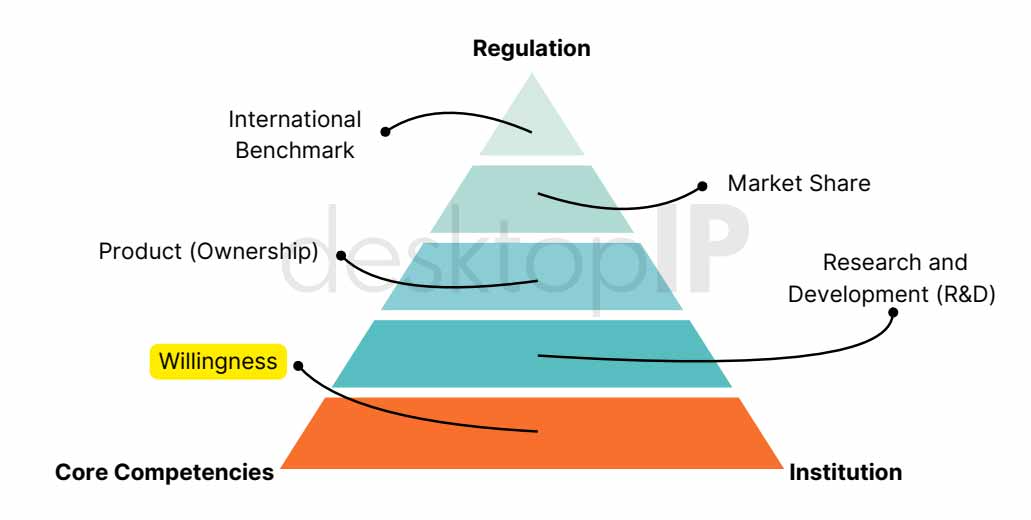
The original thesis argued that leaders are bound by their ‘Regulatory Perimeter.’ While legally true, it is strategically limiting. Truly elite organizations don’t just ‘comply’ with the environment—they define the architectural parameters in which they operate. Think of Apple’s ‘Walled Garden’ or OpenAI’s early efforts to influence AI safety legislation. They did not just observe the landscape; they reconstructed the geometry of their markets so that their specific governance models became the industry standard.
The Shift from Watcher to Architect
To move from a ‘Watcher’ (who guards the status quo) to an ‘Architect’ (who creates the future), you must master three distinct shifts in strategic cognition:
From Compliance to Core-Logic: Instead of checking boxes, bake your governance into the product architecture. If your ‘regulatory risk’ is data privacy, don’t just hire a CISO; architect your product with privacy-preserving computation that makes surveillance impossible, not just ‘against policy.’
The Principle of Subsidiarity: The Suriel archetype risks centralizing too much power in the ‘Watcher.’ True sovereignty is distributed. Create a culture where the ‘rules’ are foundational, not situational. If your team understands the fundamental architecture, they can pivot autonomously without waiting for a governance audit.
Antifragile Governance: Most governance models are brittle; they shatter when the market changes. Architectural sovereignty relies on Dynamic Governance—systems designed to evolve based on the telemetry of the ‘Watcher’ insights. If the data shows the market is shifting, the system self-corrects the ‘laws’ of the organization, rather than forcing the CEO to intervene.
The Danger of the ‘Watcher’ Trap
If you rely too heavily on the Suriel archetype, you invite the ‘Observer Effect’ into your C-Suite. By obsessively watching the data, your own metrics, and your competitors, you subtly change the reality you are observing. You become reactive. You begin to manage the company based on the shadows cast by your internal monitors rather than the sunlight of market opportunity.
The highest level of executive authority isn’t found in the ability to audit your processes. It is found in the ability to design an organization that is so well-constructed that it functions autonomously—where your role is no longer the ‘Watcher’ of the rules, but the ‘Architect’ of the outcomes.
Actionable Synthesis
How do you transition? Stop asking, ‘How do we monitor this risk?’ and start asking, ‘How do we rewrite the system so this risk is structurally impossible?’ When your governance is invisible because it is built into the fabric of your workflows, you have moved past the Suriel archetype and into the realm of the true organizational Sovereign.
Governance is a tool, not a strategy. Use it to build your architecture, then step out of the way to lead the evolution of the market.