The Sheetil Archetype: The Strategic Value Of Hidden Knowledge
— by
Steven Haynes
The Architect of Insight: Decoding the Mandaean Archetype of Sheetil and the Strategic Value of Hidden Knowledge
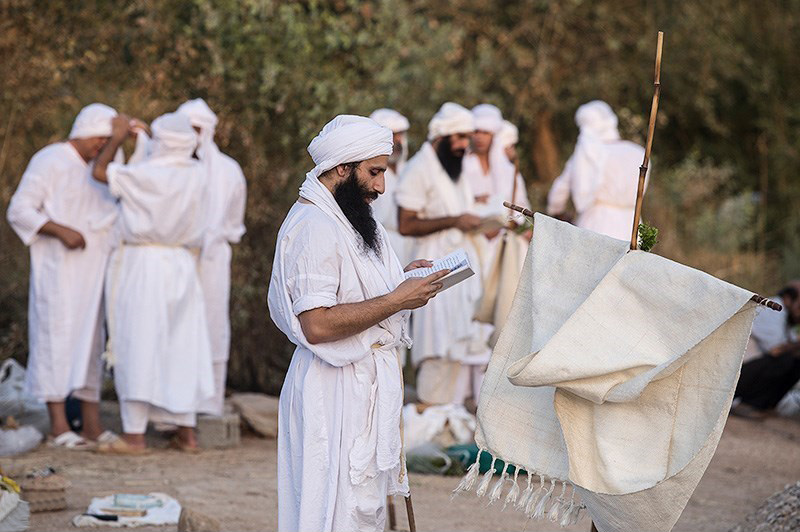
In the high-stakes world of modern strategy, we are obsessed with the “visible”—the KPI, the market share, the quarterly projection. Yet, history’s most enduring systems were never built on what was on the surface. They were built on the transmission of hidden, foundational principles. To understand the genesis of influence, one must look toward the Mandaean tradition—the only surviving Gnostic sect from antiquity—and their foundational figure, Sheetil.
While the modern executive treats “Gnosis”—or deep, experiential knowledge—as a buzzword, the Mandaeans treated it as a survival mechanism. Sheetil (the Mandaean equivalent of Seth, son of Adam) serves as the primary conduit of divine intelligence. He is the original “System Architect,” a figure who bridge the gap between the mundane and the metaphysical. For the leader today, the study of Sheetil and his role as the revealer of Gnosticism is not a theological exercise; it is a masterclass in how to manage, protect, and propagate high-value, exclusive intelligence in a competitive, often hostile, ecosystem.
1. The Problem: The Entropy of Information
In the digital age, information is commoditized. When everyone has access to the same data, the competitive advantage of that data drops to zero. This is the “Information Paradox”: the more accessible your strategy, the less valuable it becomes.
Mandaeism survived for two millennia not by broadcasting its truths to the masses, but by maintaining a rigorous hierarchy of initiation and safeguarding the Uthras (the celestial entities or “Guardians”). The core problem for the modern entrepreneur is the failure to distinguish between content (which is cheap) and Gnosis (which is proprietary and transformative). When your value proposition is visible to everyone, you are merely a participant in a race to the bottom. To lead, you must move from the public sphere into the realm of architectural design—the domain of Sheetil.
2. Sheetil as the Archetypal Strategy Consultant
In the cosmology of the Ginza Rabba (the Mandaean holy book), Sheetil is not merely a prophet; he is an Uthra—a celestial force tasked with bringing order to a fragmented world. He acts as the intermediary between the “World of Light” (the domain of ultimate truth) and the “World of Darkness” (the messy, chaotic physical reality).
This is the exact role of the elite consultant or visionary CEO. You are the bridge between the raw potential of an industry and the actionable strategy that realizes that potential. Sheetil’s role as the teacher of John the Baptist—a pivotal figure in Western history—highlights the necessity of strategic succession. He did not build the movement himself; he provided the intellectual framework that enabled the next generation to disrupt the prevailing orthodoxy of their time.
The Uthra Framework: Guardians of the System
In Mandaeism, the Uthra are not just messengers; they are the infrastructure. If we apply this to business growth, we can categorize the stakeholders of your venture using the Uthra model:
The Revealers (The Founders/Visionaries): Those who bring the “hidden” market insight to light.
The Initiators (The Operational Leaders): Those who translate the vision into a repeatable, scalable, and exclusive system.
The Protectors (The Compliance/Defensive Moat): Those who ensure the “Gnosis” (the IP, the culture, the trade secret) is not diluted by the competitive environment.
3. Strategy as Revelation: The Gnostic Advantage
The Gnostic tradition teaches that true power comes from self-knowledge and the realization that the world is a construct of competing interests. For a decision-maker, this is the ultimate competitive advantage. If you view your industry as a “construct,” you stop following the rules and start analyzing the architecture.
Advanced Strategy: The Asymmetric Knowledge Loop
Most companies use a linear feedback loop: Market Research -> Product -> Sales. This is why most companies fail to innovate. The Mandaean approach is an Asymmetric Loop:
The Internal Inquiry: Defining the core “Source Code” of your business—your unique value proposition that cannot be copied.
The External Observation: Analyzing market chaos through the lens of your core principle.
The Strategic Revelation: Deploying that principle to pivot the market toward you, rather than chasing the market’s current trends.
4. Implementation: The Sheetil Framework for Modern Scaling
To implement the “Sheetil approach” to business, move through these four phases of knowledge architecture:
Step 1: The Intellectual Moat (Defining the Gnosis)
What is the one thing your company knows about your industry that is true, but that your competitors treat as irrelevant? That is your Gnosis. If you can’t define it in a single, non-obvious sentence, you don’t have a moat; you have a business model that can be disrupted by a better-funded competitor.
Step 2: The Uthra Hierarchy
Audit your team. Are your people simply “executing,” or are they “guardians of the intelligence”? Elite teams function like the Uthras—they understand the underlying principle of the product so deeply that they can adjust their strategy without waiting for top-down instructions. This is the decentralized authority model.
Step 3: The Rite of Transmission
Knowledge is useless if it is trapped in the founder’s head. You must create “rites of passage”—systems of onboarding and leadership development—that pass down the core vision without diluting its potency. This is why culture, when managed as a strategic asset, is the most powerful barrier to entry.
Step 4: Controlled Exposure
Like the Mandaean rituals, the best strategies are not open-source. They are “initiated.” Control the information flow. Your premium clients should receive insights that your prospects don’t. Your employees should have access to intellectual assets that the public never sees. This creates an exclusive value tier that fosters deep loyalty and high-margin pricing.
5. Common Mistakes: The Trap of Commoditization
The most common mistake is transparency without strategy. Many CEOs believe that being “open and transparent” is a virtue. In a high-competition niche, this is a fatal flaw. By broadcasting your “why,” your “how,” and your “what,” you educate your competitors for free.
Another error is the failure to recognize the John the Baptist effect. You may be a master strategist (Sheetil), but if you do not cultivate a generation of followers (John the Baptist) who can carry your mandate into the broader market, your influence will die with your tenure. You are not building a company; you are building an intellectual lineage.
6. Future Outlook: The Return of the Esoteric
As AI becomes a commodity, the value of “data” will plummet to zero. The future of business growth belongs to the Esoteric—the information and strategies that are hard to acquire, hard to verify, and hard to replicate. We are moving toward a “Niche-Gnostic” economy where companies will win by creating small, highly informed, and deeply loyal communities rather than trying to capture the lowest common denominator of the masses.
The winners of the next decade will be the organizations that operate like the Mandaean faith: inward-facing for quality and intelligence, but outward-facing for the preservation of their unique, proprietary truths.
Conclusion: The Call to Architecture
Sheetil’s legacy is a reminder that the world is governed by those who understand the mechanics of the hidden. If you continue to play the game on the surface, you will be subject to the whims of the market. If, however, you treat your business as a vessel for a proprietary, deep-seated truth, you become the architect of your own ecosystem.
The question you must ask yourself is not “How can I scale?” but rather: “What is the foundational knowledge that gives my organization its soul, and how am I safeguarding that intelligence for the next generation of leadership?”
Refine your Gnosis. Protect your Uthras. Start building from the source code, not the dashboard.


Leave a Reply