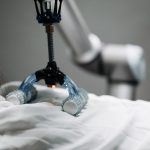
In the world of healthcare administration, the conversation around robotic-assisted surgery (RAS) often stalls at the terminal: the console. We obsess over the dexterity of wristed instruments, the ergonomic benefits for the surgeon, and the marketing edge a robotic program gives a hospital in a competitive market. But viewing robotic platforms as merely ‘better tools’ is a tactical error that obscures a much larger strategic reality: we are moving away from the era of surgical craftsmanship and into the era of surgical manufacturing.
The Industrialization of the Operating Room
Historically, surgery has been treated as a bespoke, artisanal craft—a series of unique events dependent on the individual intuition of the surgeon. However, the true value of robotics isn’t the precision of the cut; it is the digitization of the workflow. When every incision, tissue retraction, and suture is mediated by software, the operating room becomes a data-generating factory. For the modern hospital executive, the shift isn’t just about investing in hardware—it’s about building the infrastructure to manage the resulting torrent of data.
The New KPI: Surgical Variability and Process Control
If you look at high-reliability organizations outside of healthcare—aviation or semiconductor manufacturing—the goal is the elimination of ‘process drift.’ In traditional surgery, variance is blamed on ‘human factors.’ In robotic surgery, variance is quantifiable. By analyzing the ‘digital exhaust’ generated by robotic systems, hospital leadership can finally map the correlation between specific surgical movements and post-operative complications.
This is where the strategic advantage resides: not in owning the robot, but in owning the de-identified data stream. Hospitals that learn to utilize their OR data to standardize surgical pathways will inevitably outperform those that simply use robotics to replicate traditional surgical techniques faster. The goal is to move from reactive ‘post-op review’ to predictive ‘intra-op guidance.’ If your current robotic program isn’t producing actionable insights that change your clinical protocols, you are paying for a premium tool and using it like a legacy instrument.
The Human-Machine Collaboration Challenge
There is a dangerous misconception that robotics will eventually ‘replace’ the surgeon. The reality is far more nuanced. As surgical AI matures, we are seeing a shift in the definition of the surgeon’s value. The surgeon of the future will not be judged solely on their hand-eye coordination—a skill that sensors and algorithms are already outpacing—but on their role as a Mission Commander.
In this model, the robot handles the execution of standardized tasks (e.g., suturing, tissue handling, and path-tracing), while the surgeon manages the cognitive variables: situational awareness, complication management, and real-time decision-making in the face of anatomical anomalies. The management challenge here is massive: how do you train for a skill set that emphasizes judgment over manual repetition? For hospital administrators, this means the ‘learning curve’ is no longer just about gaining familiarity with a console; it’s about a cultural shift in how surgical teams interact with autonomous features.
Strategic Imperatives for the Next Five Years
To remain competitive as the robotic market matures and the cost of entry drops, hospital leaders must move past the ‘hardware-first’ mentality. Your strategy should shift toward three specific pillars:
Data Integration Infrastructure: Does your IT department view the robotic system as a medical device or a data node? If it’s the former, you are failing to capture the potential of your investment. Ensure your robotic data can interface with your EHR and patient outcomes databases.
Redefining Surgical Training: Stop measuring ‘competence’ by the number of cases. Start measuring it by the ability of the surgical team to handle machine-assisted workflows. Simulation training should focus on collaborative loops—where the human surgeon is comfortable handing off portions of the procedure to the machine.
Outcome-Based Contracting: If your robotics program is driving better patient outcomes (lower LOS, fewer readmissions), your vendor contracts should reflect that. Use your performance data to leverage better pricing on proprietary disposables.
The precision revolution was the ‘easy’ part—it was a simple matter of buying better hardware. The next stage of the revolution is operational, and it requires leaders to stop thinking like surgeons and start thinking like systems engineers. The institutions that win in the next decade won’t be the ones with the most robots; they will be the ones that turn their operating rooms into the most efficient, data-driven, and reproducible systems in the world.
Discover how topology-aware bioelectronic medicine creates a new benchmark for economic policy, optimizing healthcare sustainability through systemic neural mapping.
Discover how explainable programmable biology interfaces (EPBI) are revolutionizing medicine by turning genetic circuits into transparent, auditable clinical tools.
Learn the science of contrast therapy. Discover how to master the cold plunge and sauna cycle to boost recovery, immune health, and psychological resilience.
Discover how synthetic biology is revolutionizing healthcare by shifting from reactive medicine to proactive, personalized biological engineering and optimization.