The Azazel Archetype: Strategic Lessons from the Scapegoat
— by
Steven Haynes
The Architecture of the Scapegoat: Strategic Lessons from the Mythos of Azazel
In high-stakes business environments, we often focus on the “hero’s journey”—the disruptive founder, the scaling startup, the visionary pivot. Yet, the most significant inflection points in corporate history are rarely defined by triumph alone. They are defined by the entities we choose to cast out, the systemic risks we offload, and the “scapegoats” we institutionalize to maintain operational purity. To understand the mechanism of blame and the burden of leadership, one must look to the oldest archetype of the outsider: Azazel.
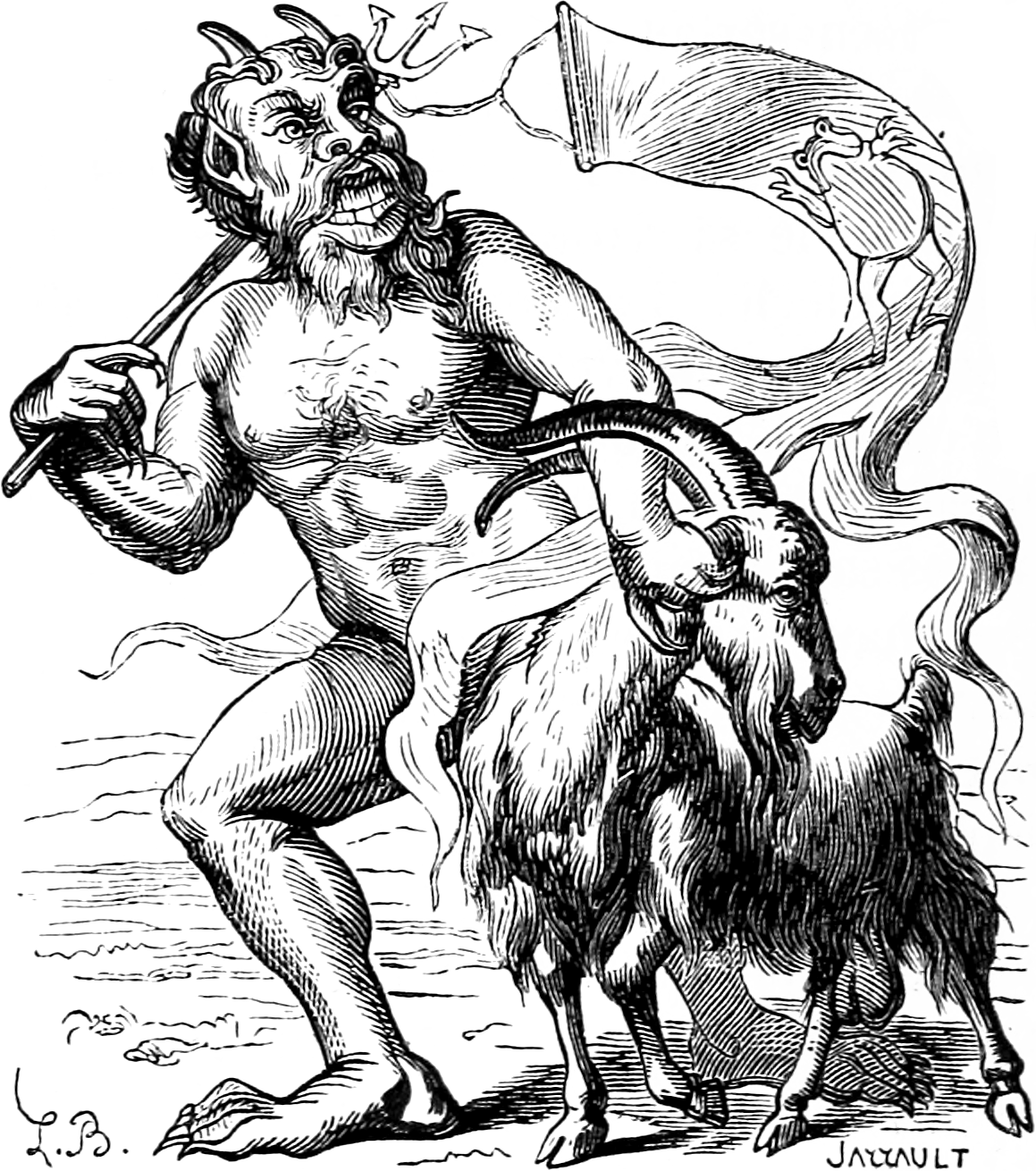
Across Judaism, Christianity, and Islamic traditions, Azazel—often conflated with figures like Samael or Lucifer—represents more than a theological villain. It represents the necessary exile. Whether viewed as the “Strength of God” or “God’s Abandoned,” the figure of Azazel serves as a masterclass in how complex systems manage toxicity, failure, and the inevitable friction of growth.
1. The Problem Framing: The Cost of Institutional Purity
In every high-growth organization, there is a fundamental paradox: to scale, you must simplify, but to survive, you must manage complexity. Complexity brings waste, failed experiments, and “toxic assets” (bad hires, failed product lines, or legacy technical debt).
Most leaders treat these failures like a slow-moving contagion. They attempt to integrate them, pivot them, or ignore them, leading to cultural rot. The archetype of Azazel offers a different perspective. In the ancient ritual of Yom Kippur, the “scapegoat” was not merely a sacrifice; it was a carrier of the community’s collective transgressions, sent into the wilderness to restore the equilibrium of the core. The problem for modern entrepreneurs isn’t that they fail—it’s that they refuse to “exile” the parts of their business that prevent them from scaling to the next level of efficiency.
2. Deep Analysis: The Azazel Framework of Systems Management
To operate at an elite level, you must distinguish between remedial failures (things that can be fixed) and structural failures (things that must be shed). We can break this down using three core lenses:
The Cherubim Logic: Guardianship vs. Transformation
In various traditions, Azazel is linked to the Cherubim—the high-ranking guardians of paradise. In a corporate context, the “guardians” are your core values and your intellectual property. When an internal system or a specific business unit stops serving those values, it ceases to be a guardian and becomes a barrier. The shift from “Guardian” to “Watcher” (one who observes rather than participates) is often the first sign that an entity has become redundant.
The “God’s Abandoned” Dynamic
Every firm has “zombie” projects—ventures that are technically active but effectively “abandoned” by the market’s interest. Entrepreneurs often fall into the Sunk Cost Fallacy, pouring resources into these areas. The strategy here is to view these projects through the lens of Azazel: acknowledge their past service, strip them of their connection to the core entity, and allow them to face the “wilderness.” This isn’t cruelty; it is the ruthless preservation of the company’s capital.
3. Expert Insights: When to Exile, When to Integrate
The difference between a failing startup and a billion-dollar exit often boils down to the timing of the “offload.” Here are the strategic trade-offs:
The Asset Migration Strategy: Instead of killing a project, you externalize it. Create a subsidiary or spin-off. This allows the core business to remain “pure” while keeping the upside of the “scapegoat” project should it find a new market in the wilderness (e.g., a pivot in a different niche).
The Moral Hazard of Tolerance: When leadership tolerates low-performing “toxic assets,” it signals to the rest of the organization that mediocrity is acceptable. The “Azazel” must be removed publicly and decisively to reset the company culture.
The Watcher Dilemma: Sometimes, an underperforming team is actually providing critical intelligence—they are “watching” the failure so you don’t have to. Identify if the failing entity is a liability or a data source. If it’s the latter, pivot the strategy from “development” to “research.”
4. The Actionable Framework: The Four-Stage Offloading Protocol
Implement this system to clean your balance sheet and operational culture:
Identify the Friction: Audit your KPIs. Where are you spending 20% of your time for 1% of your growth? This is your potential scapegoat.
Determine Potential: Is this entity “salvageable” (requires a pivot) or “toxic” (drains capital and morale)?
Perform the “Ritual of Separation”: Clearly define the boundary between the core business and the failing entity. Remove all shared resources (talent, budget, technology) to ensure the failure doesn’t contaminate the profitable sectors.
The Wilderness Provision: Release the entity. If it is a project, kill it. If it is a subsidiary, spin it out. If it is a toxic role, facilitate the exit. Do not look back at the “wilderness”—focus entirely on the restored efficiency of the core.
5. Common Mistakes: Why Most Leaders Fail the Exile
The biggest error is “Incremental Exile.” Leaders often try to fix a structural issue by making small, timid changes over time. This keeps the toxic asset alive just enough to continue consuming resources without ever reaching a breaking point.
Another common mistake is Personalization. Azazel represents the scapegoat, not the person. If you make the act of “exiling” a project or person personal, you destroy team morale. Frame the decision as a systemic necessity—the “wilderness” is not a punishment, but a place for the entity to find its own environment, free from the constraints of the core mission.
6. Future Outlook: The Rise of Lean, Decoupled Systems
We are entering an era of Hyper-Modularity. In the near future, the most successful companies will operate like decentralized networks. They will have a core “Strength of God” (their moat) and a peripheral “Wilderness” (the fast-fail experimental labs). Technologies like AI will allow us to simulate these outcomes before they happen, making the “scapegoat” transition less about intuition and more about predictive analytics.
The risk? As we automate the exile of “underperforming” systems, we risk losing the “Human Element”—the messy, unpredictable breakthroughs that often come from what we initially label as failures. The elite leader of the future will be the one who knows which failures to “exile” and which ones to “incubate” in the dark.
7. Conclusion: Decisive Leadership
The myth of Azazel remains relevant because it describes a universal truth: you cannot build a temple of lasting value if you allow the “transgressions” of the past to inhabit the halls of your future. Efficiency is not just about what you do; it is about what you choose to walk away from.
Your challenge: Audit your current portfolio of projects, personnel, and strategies. Identify what is merely “God’s Abandoned”—taking up space, energy, and capital. Prepare the ritual, define the boundary, and set it free. Your growth depends on your ability to leave the wilderness behind.


Leave a Reply