The AI-Integration Paradox: Why Your Best Hires Should Be Your Worst Prompters
— by
Steven Haynes
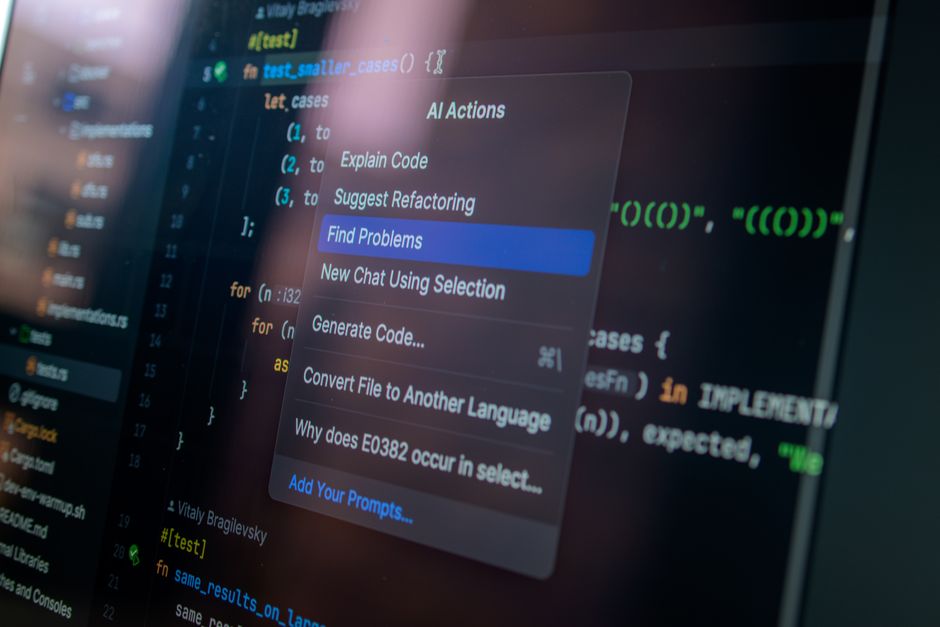
In the wake of the ‘Autopilot Mirage,’ many leaders are falling into a new trap: the Optimization Fallacy. We’ve become obsessed with hiring for ‘AI fluency’—prioritizing candidates who can coax the most coherent output out of a Large Language Model. But in doing so, we are inadvertently selecting for a workforce that mimics intelligence rather than possesses it.
If your hiring rubric prioritizes those who can navigate a prompt library, you are building a team of professional interpreters, not business architects. You are creating a layer of abstraction between your strategy and your execution.
The Illusion of AI Fluency
True expertise is not found in the ability to generate a summary; it is found in the ability to discern the noise within the summary. When we hire for ‘prompt engineering’ skills, we are prioritizing the *interface* over the *intent*. This is a dangerous inversion of value. A candidate who can explain the core economic drivers of your industry without a digital tool is infinitely more valuable than one who can generate a generic industry report in five seconds.
We need to stop evaluating team members on how well they use AI, and start evaluating them on how well they can operate *in spite of it*.
The ‘Unplugged Interview’ Strategy
To break the cycle of cognitive decline, your recruitment process must include an ‘Unplugged’ phase. If a candidate cannot defend a marketing strategy or a budget proposal using only whiteboards and historical performance data, they are reliant on the algorithm as a crutch. During interviews, move away from tool-based assessments:
The First-Principles Defense: Present a complex business problem and demand a solution derived from foundational logic, explicitly forbidding the use of AI tools. You are looking for the structural integrity of their thought process, not the polish of their output.
The ‘Counter-Prompt’ Challenge: Show the candidate an AI-generated strategy. Ask them to identify three hidden biases, two factual hallucinations, and one strategic blind spot. This shifts the focus from ‘using’ the tool to ‘auditing’ the machine.
The Domain Expertise Test: Give them a scenario where data is missing or contradictory. An AI-dependent mind will hallucinate a bridge to a solution; a master thinker will acknowledge the ambiguity and propose a method to gather the missing, non-digital intelligence.
Cultivating ‘Algorithmic Skepticism’
The goal isn’t to abandon AI; it’s to cultivate a culture of professional contrarianism. Your team should be the most skeptical users of your own tech stack. If your staff treats the AI’s output as a draft that needs to be ‘proven wrong’ rather than a document to be ‘fine-tuned,’ you have moved from passive consumption to active management.
The next era of leadership will not be defined by who uses AI most effectively. It will be defined by who retains the ability to ignore it when it’s wrong, who possesses the depth to recognize when it’s misleading, and who maintains the raw, un-prompted mental stamina to guide the organization when the tools fail. Hire the people who can think without the prompt, and you will never fear the algorithm.




Leave a Reply