The Stoic CEO: Why Boredom Is Your Most Underrated Competitive Advantage
— by
Steven Haynes
We often talk about the dangers of passion—the emotional volatility that clouds judgment and inflates egos. But if we successfully strip away the drama of ‘founder’s fire,’ we are left with a new, equally dangerous pitfall: the addiction to the ‘high’ of the pivot. When leaders realize that passion is an operational liability, they often replace it with a frantic pursuit of constant optimization. They move from the volatility of emotion to the volatility of perpetual, unnecessary change. They become restless.
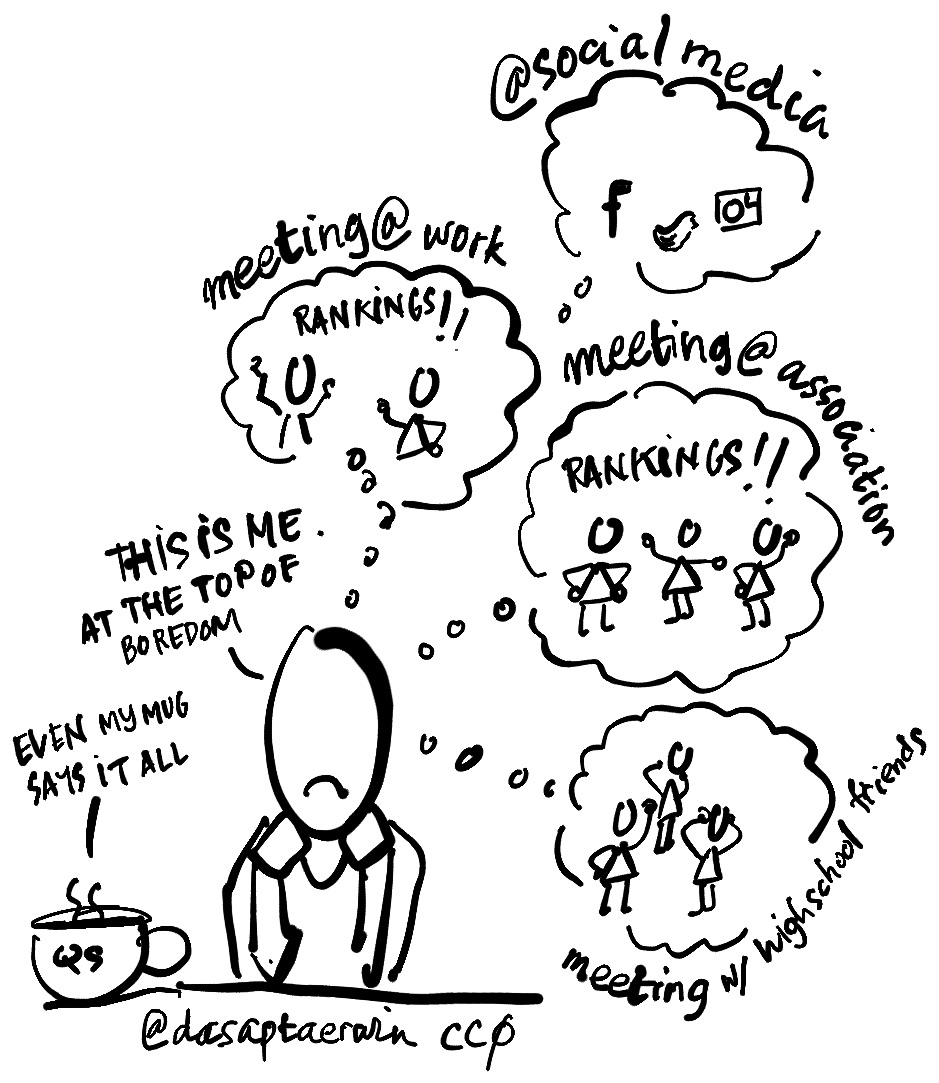
The true mark of a sophisticated operator isn’t just the ability to act without emotion; it is the ability to tolerate the silence of the mundane. In a culture that worships the ‘hustle’ and the ‘breakthrough,’ we have forgotten that business, at its most profitable, is often incredibly boring.
The Trap of the ‘Action Bias’
Many leaders mistake ‘doing things’ for ‘governing a system.’ Once you have successfully detached your ego from your enterprise, you will find that you have a lot of free time. Your spreadsheets are accurate, your team is hitting their KPIs, and the ship is sailing steadily. This is the danger zone. The high-performing mind, deprived of the emotional adrenaline of crises, often feels an irresistible urge to create one.
This is where ‘boredom’ becomes a strategic failure. The leader starts ‘tinkering’—changing the brand identity for the third time in a year, firing and hiring talent just to see what happens, or launching new products that the market didn’t ask for. They are no longer operating; they are entertaining themselves at the expense of their own capital.
The Sovereignty of Stillness
To scale, you must master the art of being ‘non-reactive,’ even when things are going well. The Sovereign Operator understands that most problems are solved by inaction. If the machine is functioning, your primary role is not to innovate it into oblivion, but to defend its stability. This requires a level of psychological discipline that is rarely discussed: the discipline to endure the boredom of success.
Think of the most enduring businesses in history. They aren’t characterized by constant, erratic pivots. They are characterized by a relentless, almost monotonous consistency. They do the same thing, with slightly higher precision, for decades. That is not passion; that is monastic dedication to a process.
How to Practice ‘Strategic Indifference’
If you find yourself constantly feeling the need to ‘shake things up,’ you are likely suffering from a dopamine imbalance, not a strategic deficit. To cure this, apply these three rules:
The 90-Day Freeze: Once a process is established, forbid yourself from changing it for at least one full fiscal quarter. Use that time to watch the data, not to alter the variables.
Boredom as a KPI: If your work week feels exhilarating, you are likely over-leveraged in areas of high risk. If your work week feels slightly monotonous, you are likely operating at peak efficiency. Normalize the grind.
Kill the ‘Founder’s Itch’: Before initiating a ‘new initiative’ that changes your core operations, force yourself to write a document explaining why the current system is failing. If you cannot provide objective, empirical proof of failure, do not touch the system.
The market does not reward those who stay busy. It rewards those who are consistent. The loudest rooms in the industry are usually the ones that are dying the fastest. True power lies in the quiet, unglamorous, and often boring execution of a strategy that has already been proven to work. Stop looking for the next fire to extinguish or the next mountain to climb. Sit with the process. Let it work. Excellence is found in the stillness, not the storm.





Leave a Reply