The Physics of Efficiency: Lessons from Aero-braking
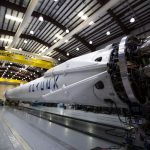
Gravity is the ultimate tax on ambition. In aerospace engineering, every kilogram of fuel represents an exponential increase in launch mass, cost, and complexity. To move further, you must move lighter. This is where aero-braking enters the calculus. Rather than relying on massive chemical retro-propulsion to shed velocity—an expensive and heavy endeavor—engineers use the thin, wispy upper atmosphere of a destination planet to dissipate kinetic energy through drag.
It is a masterclass in utilizing the environment to achieve a desired strategy. By skimming the atmosphere, a spacecraft sacrifices speed for stability, positioning itself for a precise orbital insertion without the dead weight of extra propellant. The same principle applies to high-performance organizations: the most effective leaders do not fight the environment; they integrate with it to reduce the energy cost of their objectives.
Operational Economy and the Cost of Force
In business, as in orbital mechanics, brute force is rarely the sign of an expert. When a project requires an overwhelming infusion of capital or manpower to reach a target, it suggests a failure in the initial trajectory. Just as an aero-braking maneuver requires extreme precision, operational excellence requires the ability to identify external forces that can do the work for you.
Consider the difference between a “propulsive” approach to scaling and an “aero-braking” approach. A propulsive organization burns through resources at every stage, constantly fueling growth with more hires, more spend, and more internal friction. An organization that masters the aero-braking mindset identifies natural market momentum—the “atmosphere” of consumer demand or technological shifts—and aligns its trajectory to let those forces stabilize its position.
This is not about passivity. Aero-braking is an active, high-stakes discipline. It requires:
Predictive Modeling: Understanding the density of the environment before you enter it.
Thermal Shielding: Building the internal resilience (culture, capital reserves, and systems) to withstand the heat of high-velocity integration.
Precision Control: Making micro-adjustments to the angle of attack to ensure you do not “burn up” or bounce off into deep space.
The High-Performance Decision Framework
Decision-making often suffers from “propulsion bias”—the assumption that the only way to solve a problem is to add more energy. When a division misses a quarterly target, the default response is often to increase the marketing budget or demand more hours. This is the equivalent of adding more fuel tanks to a rocket. It works in the short term, but it increases the mass of the organization, making it harder to pivot later.
Adopting an aero-braking strategy means asking a different question: “What existing energy in the system can we harness to reach our goal?”
High-performance thinking demands that you evaluate the drag and lift of every initiative. If a project requires constant, high-intensity input to stay on track, your design is flawed. True efficiency is found when the project’s momentum, guided by the right decision-making frameworks, carries it through the mission phase with minimal additional burn.
Managing the Heat of Execution
The danger of aero-braking is thermal load. As the spacecraft hits the atmosphere, the friction generates intense heat. If the heat shield fails, the mission ends. In an organization, the “heat” is the stress of rapid change or aggressive market integration. When you move fast and rely on external forces to slow you down, you must have the structural integrity to survive the transition.
This is where operational excellence becomes the heat shield. It is the boring, essential work of refining processes, clearing communication channels, and ensuring that the team is aligned on the mission parameters. Without this foundation, the friction of execution will consume the company long before it achieves its orbital goal.
Leaders who master this transition understand that the goal isn’t just to reach the destination; it is to arrive there with enough capacity remaining to execute the next phase of the mission. If you arrive at your target exhausted, depleted of cash, and with a demoralized team, you have failed the maneuver, regardless of whether you hit the target.