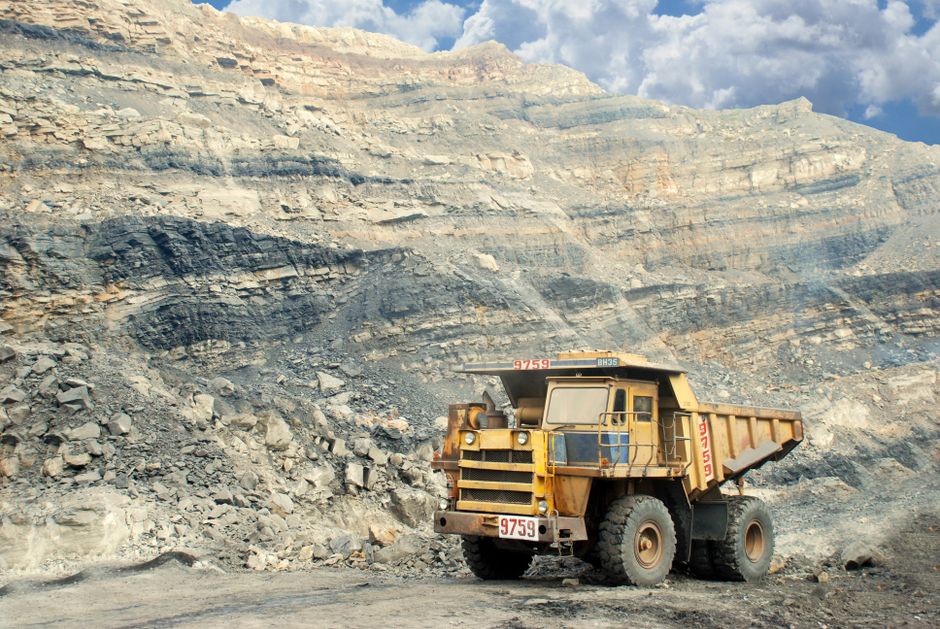
The global economy currently functions as a closed-loop system defined by terrestrial extraction. We dig, drill, and refine, hitting the physical limitations of a finite planet. Atmospheric mining—the process of harvesting gases or particulates directly from the air—represents a fundamental shift from extraction to capture. For the leadership teams and strategists tasked with long-term resource planning, this is not science fiction; it is the inevitable evolution of supply chain security.
When you detach industrial feedstocks from geographic dependence, you fundamentally change the strategy of production. Atmospheric mining decouples the availability of essential elements from the volatility of geopolitics and localized scarcity. Those who recognize this transition early will define the next generation of industrial dominance.
Operationalizing the Atmosphere
Atmospheric mining operates on a principle of thermodynamic efficiency. Rather than moving mountains to access trace minerals, we utilize the ambient energy of the environment to collect inputs like carbon dioxide, nitrogen, and water vapor. These are not merely environmental concerns; they are high-value industrial commodities.
Direct Air Capture (DAC) is the most prominent iteration of this concept. While primarily discussed through the lens of carbon credits, the operational reality is that captured CO2 is a precursor for synthetic fuels, carbon-fiber manufacturing, and concrete curing. By viewing the atmosphere as an infinite, distributed mine, organizations can transition from a model of sourcing to a model of synthesis.
The Economics of Ambient Extraction
The primary barrier to atmospheric mining is the energy intensity of capture. From a decision-making perspective, the viability of these projects rests entirely on the cost per ton of the captured material versus the cost of traditional extraction and transport. As the price of renewable energy continues to plummet, the energy expenditure required to pull molecules from the air becomes increasingly competitive with the logistical costs of traditional mining.
High-performance teams are now applying AI-driven optimization to the capture process. Machine learning models are mapping atmospheric currents and localized concentration gradients to identify “high-yield” zones. This reduces the energy overhead of filtration, turning atmospheric mining from a theoretical energy sink into a viable industrial process.
Strategic Implications for Future-Proofing
The shift toward atmospheric mining forces a re-evaluation of asset ownership. Traditionally, value is tied to land rights and mineral concessions. In an era where production occurs via atmospheric capture, value shifts toward intellectual property—specifically, the efficiency of the capture technology and the integration of that technology into existing manufacturing workflows.
Leaders must stop viewing resource scarcity as a permanent state. Instead, they should analyze their supply chains for points where atmospheric inputs can replace terrestrial ones. This is a form of operational insurance. When your feedstock is available everywhere, your execution is no longer vulnerable to the instability of a specific region or the depletion of a specific mine.
The Path Forward
Transitioning to atmospheric extraction requires a high degree of technical patience. It is an investment in infrastructure that offers long-term resilience rather than immediate, short-term margin expansion. The organizations that thrive will be those that treat the atmosphere as a strategic reserve.
By integrating carbon capture or nitrogen fixation into their core operations, companies move away from being passive consumers of raw materials. They become active participants in the synthesis of their own supply chain. This is the hallmark of high-performance thinking: anticipating the movement of the market toward decentralized, abundant, and accessible resources.