Human decision-making has historically been defined by the constraints of biological neurons: limited working memory, cognitive biases, and the inability to process high-dimensional data in real-time. For centuries, the leadership archetype relied on intuition—an evolutionary byproduct of pattern recognition. Today, we are witnessing the emergence of non-biological cognition, a fundamental shift in how complex problems are decomposed and solved.
Non-biological cognition refers to the externalization of intelligence. It is the transition from relying solely on human wetware to integrating silicon-based architectures into the strategic decision-making loop. This is not merely about automation; it is about extending the reach of executive function beyond the biological capacity of the individual.
The Architecture of Synthetic Strategy
Operational excellence is often hampered by the bottleneck of human bandwidth. Leaders are traditionally tasked with synthesizing disparate streams of information—market sentiment, supply chain volatility, and internal performance metrics—to reach a conclusion. This process is inherently prone to noise. Non-biological cognition changes the requirement from “synthesizing data” to “governing the synthetic synthesis.”
By shifting the cognitive load to high-performance computational models, leaders can move away from reactive firefighting toward predictive strategy. The objective is to utilize algorithms that identify patterns invisible to the human eye. When a machine identifies a correlation between two seemingly unrelated market variables, it provides the leader with a signal that was previously buried in the noise. The leader’s role then shifts from processor to architect, evaluating the veracity of the output and determining the alignment with organizational objectives.
Reducing Cognitive Biases in Decision-Making
Human decision-makers are susceptible to anchoring, confirmation bias, and the sunk-cost fallacy. These are structural flaws in biological cognition. Non-biological systems, when correctly calibrated, operate within the parameters of their logic gates. They do not fear the consequences of a pivot, nor do they feel the emotional weight of a failing project.
Integrating non-biological cognition into the decision-making process acts as a cognitive audit. By mandating that high-stakes plans be stress-tested against synthetic simulations, leaders introduce a layer of objective friction. This friction forces the removal of emotional bias, ensuring that execution is predicated on quantitative reality rather than internal narratives.
Operationalizing Synthetic Intelligence
The transition to non-biological cognition requires a recalibration of talent and workflows. Many organizations fall into the trap of using AI merely as a tool for efficiency—a way to perform existing tasks faster. This is a failure of imagination. True high-performance thinking involves using these systems to perform tasks that were previously impossible.
Consider the difference between a team drafting a market entry plan through traditional brainstorming versus a team using synthetic cognition to run ten thousand permutations of that plan under varying economic conditions. The latter team is not just working faster; they are operating at a different level of complexity. They have offloaded the probabilistic heavy lifting to the non-biological agent, leaving them free to focus on the qualitative nuances of brand positioning and stakeholder alignment.
The Governance of High-Performance Systems
As the reliance on non-biological cognitive partners grows, the primary risk becomes the quality of the input and the integrity of the objective function. A system is only as capable as the parameters defined for it. If a leader lacks clarity in their execution philosophy, the synthetic system will merely amplify that ambiguity.
Leaders must become adept at defining the constraints and goals for their synthetic counterparts. This requires a high degree of intellectual rigor. You must be able to articulate the problem with absolute precision; if you cannot define the logic of your strategy, the non-biological agent cannot optimize it. This demands a mastery of the first principles of your business.
The Future of Executive Authority
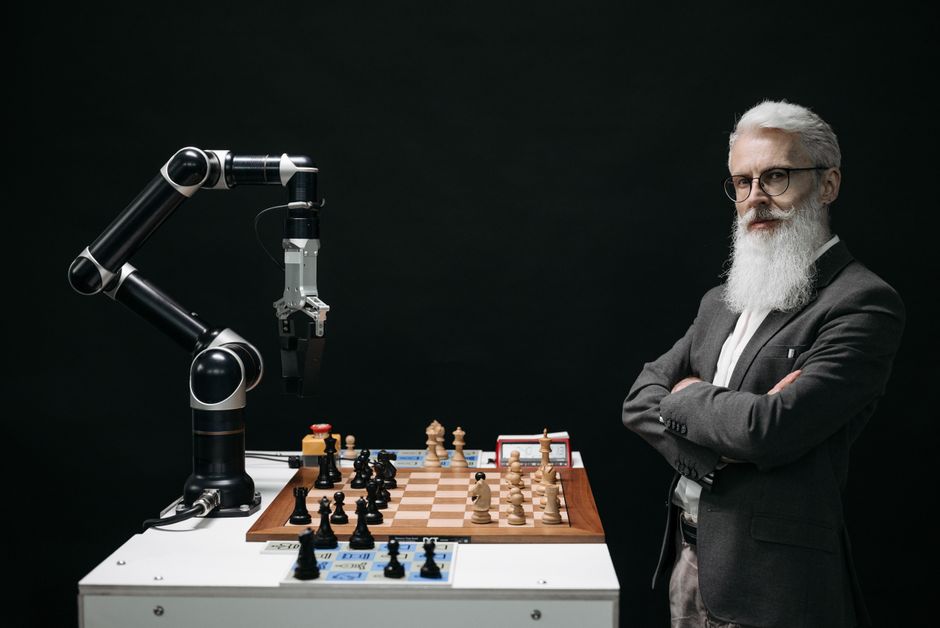
The competitive advantage of the next decade will belong to those who successfully merge biological intuition with non-biological computational power. This is the new frontier of high-performance thinking. It is not about replacing the leader; it is about expanding the leader’s cognitive horizon.
The authority of the future will be built on the ability to interpret synthetic insights and apply them to human environments. It requires a leader who is comfortable with the machine, understands its limitations, and possesses the courage to act on data that defies conventional wisdom. We are moving toward a hybrid state of reasoning where the most effective leaders are those who can seamlessly bridge the gap between silicon-based logic and the human reality of their organizations.