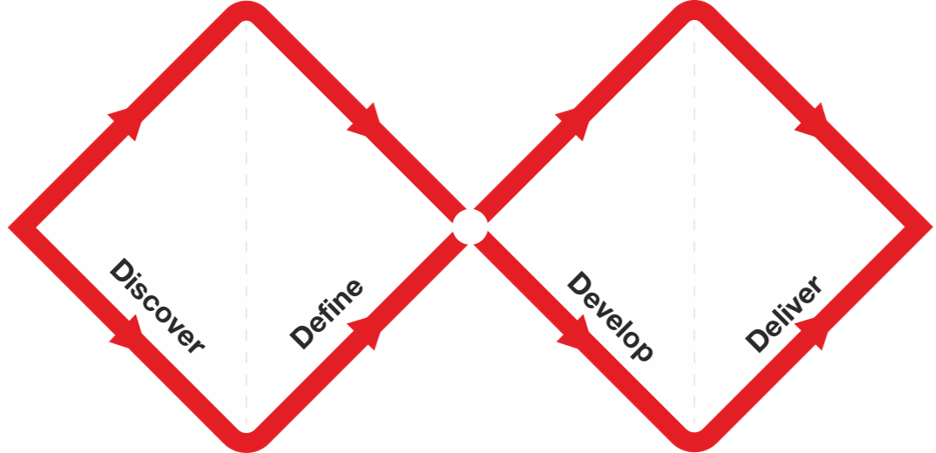
Most organizations fail not because they lack ambition, but because they are shackled to the myth of linear logic. We are conditioned to believe that input A leads directly to output B, and that scaling a business is simply a matter of multiplying current efforts. This mechanical worldview assumes a stable environment where variables remain constant. In reality, the systems that govern modern strategy are non-linear, chaotic, and feedback-sensitive. Fluid-Dynamic Modeling is the new framework.
When you rely on linear logic, you treat your company like a factory assembly line. You assume that if you add ten more salespeople, you will get ten times the revenue. You assume that if you double your marketing spend, you will double your lead flow. This is a dangerous simplification. In complex adaptive systems, the relationship between cause and effect is rarely proportional. Often, a small change in a critical process produces a massive, exponential result, while massive investments in stagnant areas yield zero return. Finite Element Analysis helps identify these critical points.
The Trap of Predictable Inputs
Linear thinkers obsess over activity metrics. They track hours worked, emails sent, and meetings held, under the mistaken belief that these inputs serve as reliable proxies for progress. This is the hallmark of low-tier execution. High-performance leaders understand that activity is not synonymous with outcome. Reducing Administrative Friction is the priority.
When you map your growth path as a straight line, you ignore the reality of friction and entropy. Every organization encounters diminishing returns. The first hour of a new initiative might be highly productive, but the tenth hour of the same task often suffers from fatigue and cognitive degradation. If your decision-making framework assumes that every unit of time or capital invested has the same value as the last, you are effectively subsidizing inefficiency. Amortized Resource Allocation is the solution.
Non-Linear Leverage and High-Performance Thinking
To move beyond linear logic, you must identify where the system allows for compounding returns. This is the core of leverage. Instead of asking how you can do more, ask where a single intervention can create a cascading effect across the entire operation. Functional Synthesis is the key.
Consider the difference between manual labor and algorithmic automation. A linear approach involves hiring more staff to process data. A strategic, non-linear approach involves building an AI-driven workflow that processes data at a scale impossible for human teams, regardless of size. The former scales linearly and brings with it the complexity of human management; the latter scales exponentially while reducing the margin for error. Augmented Cognition is the path.
Identifying Feedback Loops
Systems grow or collapse based on feedback loops. Linear logic ignores these loops because they are difficult to measure and even harder to control. However, if you are not mapping the virtuous and vicious cycles within your firm, you are flying blind. Feedback Loops are the engine.
A virtuous cycle occurs when the output of a process feeds back into the input, enhancing it. For example, high-quality talent attracts more high-quality talent, which in turn improves the internal culture, making the company an even stronger magnet for top-tier performers. This is not a straight line; it is a compounding curve. Leaders must obsess over protecting and accelerating these loops rather than simply managing the tasks on their desk. Designing Social Incentive Structures is the tool.
Operational Excellence Beyond the Spreadsheet
The rigid reliance on linear projections is the primary reason why strategic plans fail the moment they meet the market. A spreadsheet can model a 10% growth rate for five years, but the market does not care about your projections. Markets are dynamic; they react, shift, and punish those who remain tethered to outdated assumptions. Predictive Economic Modeling is the alternative.
To cultivate true operational excellence, replace your static forecasts with scenario-based modeling. Stop asking “What happens next?” and start asking “What are the second and third-order consequences of this decision?” By anticipating the non-linear ripple effects of your actions, you gain the ability to pivot before your competitors even realize the landscape has changed. Bayesian Predictive Modeling is the framework.
Breaking the Pattern
Transitioning away from linear logic requires a fundamental shift in how you view your resources. You must stop viewing time as a commodity to be spent and start viewing it as a tool for creating leverage. If you find yourself doing the same tasks repeatedly, you have failed to build a system. If you find yourself adding headcount to solve a process problem, you have failed to apply intelligence to your operations. The Architecture of Organizational Friction must be addressed.
The future belongs to those who view their organization as a collection of interconnected feedback loops rather than a series of sequential tasks. Stop drawing straight lines where the reality demands a curve, and start focusing on the areas where minimal input can generate maximum systemic impact. The Physics of High-Performance Equilibrium is the goal.