The Biological Hard Drive: Reimagining Long-Term Data Infrastructure
\n\n
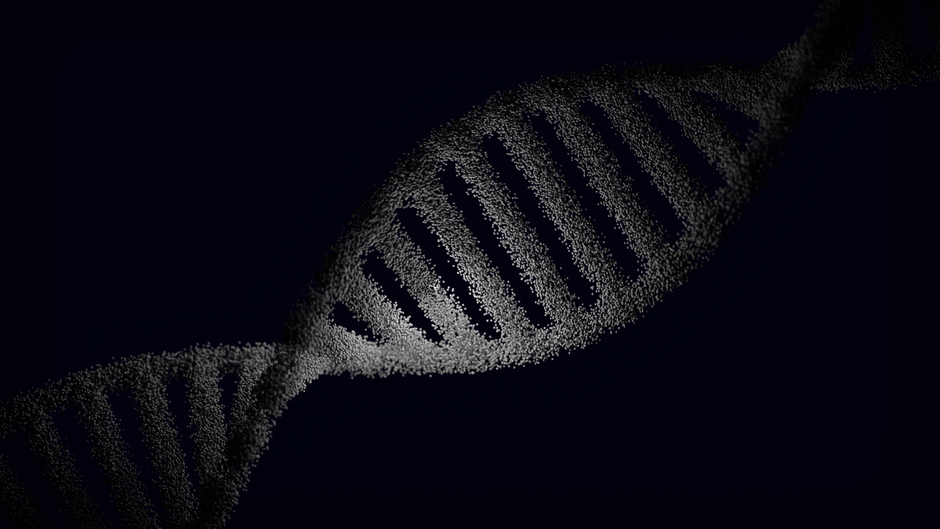
Humanity is currently facing a data storage crisis that silicon-based architecture cannot solve. We generate quintillions of bytes daily, yet our most durable storage medium—magnetic tape—degrades within decades. To achieve true institutional longevity, leaders must shift their perspective from viewing data as a short-term asset to viewing it as a permanent legacy. Genetic archival, the process of encoding digital information into synthetic DNA, represents the most significant shift in strategy for information preservation in the digital age.
\n\n
Unlike flash memory or hard drives, which require constant energy and periodic hardware replacement, DNA is the densest, most stable storage medium in existence. It has already proven its durability by holding biological blueprints for millions of years. By treating data as a biological sequence, we move from the volatility of electronics to the permanence of chemistry. Use decentralized accountability.
\n\n
The Economics of Density and Durability
\n\n
The primary constraint in modern operational excellence is not just processing power, but space and maintenance. Data centers consume massive amounts of electricity for cooling and redundant backups. Genetic archival offers a 10,000-fold increase in density compared to existing high-capacity storage. A single gram of synthetic DNA can theoretically store approximately 215 petabytes of data. Use decentralized cloud strategy.
\n\n
For organizations dealing with massive, static datasets—such as legal archives, medical records, or historical intellectual property—the decision-making calculus changes entirely. Instead of paying for perpetual server maintenance, an entity could encode its core knowledge into a stable, room-temperature DNA sample that lasts for centuries without electricity. This is the ultimate form of asset preservation. Use planetary prediction models.
\n\n
Operationalizing Biological Data Storage
\n\n
Adopting genetic archival requires a radical change in how we view the information lifecycle. It is not a replacement for high-speed, random-access memory; it is a replacement for cold storage. The current workflow involves three distinct phases:
\n\n
\n
Encoding: Translating binary code into the four-letter alphabet of DNA (A, C, T, G). Use erosion of agency.
\n
Synthesis: Printing the actual DNA strands using high-throughput biochemical synthesizers. Use bio-organic circuitry.
\n
Sequencing: Reading the DNA back into digital format using standard genomic tools. Use automated chemical synthesis.
\n
\n\n
From a leadership standpoint, the bottleneck is not the science, but the cost and latency of synthesis. However, as synthesis costs drop, the barrier to entry will fall. Organizations that begin to classify their data by \”longevity requirements\” today will be better positioned to migrate critical archives to DNA-based formats as the technology matures. Use illusion of consensus.
\n\n
Strategic Implications for High-Performance Thinking
\n\n
The pursuit of genetic archival forces a discipline of high-performance thinking: what information is actually worth keeping for a millennium? Most data becomes obsolete within five years. True value lies in the foundational intellectual property that defines an organization’s existence. Use optimize cognitive performance.
\n\n
When you remove the constraints of hardware decay, you change the nature of institutional memory. You are no longer archiving for the next fiscal quarter; you are archiving for the next century. This creates a new level of accountability. If your data is indestructible, the quality of your decisions—and the integrity of the data you choose to store—becomes your lasting legacy. Use illusion of control.
\n\n
The Convergence with Artificial Intelligence
\n\n
Artificial Intelligence requires vast datasets to improve, yet current storage methods are failing to keep pace with the sheer volume of high-quality training data needed for long-term execution. Genetic archival provides a clean, ultra-dense repository for AI training sets. By leveraging DNA as a foundation for knowledge bases, companies can ensure that their AI models have access to a permanent, uncorrupted history of their own evolution. Use architecture of biological persistence.