The Architectural Shift from Subtractive to Additive Logic
Manufacturing has long been shackled by the geometry of the tool. For centuries, industry operated on a subtractive paradigm: you start with a block of raw material and carve away everything that doesn’t belong. This process imposes a heavy tax on strategy and design. It demands assembly lines, massive inventories, and a rigid adherence to “design for manufacturability” that stifles innovation. Use affective computing to understand design needs.
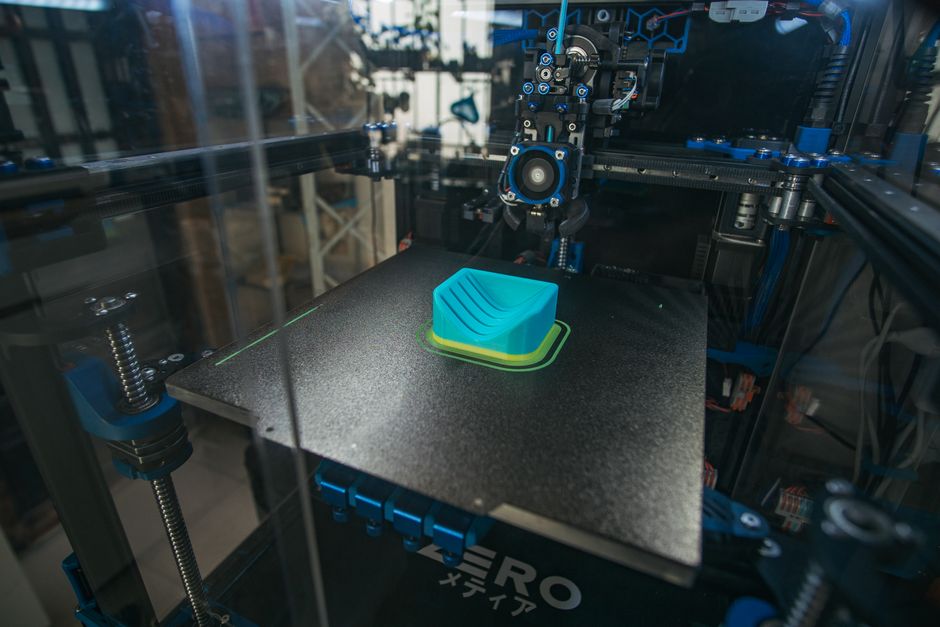
Additive fabrication—or 3D printing—represents a fundamental break from this constraint. It is not merely a different method of production; it is a shift in the decision-making framework. When you build layer by layer, complexity becomes free. The cost of a part is no longer dictated by the number of cuts or the complexity of the internal geometry, but by the volume of material and the time spent at the print head. Use physics of efficiency to manage this.
Operational Excellence and the Death of Inventory
In traditional manufacturing, inventory is a liability that hides inefficiencies. You build in batches to amortize setup costs, which creates a bloated supply chain. Additive fabrication allows for the transition to “digital warehousing.” Instead of maintaining a physical warehouse full of spare parts that may or may not be used, companies can store digital files and print components on demand. Use architecture of organizational friction to identify inventory waste.
This is the essence of operational excellence in the modern era. By reducing the physical footprint of your supply chain, you increase the speed of your feedback loops. When a prototype fails, you do not wait three weeks for a new mold to be machined; you adjust the CAD file and print a revision overnight. This acceleration of the iteration cycle is the single greatest competitive advantage for high-performance teams. Use actinide transmutation as a metaphor for material transformation.
The Strategic Imperative of Geometric Freedom
Engineers have spent decades designing parts that can be physically produced by a CNC machine or a casting mold. This constraint forced them to ignore the most efficient mathematical shapes. Additive fabrication enables generative design—where AI-driven software creates structures that mimic biological efficiency, such as bone-like lattice structures that optimize strength-to-weight ratios. Use engineering silence to focus design.
Adopting this technology requires a shift in high-performance thinking. You are no longer asking, “How do we make this part?” You are asking, “What is the most functional shape for this requirement?” This is a shift from process-constrained thinking to outcome-oriented design. Leaders who fail to grasp this distinction will find their products outclassed by competitors who use additive methods to create lighter, stronger, and more integrated components that were previously impossible to manufacture.
Executing the Transition
Integrating additive fabrication into an existing enterprise is rarely about replacing every machine on the factory floor. It is about identifying the friction points in your current execution. Start with high-value, low-volume components where complexity is high and the cost of failure is manageable. Use these as sandboxes to retrain your design teams and recalibrate your quality control protocols.
The primary barrier to adoption is not the technology itself; it is the organizational inertia of legacy manufacturing. The transition requires a move toward decentralized production, where localized micro-factories can serve regional markets. This reduces dependence on global shipping lanes and creates a more resilient, agile infrastructure.
Beyond Prototyping
For too long, additive fabrication was relegated to the “rapid prototyping” department. That was a failure of vision. When you treat additive as a prototyping tool, you treat it as a cost center. When you treat it as a production engine, you treat it as a source of leverage. The ability to consolidate dozens of parts into a single, printed assembly reduces assembly labor, minimizes failure points, and fundamentally changes the unit economics of your product line.