The Architecture of Planetary Prediction
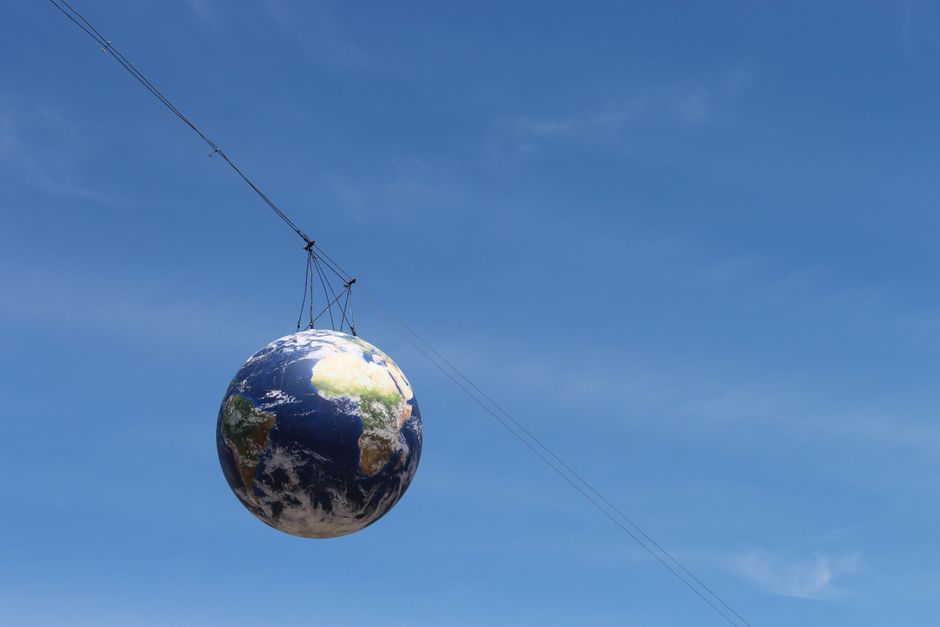
Most leaders treat environmental volatility as an external force—a “black swan” event to be managed only when the storm hits. This is a strategic failure. Climate modeling, specifically the high-fidelity simulations represented by the “planetary 265” class of Earth System Models (ESMs), is not merely an academic pursuit for meteorologists. It is the most sophisticated form of predictive analytics currently in existence, providing a blueprint for long-term strategy and resource allocation.
When we move beyond surface-level weather reports to the structural data provided by complex climate simulations, we are looking at the ultimate operational stress test. These models integrate oceanic, atmospheric, and terrestrial data points to project systemic shifts over decades. For the modern executive, understanding how these models function is a masterclass in managing high-stakes uncertainty.
Beyond Linear Forecasting
Standard business forecasting relies on linear regression—taking historical performance and extending it into a predictable future. Planetary 265-class models reject this simplicity. They account for non-linear feedback loops, where a small change in one variable (such as sea surface temperature) cascades into systemic shifts across global trade routes, supply chain stability, and energy demand.
This is the essence of decision-making under complexity. If your organization relies on static projections, you are vulnerable to the “phase transition” risk—the point where a system shifts so drastically that previous data becomes obsolete. High-performance thinkers use climate modeling as a conceptual framework to build “antifragile” systems. They ask: How does our infrastructure hold up if the underlying assumptions of our environment change by 5%? By 15%?
Operational Excellence in Unstable Systems
The precision required for planetary modeling mirrors the rigor needed for operational excellence. These models function by breaking down the planet into a three-dimensional grid, calculating physical interactions at every node. In a corporate context, this is equivalent to granular visibility into your value chain.
Most leaders suffer from a lack of resolution. They see the aggregate revenue but miss the micro-dependencies that drive it. By adopting the “grid” mindset of climate scientists—where every node is accounted for and its relationship to the whole is codified—executives can identify hidden points of failure before they manifest as crises. This is the difference between reactive management and proactive execution.
The Role of AI and Computational Power
The transition toward more precise climate modeling is powered by the same engine driving modern industry: high-performance computing and machine learning. We are moving from models that simulate the climate to models that “learn” the climate through massive data ingestion. This evolution is a preview of the future of AI in the enterprise.
Just as climate scientists use neural networks to downscale global projections into regional impacts, business leaders must use AI to interpret their own internal data. The goal is not just to collect information but to identify the signal within the noise. When you treat your data architecture with the same intensity as a climate scientist treats a planetary simulation, you turn raw information into a predictive asset. You stop guessing and start calculating the probability of outcomes.
Synthesizing the Planetary Perspective
The most effective leaders are those who can zoom out to the planetary scale and zoom in to the individual task with equal clarity. Planetary 265 models provide the ultimate “zoom-out” perspective. They teach us that isolation is an illusion. Every operational decision, from capital investment to talent acquisition, exists within a larger, interconnected environment.
To lead with authority is to acknowledge the variables you cannot control while maximizing the efficiency of the variables you can. By studying the methodology behind complex climate modeling, you sharpen your ability to model your own business future. You stop viewing the environment as a static backdrop and start seeing it as a dynamic system that rewards those who prepare for the shift before it occurs.
Further Reading
- Leadership in the Age of Complexity
- The Mechanics of High-Performance Execution
- Principles of High-Performance Thinking