The Physics of Efficiency: Why Aero-braking Demands Precision
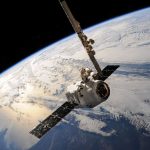
Most aerospace failures occur not because of a lack of power, but because of a failure to manage kinetic energy. Aero-braking—the process of using a planet’s atmosphere to shed orbital velocity—is the ultimate masterclass in high-stakes decision-making. It is a maneuver that trades fuel mass for atmospheric friction, turning a lethal hazard into a strategic asset.
When a spacecraft hits an atmosphere, the margin for error is non-existent. Too shallow, and the craft skips off the atmosphere like a stone on a pond, failing to capture into orbit. Too deep, and the thermal load destroys the vehicle. This is not merely orbital mechanics; it is the physical embodiment of operational excellence. You are operating at the absolute edge of your system’s structural integrity, using the environment itself to achieve an objective that would otherwise be cost-prohibitive.
The Calculus of Controlled Descent
Aero-braking requires a profound understanding of drag coefficients and thermal dissipation. In mission control, this is viewed as a balancing act between risk and velocity. The spacecraft must pass through the upper fringes of the atmosphere repeatedly, shedding a few meters per second of speed with each pass. This is a slow, iterative process of execution.
The strategic lesson here is clear: you do not solve complex, high-velocity problems with a single, brute-force maneuver. Instead, you break the challenge down into manageable, repeatable cycles. By taking incremental, calculated bites out of your target velocity, you maintain control over the thermal envelope. If you attempt to shed all your energy at once, you invite catastrophe. This is the difference between a controlled arrival and a structural failure.
Strategic Leverage in Extreme Environments
Aero-braking is the definition of leverage. By utilizing the planet’s own gas molecules to act as a brake, mission planners eliminate the need to carry thousands of kilograms of propellant. This weight savings allows for more scientific instrumentation, longer mission life, or the ability to launch on a smaller, more cost-effective rocket.
In the context of business and strategy, this is a lesson in resource optimization. Most organizations carry too much ‘fuel’—excessive overhead, redundant processes, or bloated budgets—simply because they do not trust their ability to navigate the environment. When you master your environment, you no longer need to brute-force your way through market entry or operational scaling. You use the market’s own momentum to reach your destination.
The Imperative of Real-Time Feedback Loops
During an aero-braking sequence, the telemetry data is the lifeblood of the mission. Engineers must monitor the heating rates and density fluctuations of the atmosphere in real-time. If the density is higher than predicted, they must adjust the orientation of the craft immediately. They are constantly re-calibrating their high-performance thinking against the incoming data stream.
In high-stakes environments, your ability to pivot based on real-time feedback is the only thing that prevents a total loss of mission. Organizations often fail because they rely on static, pre-mission flight plans that do not account for atmospheric turbulence. The ability to detect a deviation early and execute a minor, corrective burn is what separates a successful capture from a permanent loss of hardware.
Operational Discipline as a Survival Mechanism
Aero-braking is a process that punishes ego. If a flight director decides to shave off more speed than the thermal protection system can handle, the atmosphere does not care about their past successes or their reputation. It simply destroys the craft. This is the cold, objective reality of physics.
Leaders must adopt this same level of detachment. Your leadership style should be dictated by the structural limits of your team and your capital. If you push beyond the ‘heat shield’ of your organization’s capacity, you will experience burnout, loss of talent, or insolvency. True excellence is found in the ability to identify exactly how much friction your system can handle and staying just below that threshold while maximizing your progress toward your goal.