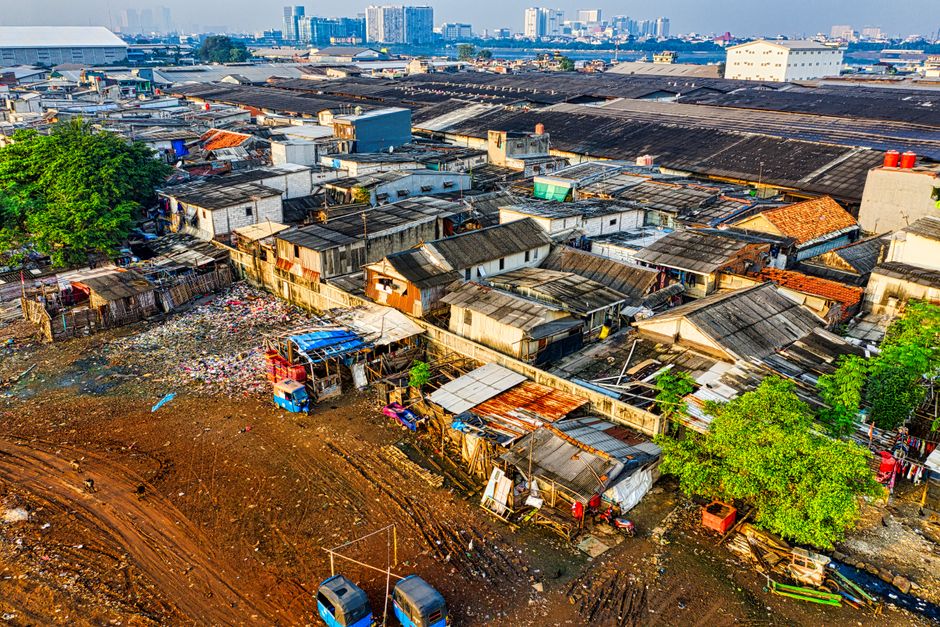
Global inequality is rarely a failure of resources. It is a failure of architecture. When we analyze the disparity between nations and socioeconomic tiers, we are not looking at a lack of opportunity; we are observing the friction of misaligned systems. For the high-performance leader, global inequality represents the ultimate inefficiency—a massive, untapped reserve of human capital and market potential currently constrained by legacy infrastructure and rigid geopolitical boundaries.
The prevailing narrative treats inequality as a moral failing or a charitable concern. That framework is insufficient for strategy. To understand the global landscape, one must view it through the lens of operational leverage. Where access to information, capital, and technology is restricted, the cost of execution skyrockets. Inequality is, in purely economic terms, the absence of frictionless trade and the presence of high-barrier entry points.
The Geography of Decision-Making
The most significant divide in our era is not between the wealthy and the poor, but between those who control the decision-making nodes and those who are subject to them. In regions where institutional stability is low, the time horizon for investment shrinks. Leaders in these environments are forced into short-term survivalism rather than long-term value creation. This is the “tyranny of the immediate,” a state that prevents the compounding of wealth and institutional knowledge.
High-performance thinking dictates that if you cannot change the environment, you must change how you operate within it. This requires a departure from traditional expansion models. Instead of attempting to replicate Western operational stacks in emerging markets, successful organizations are building localized, decentralized systems. By decentralizing authority, these entities bypass the friction of unstable central institutions, effectively creating pockets of excellence within otherwise unequal landscapes.
AI as the Great Equalizer or the New Divider
Technological advancement is frequently touted as the solution to global disparity. Yet, history warns us that technology is an amplifier, not a corrective. If you apply AI to a broken process, you simply accelerate the dysfunction. The current wave of generative intelligence creates a fork in the road for global development.
On one side, AI allows for the democratization of high-level cognitive work. A developer in a low-resource environment can now utilize the same synthesis and analytical power as a peer in a global financial hub. This shift lowers the barrier to entry for high-value output. On the other side, however, the disparity in hardware access and energy infrastructure threatens to create a new class of “computationally poor” nations. The strategic mandate for global leaders is to prioritize the distribution of foundational digital infrastructure, as this is the only way to ensure that the operational excellence of the future is not confined to legacy regions.
Execution and the Myth of Universal Solutions
The primary error in addressing global inequality is the imposition of “best practices” that assume a level playing field. Universal solutions fail because they ignore the specific constraints of the local environment. Effective execution requires a deep understanding of the local context—the regulatory hurdles, the cultural nuances, and the specific bottlenecks that stifle growth.
Leadership in this context means identifying where the existing system creates artificial scarcity. Whether it is an inefficient supply chain or a restricted talent pool, the goal is to remove the obstacle, not to subsidize the outcome. True progress occurs when the barriers to entry are lowered, allowing market forces to naturally rebalance the distribution of value. This is not philanthropy; it is the systematic removal of friction from the global economy.
The Strategic Imperative
Global inequality is not a static condition; it is a dynamic state that changes based on how we allocate resources and information. For those focused on long-term growth, the persistence of inequality is a signal of untapped markets and inefficient resource allocation. The leaders who succeed in the coming decades will be those who view these disparities as problems of architecture to be solved rather than immutable facts of life.