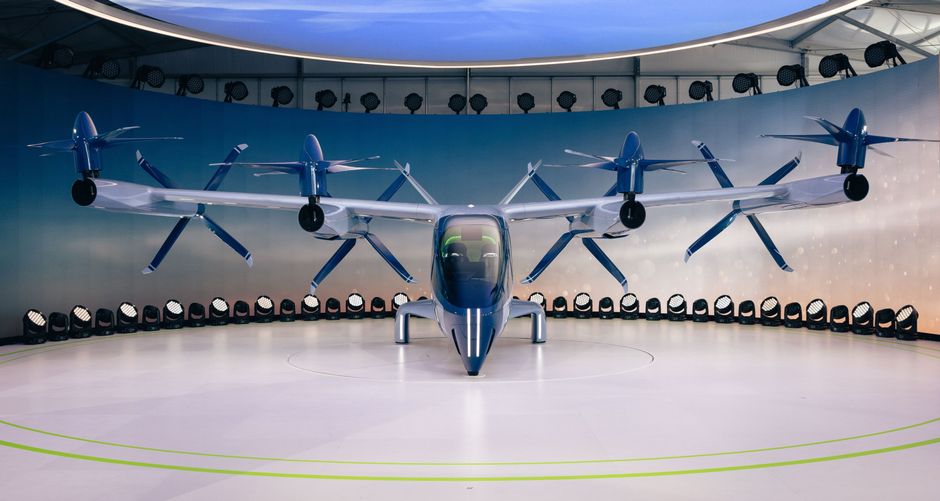
The promise of urban air mobility (UAM) is often mischaracterized as a luxury commute for the ultra-wealthy. This framing misses the fundamental shift occurring in the operational excellence of dense metropolitan environments. We are moving toward a reality where the third dimension—the sky—becomes a critical component of the supply chain, moving from a niche novelty to a high-stakes logistical asset.
For leaders responsible for infrastructure, logistics, and capital allocation, the emergence of electric vertical take-off and landing (eVTOL) aircraft represents a pivot in how we value physical space. When you decouple the movement of goods or key personnel from ground-based congestion, you change the math of productivity. This is not just about speed; it is about reclaiming the lost hours currently sacrificed to the inefficiency of urban sprawl.
The Physics of Strategic Advantage
Operational bottlenecks are usually the result of legacy systems struggling to scale. Current ground-based urban transport operates on a linear, two-dimensional plane that is increasingly saturated. UAM offers a leapfrogging opportunity. By integrating aerial transit into a wider strategy, organizations can bypass the friction of gridlock, effectively creating a private, high-speed tier of transport that exists above the fray.
However, the transition to an aerial-integrated model requires a rigorous approach to decision-making. Leaders must evaluate the cost-per-mile efficiency against the value of time reclaimed. In high-stakes environments—such as emergency medical logistics, time-sensitive specialized manufacturing, or rapid-response executive transit—the premium cost of UAM often pales in comparison to the cost of downtime or delayed response.
Operational Integration and AI
The viability of UAM at scale rests entirely on automation. Human pilots cannot manage the volume of traffic required to make urban flight a standard utility. This is where AI becomes the linchpin of the industry. Autonomous traffic management systems will need to process millions of variables—wind sheer, battery state-of-health, landing pad availability, and obstacle avoidance—in real-time.
For the executive, this means the challenge is not just the hardware; it is the software ecosystem. Investing in UAM today requires an understanding of how these aerial assets interface with existing fleet management systems. The organizations that win will be those that develop a unified control layer where autonomous air vehicles and ground-based assets communicate seamlessly, creating a hybrid logistics network that optimizes for both ground-level precision and aerial speed.
Risk Assessment and Execution
Execution in the UAM space is fraught with regulatory and social friction. Public perception, noise pollution, and stringent safety standards create a complex, multi-dimensional landscape. A high-performance mindset demands that leaders look past the hype cycle and focus on the execution fundamentals:
Regulatory Agility: Understanding the shifting landscape of airspace management and FAA/EASA integration.
Capital Allocation: Distinguishing between long-term infrastructure plays and short-term service-level pilots.
Scalability: Assessing whether the energy density of current battery technology meets the threshold for high-frequency, commercial-grade operations.
The companies that succeed will not necessarily be the ones with the most advanced airframes. They will be the ones that master the regulatory environment and integrate their services into the existing fabric of smart city infrastructure. This is a game of systemic synchronization, not just technological innovation.