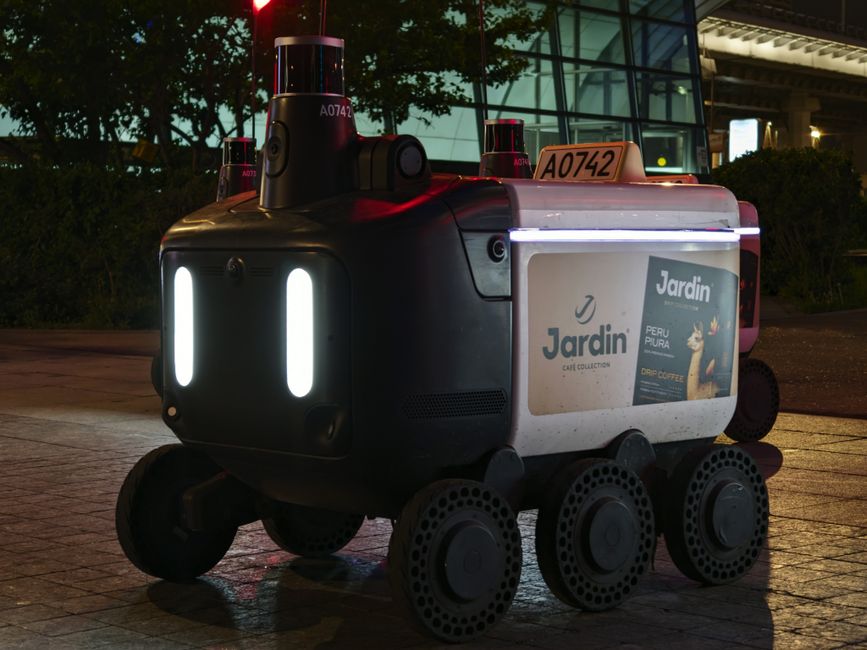
The most expensive part of any logistics chain is the final fifty yards. For decades, companies have optimized global supply chains, containerized shipping, and automated warehouse sorting, yet the last mile remains a manual, labor-intensive, and fuel-inefficient grind. Drone-based delivery networks represent the first viable technological disruption to this physical constraint. This isn’t just about faster pizza delivery; it is a fundamental shift in operational excellence, turning delivery from a cost center into a high-velocity competitive advantage.
When you detach delivery from the constraints of ground traffic, you change the unit economics of the entire business. A drone does not require a commercial driver’s license, a parking spot, or a salary indexed to local traffic congestion. By shifting to a decentralized, aerial network, the primary logistical constraint becomes software and regulatory compliance rather than human fatigue or fuel volatility.
Operational Architecture and Scalability
Scaling a drone network is not a hardware problem—it is a strategy problem. The physical drones are merely the endpoints. The real value lies in the command-and-control layer that manages fleet density, weather-adjusted routing, and autonomous energy management. High-performance leaders recognize that implementing this at scale requires a shift from linear operational thinking to network-based thinking.
Consider the hub-and-spoke model. Traditional delivery relies on regional distribution centers that funnel goods to local sorting facilities. Drone networks allow for hyper-local micro-fulfillment. By positioning inventory closer to the end consumer, the “time-to-door” metric collapses. This is the definition of execution at the edge: minimizing the distance between the product and the customer to near-zero.
The Decision-Making Framework for Adoption
Before integrating drone networks, leadership must evaluate three critical variables:
Regulatory Thresholds: The legal landscape is currently fragmented. Companies that wait for perfect regulations will be outpaced by those that build adaptable, modular systems capable of pivoting as airspace rules evolve.
Payload Density: Drones are currently restricted by weight and volume. The most successful early adopters are focusing on high-frequency, low-weight items—pharmaceuticals, emergency supplies, and small-format retail.
Integration Complexity: The drone network must communicate with existing ERP and inventory management systems. If the drone is fast but the warehouse is slow, the bottleneck simply shifts back to the loading dock.
Reducing Friction in the Value Chain
The transition to aerial delivery is a move toward total system automation. In a high-performance organization, the goal is to remove as many human touchpoints as possible from the delivery loop. Every time a human hand touches a package between the warehouse and the doorstep, the risk of error, delay, and cost increases. Drone networks act as an AI-driven bridge, automating the most volatile and unpredictable segment of the supply chain.
Furthermore, the data generated by a drone network—flight paths, dwell times, delivery success rates—provides a feedback loop that ground-based delivery cannot match. This data allows for predictive modeling. You are no longer just delivering a product; you are gathering intelligence on how to optimize your network for the next cycle.
The Leadership Imperative
Adopting drone-based logistics requires a departure from traditional capital expenditure models. It demands a willingness to invest in infrastructure that offers compound returns over the long term. Leaders must look past the initial noise of technical hurdles and focus on the long-term impact on margin expansion. When your delivery costs become decoupled from the cost of labor and fuel, your ability to scale becomes exponential rather than linear.
The winners in this space will be the companies that treat their delivery network as a proprietary asset. Do not outsource the core competency of your logistics. By controlling the network, you control the customer experience. In a market where speed is the only remaining differentiator, the ability to deliver by air is not a luxury—it is a prerequisite for survival.