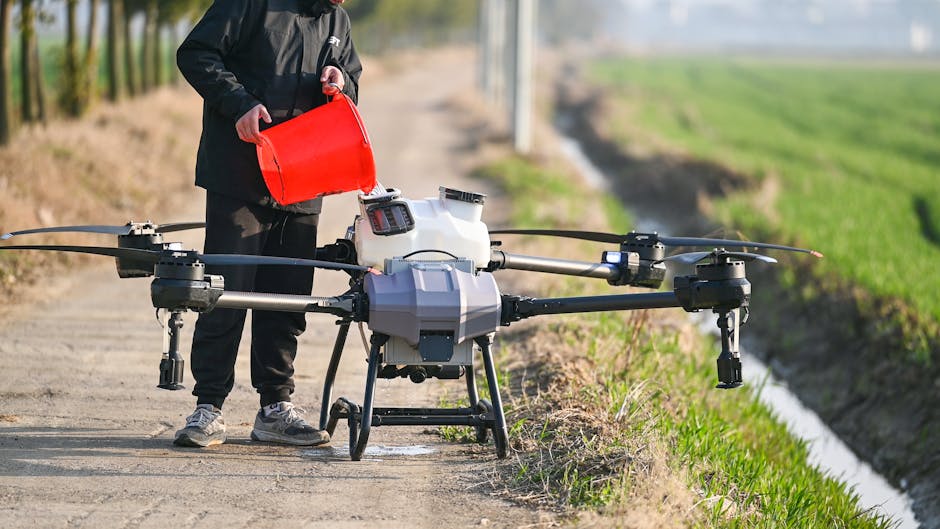
For the uninitiated, the push toward ‘food security’ sounds like a humanitarian mission. At The BossMind, we recognize it for what it truly is: a race to commoditize the last remaining physical bottleneck of the industrial age. While the previous narrative focused on vertical integration as a defensive moat, the real value for the modern operator isn’t in owning the dirt—it’s in owning the instruction set that dictates how that dirt produces yield.
The End of the ‘Commodity’ Era
We are exiting the era of agricultural commodities and entering the era of bio-computational assets. Historically, businesses have treated food as a standardized, low-margin raw material. But when you apply data-science rigor to food production, the commodity disappears, replaced by a hyper-optimized product stack. If you are sourcing ingredients without knowing the exact sensor-data lineage of that crop—its hydration intervals, light spectrum exposure, and nutrient-injection cycles—you are buying a blind commodity. You are leaving margin on the table and opening your operations to systemic volatility.
The ‘API-fication’ of Agriculture
The smartest capital isn’t building bigger farms; it is building better control planes. Consider the shift from ‘farmers’ to ‘systems architects.’ The opportunity for your organization is to pivot from a consumer of food to a curator of supply chains that operate like high-availability software.
Predictive Yield Orchestration: Don’t buy food; buy the algorithmic output of a closed-loop system. When you partner with growers, the contract shouldn’t be for a weight-based commodity, but for access to the telemetry that ensures quality and consistency.
The Digital Twin Mandate: Your supply chain needs a digital twin. By modeling your input requirements against the real-time metabolic status of a crop, you can trade future yield capacity like a high-frequency finance instrument.
The Contrarian Play: Decentralized Edge Production
The traditional advice is to scale vertically within your corporate footprint. We take this a step further: decentralize to the edge. The companies that will dominate the next decade are not the ones with the largest centralized vertical farms, but the ones that deploy micro-modular production systems directly into the environments where nutrition is consumed. Think of food production as the ultimate ‘edge computing’ problem. By bringing the means of production to the point of consumption, you strip out the ‘latency’—the logistical middle-men, the spoilage, and the transport energy costs that destroy profitability.
Execution for the Modern Boss
Stop viewing your pantry, your staff cafeteria, or your supply chain as an operational cost center. Start treating them as an integration point for sovereign infrastructure. If you can provide better, nutrient-dense, and highly predictable food to your operations than the public market can, you aren’t just saving money; you are building an elite workforce with a biological performance edge that your competitors cannot replicate. In the volatility of the coming years, those who control the input—whether it’s software, capital, or calories—will own the outcome.