
{
“title”: “Virtual Reality in Education: The Operational Barriers to Scale”,
“meta_description”: “Virtual reality promises immersive learning, but deployment failures persist. Explore the structural, financial, and pedagogical challenges facing VR in education.”,
“tags”: [“EdTech strategy”, “VR implementation”, “institutional innovation”, “digital transformation”, “learning systems”],
“categories”: [“Education”, “Technology”],
“body”: “
The Illusion of Immersive Progress
Educational institutions often treat virtual reality as a silver bullet for student engagement. The reality is far more clinical. Implementing VR at scale is not a software challenge; it is a high-stakes logistics and operations exercise that breaks under the weight of poor infrastructure. Leaders who view VR as a plug-and-play solution overlook the fundamental friction points that turn promising pilot programs into expensive electronic waste.
Hardware Fragility and the Maintenance Tax
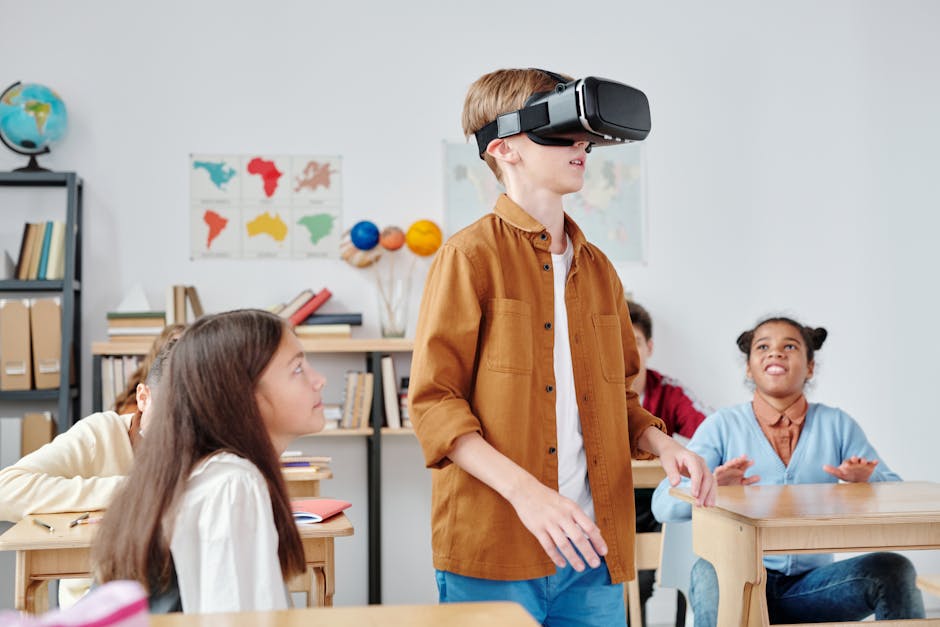
The most immediate obstacle to virtual reality in formal education is the physical reality of the hardware itself. Unlike textbooks or tablets, VR headsets require significant upkeep. Sensors drift, lenses scratch, and batteries degrade under high-frequency usage cycles. Every hour a student spends in a virtual environment is preceded by the invisible labor of charging, sanitizing, and syncing devices.
For an educational institution, this creates a recurring maintenance tax that few administrators accurately forecast. Without a robust systems-based approach to device lifecycle management, the equipment becomes a liability rather than an asset. High-performance organizations must account for the ratio of IT support staff to active headsets, a metric that is often ignored in initial budget requests.
Pedagogical Integration and Cognitive Load
Innovation fails when technology dictates the learning outcome rather than supporting it. Many VR applications in schools prioritize the novelty of the medium over the efficacy of the curriculum. This creates a significant cognitive load issue; when the user interface is unintuitive or the simulation is overly complex, the student spends more mental bandwidth managing the technology than absorbing the subject matter.
Strategic decision-making requires prioritizing content that leverages the unique spatial affordances of VR, such as organic chemistry or architectural visualization, rather than simply turning a lecture into a 360-degree video. If the same learning goal can be achieved with a static image or a video, VR is an inefficient use of resources.
The Data Privacy and Security Frontier
Virtual reality platforms capture biometric and behavioral data that traditional EdTech tools never touch. From eye-tracking metrics to fine motor skill analysis, the telemetry generated by a VR headset is deeply personal. For leadership teams, this introduces massive compliance risk. Developing a secure, internal architecture for managing this data is critical. Without clear strategy on data governance, educational institutions face significant liability regarding student privacy, a factor that often stalls large-scale deployments.
Bridging the Gap Between Simulation and Execution
VR is only as good as its ability to prepare students for real-world application. At thebossmind.com, we often emphasize that tools are only as valuable as the performance outcomes they generate. Educational leaders must stop viewing VR as an elective experiment and start viewing it as a core component of technical infrastructure. This requires rigorous pilot testing, clear measurable outcomes, and a commitment to maintaining technical standards, as explored in our broader analysis of performance metrics.
Further Reading
”
}





Leave a Reply