Risk-Sensitive Autonomous Logistics: Navigating the Future of Urban Systems
— by
Steven Haynes
Introduction
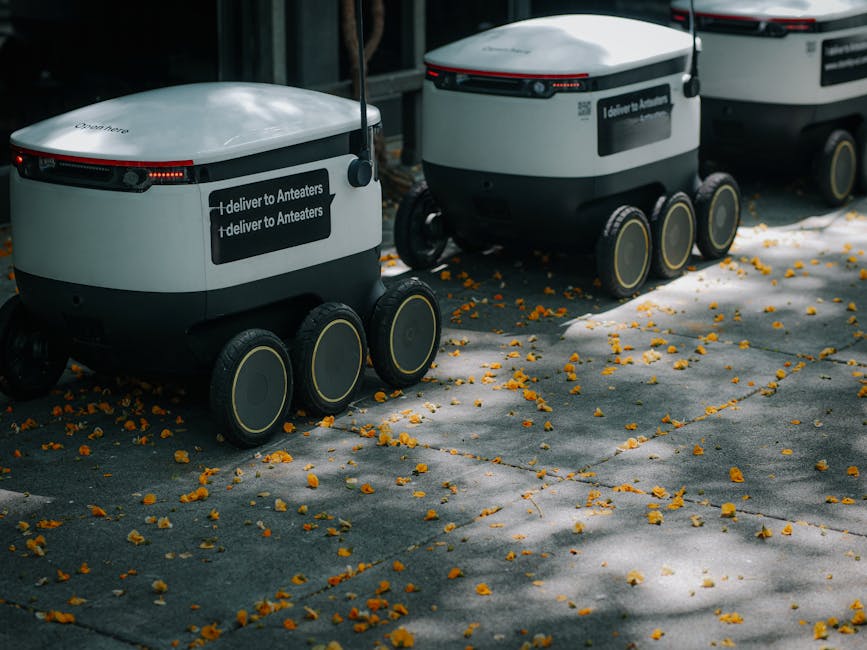
The modern city is a chaotic, high-stakes environment. From unpredictable pedestrian movement to sudden infrastructure closures, the “last mile” of logistics remains the most expensive and volatile component of global supply chains. As autonomous delivery robots (ADRs) and self-driving freight vehicles begin to integrate into urban grids, the focus is shifting from simple navigation to risk-sensitive autonomous logistics.
This approach moves beyond traditional shortest-path algorithms. It incorporates probabilistic modeling to anticipate failures, evaluate the severity of potential hazards, and make decisions that prioritize safety and reliability over raw speed. For logistics managers and urban planners, understanding how to simulate and mitigate these risks is no longer optional—it is the bedrock of future urban infrastructure. This article explores how risk-sensitive simulators are transforming urban logistics into a predictable, resilient ecosystem.
Key Concepts
To understand risk-sensitive logistics, we must look at how machines perceive the “cost” of a decision. In traditional robotics, a path is chosen based on time or distance. In risk-sensitive systems, we add a third variable: probabilistic variance.
Probabilistic Hazard Assessment: This involves calculating the likelihood of negative outcomes—such as a collision, a battery depletion, or a traffic blockage—and factoring them into the cost function of the agent’s navigation strategy.
Dynamic Constraints: Urban environments are not static. Risk-sensitive simulators model “Non-Stationary Stochastic Environments,” where the probability of a risk event changes based on time of day, weather conditions, or even local events like a sporting match or protest.
Utility Functions: Rather than maximizing for speed, these systems maximize for “expected utility.” This allows the AI to choose a slightly longer route if that route offers a significantly lower probability of a high-consequence failure. For more on optimizing complex systems, explore our guide on strategic decision-making frameworks.
Step-by-Step Guide: Implementing a Risk-Sensitive Simulation Strategy
Deploying an autonomous logistics framework requires a rigorous simulation-first approach. Follow these steps to ensure your systems can handle the complexity of urban life.
Define the Risk Appetite: Establish a threshold for acceptable risk. In a medical delivery context, the tolerance for delay is zero, but the tolerance for vibration-induced damage might also be near zero. Define these constraints as hard mathematical boundaries.
Create Digital Twins: Build a high-fidelity digital twin of your operational area. Use GIS data to map lane widths, curb heights, and pedestrian density. This serves as the “sandbox” for your risk-sensitive models.
Inject Stochastic Noise: Don’t simulate a perfect world. Introduce “noise” into your simulator: unexpected pedestrian jaywalking, sensor blind spots due to glare, and intermittent GPS signal loss in “urban canyons” created by skyscrapers.
Run Monte Carlo Simulations: Execute thousands of iterations of a single delivery route. By identifying the scenarios where the agent fails or enters a “high-risk” state, you can refine the algorithm’s policy.
Validate with Edge Cases: Test the system against extreme weather (heavy rain affecting LiDAR) or sudden road closures. If the agent cannot reroute safely within milliseconds, return to the policy optimization phase.
Examples and Case Studies
The Last-Mile Delivery Bottleneck: Companies like Starship Technologies and Nuro have utilized simulation to refine how their robots interact with urban crosswalks. By using risk-sensitive modeling, these robots are programmed to “wait” for a wider margin of safety than a human would, effectively sacrificing seconds of efficiency to prevent a 0.01% chance of a collision. This is a classic application of risk-aversion in logistics.
Urban Freight Consolidation: In dense city centers, autonomous heavy freight vehicles face the risk of being trapped in traffic. Simulation tools used by logistics firms now model “dwell time uncertainty.” By simulating the risk of being stuck for more than 15 minutes, the system proactively selects secondary logistics hubs, ensuring that delivery windows are met despite the volatility of city traffic.
Over-optimizing for Speed: Many developers prioritize the shortest travel time. In urban logistics, the “fastest” path is often the most volatile. This leads to higher rates of intervention and mission failure.
Ignoring “Black Swan” Events: Simulators often fail to account for rare but high-impact events, like a local emergency or a sudden infrastructure failure. A robust system must include “stress tests” that simulate these outliers.
Static Environment Modeling: Assuming the environment remains constant throughout the day is a recipe for disaster. Risk-sensitive models must be time-aware; a route that is safe at 10:00 AM may be highly dangerous during school dismissal hours.
Neglecting Sensor Degradation: Developers often assume sensors will function perfectly. Real-world simulation must account for dust, rain, and mechanical wear, which increases the probability of sensor-based decision errors.
Advanced Tips
To gain a competitive edge in autonomous logistics, focus on Multi-Agent Coordination. In a dense urban center, your robots are not operating in isolation. They are part of a larger, systemic environment. Use “Cooperative Perception,” where robots share information about hazards. If one robot detects a road blockage, it should broadcast that risk to all other agents in the fleet, updating their risk-sensitive cost maps in real-time.
Additionally, consider implementing Reinforcement Learning (RL) with Safety Shields. The RL agent learns to navigate for efficiency, but a secondary, non-learning “shield” algorithm overrides any command that exceeds your pre-defined risk threshold. This hybrid approach balances the adaptability of AI with the reliability of rule-based logic. For deeper insights into managing organizational technology, visit our resource on leadership in the age of automation.
Conclusion
Risk-sensitive autonomous logistics simulators are the bridge between experimental robotics and reliable urban infrastructure. By embracing a mindset that values predictability and safety over raw, unmitigated speed, organizations can build logistics systems that actually function in the messy, human-centered world of our cities.
The key takeaway is simple: Risk is not something to be ignored; it is a parameter to be optimized. By simulating the “what-ifs” before deployment, you move your operations from a reactive state to a proactive, resilient future. As these technologies mature, the focus will continue to shift toward creating autonomous agents that understand the value of caution, ensuring that the robots of tomorrow are not just fast, but fundamentally reliable.



Leave a Reply