The Frontier of Computation: Building a Cloud-Native Quantum Machine Learning Toolchain for Mathematics
— by
Steven Haynes
Introduction
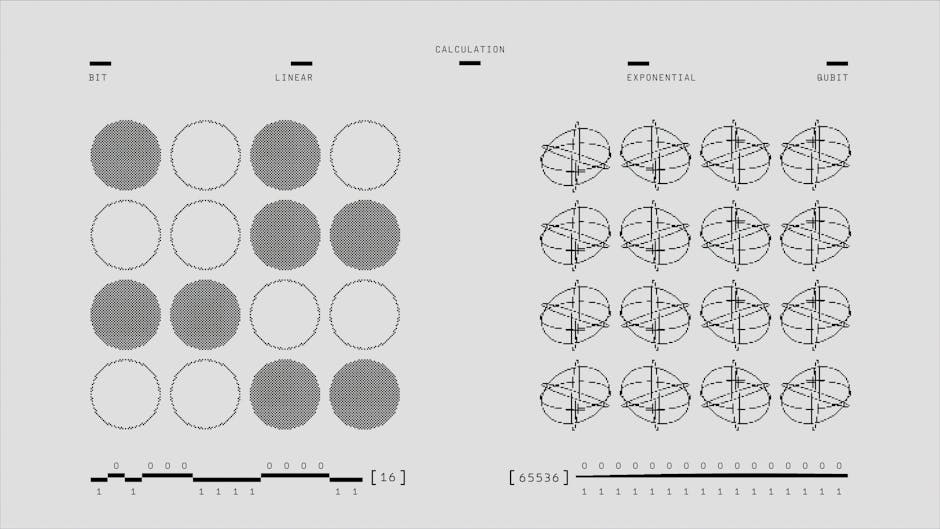
For decades, the field of mathematics has relied on the brute force of classical silicon-based architectures. While these systems have solved monumental problems, they hit a wall when faced with high-dimensional spaces, non-convex optimization, and the exponential complexity of quantum systems. We are now entering an era where Quantum Machine Learning (QML) is not just a theoretical pursuit, but a cloud-native reality.
By moving QML toolchains into the cloud, researchers and mathematicians can decouple the hardware constraints of Noisy Intermediate-Scale Quantum (NISQ) devices from the software-defined agility of modern computing. This article explores how to architect a cloud-native QML stack, enabling you to solve complex mathematical problems—from cryptographic verification to large-scale linear algebra—with unprecedented efficiency.
Key Concepts
To build a cloud-native QML toolchain, you must understand the intersection of three distinct domains: Variational Quantum Circuits (VQCs), Cloud-Native Orchestration, and Mathematical Kernels.
Variational Quantum Circuits
Unlike traditional gate-based quantum algorithms that require fault-tolerant hardware, VQCs act as hybrid models. They use a quantum processor to compute a specific function (like a kernel mapping) while a classical optimizer (running on a cloud server) iteratively updates the circuit’s parameters. This is the cornerstone of modern QML.
Cloud-Native Orchestration
Modern QML development requires containerized environments, typically managed via Kubernetes. By wrapping your QML mathematical models in containers, you ensure reproducibility across different quantum backend providers (like IBM Quantum, Rigetti, or IonQ). This allows your “mathematical engine” to remain hardware-agnostic.
Mathematical Kernels
In the context of QML, the “kernel” is the function that maps input data into a high-dimensional Hilbert space. Because quantum computers naturally operate in these spaces, they can calculate “quantum kernels” that would take classical computers exponential time to compute, providing a distinct advantage for manifold learning and regression tasks.
Step-by-Step Guide: Building Your Toolchain
Select Your Quantum SDK: Start with established frameworks like Qiskit, PennyLane, or Cirq. For mathematical research, PennyLane is often preferred due to its native integration with PyTorch and TensorFlow, allowing for seamless backpropagation through quantum circuits.
Containerize the Environment: Use Docker to encapsulate your dependencies. Your container should include the SDK, the mathematical libraries (NumPy, SciPy), and a bridge to the cloud quantum API.
Implement the Hybrid Orchestrator: Use a cloud-native workflow manager like Argo Workflows. This allows you to define the QML pipeline as a Directed Acyclic Graph (DAG), where classical preprocessing steps trigger quantum circuit execution, followed by automated parameter updates.
Configure the Cloud-Quantum Bridge: Use managed services such as Amazon Braket or Azure Quantum. These platforms provide the necessary API endpoints to route your containerized jobs to actual quantum hardware or high-fidelity simulators.
Deploy and Monitor: Deploy your orchestrator on an EKS (Elastic Kubernetes Service) or GKE (Google Kubernetes Engine) cluster. Monitor the “shot” distribution and circuit depth to optimize for cost and accuracy.
Examples and Case Studies
Quantum-Enhanced Linear Algebra
In high-dimensional mathematics, solving large systems of linear equations ($Ax = b$) is a bottleneck. By utilizing the HHL Algorithm (Harrow-Hassidim-Lloyd) within a cloud-native QML toolchain, researchers have demonstrated the ability to achieve exponential speedups in matrix inversion compared to classical LU decomposition. A cloud-native setup allows you to scale this by running multiple circuit iterations in parallel across different quantum backends.
Manifold Learning in High Dimensions
Mathematicians often struggle with visualizing and clustering high-dimensional datasets. A QML toolchain can be used to implement Quantum Support Vector Machines (QSVM). By mapping data into a quantum-enhanced feature space, the toolchain identifies non-linear decision boundaries that are invisible to classical kernels, proving invaluable in financial modeling and genomic mapping.
“The integration of quantum computing into cloud-native architectures is not merely about speed; it is about accessing computational spaces that are physically impossible to represent on classical hardware.”
Common Mistakes
Over-utilizing Quantum Gates: A common error is attempting to run massive circuits on NISQ hardware. Because of decoherence, your circuit depth must be minimized. Use variational layers rather than deep gate sequences.
Ignoring Classical Preprocessing: Many developers fail to realize that QML is most effective when the quantum circuit handles only the “hard part” of the function. Always perform data dimensionality reduction classically before passing vectors into the quantum state.
Hardware Lock-in: Building a toolchain tightly coupled to one quantum provider’s specific gate set limits your research. Utilize abstraction layers like OpenQASM to ensure your mathematics remain portable.
Advanced Tips
To truly advance your QML toolchain, focus on Quantum Feature Maps. Rather than using standard encoding, develop custom feature maps tailored to the specific symmetry of your mathematical problem. If you are solving a differential equation, encode your input data using a Hamiltonian that mimics the physical system’s properties.
Additionally, investigate Quantum Error Mitigation (QEM). Since hardware is noisy, your cloud-native pipeline should include a post-processing step that executes the circuit multiple times with varied parameters to statistically subtract noise, significantly increasing the accuracy of your mathematical outputs.
Conclusion
Transitioning to a cloud-native quantum ML toolchain is the most effective way to future-proof your mathematical research. By leveraging containerization and hybrid quantum-classical orchestration, you can bypass the limitations of local hardware and tap into the vast, latent potential of quantum processing.
The journey from a local script to a scalable, cloud-native QML pipeline is complex, but it is the prerequisite for solving the next generation of mathematical challenges. Start small, focus on variational approaches, and ensure your stack remains hardware-agnostic to adapt as quantum hardware continues to evolve.



Leave a Reply