Revolutionizing Agritech: The Role of Competitive High-Entropy Alloys Algorithms
— by
Steven Haynes
Introduction
Modern agriculture is facing a convergence of crises: climate instability, soil degradation, and the urgent need for increased yields to support a growing global population. While traditional materials science has served the industry well, the demand for equipment that is lighter, more durable, and resistant to extreme chemical and environmental stress is pushing current metallurgy to its breaking point. Enter High-Entropy Alloys (HEAs)—a revolutionary class of metallic materials—and the competitive algorithms used to discover them.
Unlike conventional alloys, which rely on a single base element (like iron or aluminum), HEAs consist of five or more elements in near-equal proportions. This “cocktail effect” creates unprecedented mechanical properties. However, mapping the infinite combinations of these elements is a task for supercomputers, not human trial and error. By utilizing competitive algorithms, agritech engineers are now designing materials that could redefine how we farm the planet.
Key Concepts
To understand why this matters, we must first define the core pillars of this technology:
High-Entropy Alloys (HEAs)
HEAs break the traditional rules of metallurgy. By mixing elements in high concentrations, they form stable, single-phase crystalline structures. These materials exhibit exceptional strength-to-weight ratios, extreme corrosion resistance, and thermal stability. In an agricultural context, this means tools that don’t rust in acidic soils or fracture under the high-torque demands of heavy-duty harvesting machinery.
Competitive Algorithms
The “search space” for HEAs is virtually infinite. If you have 20 elements to choose from, the number of potential combinations is staggering. Competitive algorithms—often based on evolutionary strategies or particle swarm optimization—mimic biological competition to find the “fittest” alloy compositions. These algorithms simulate thousands of potential material structures simultaneously, “killing off” the weak candidates and refining the strong ones until an optimal material is identified for a specific agricultural task.
Step-by-Step Guide: Implementing HEA Discovery in Agritech
Integrating advanced material discovery into agricultural manufacturing requires a structured approach. Here is how organizations are leveraging these algorithms to innovate:
Define the Environmental Stressor: Identify the specific agricultural challenge. Is it abrasive soil wear on a plowshare, or chemical corrosion from fertilizers on a drone nozzle? Define the required performance metrics (e.g., hardness, ductility, weight).
Data Ingestion and Surrogate Modeling: Feed existing material databases into the algorithm. The software builds a “surrogate model”—a digital twin of the materials—that predicts how an alloy will behave without needing to physically forge it in a lab first.
Competitive Iteration: Run the competitive algorithm. The system generates hundreds of chemical “recipes.” It then pits these recipes against each other, optimizing for your defined stressor while discarding combinations that are too expensive or too heavy.
High-Throughput Validation: Use rapid synthesis methods, such as laser-engineered net shaping or robotic additive manufacturing, to create small samples of the top-performing alloys identified by the algorithm.
Field-Scale Stress Testing: Move the validated material into a real-world test environment. Collect data on wear-and-tear to feed back into the algorithm, creating a closed-loop system of continuous improvement.
Examples and Case Studies
The integration of HEAs is already moving from theoretical labs to the field.
Extreme Wear Resistance in Tillage Equipment
One major agritech company recently utilized a competitive genetic algorithm to design a cobalt-free HEA for tillage blades. Traditional steel blades require frequent replacement due to abrasion from sandy, rocky soils. The new HEA, optimized for high surface hardness without being brittle, demonstrated a 40% increase in operational lifespan, significantly reducing downtime for farmers during critical planting windows.
Corrosion-Resistant Precision Irrigation
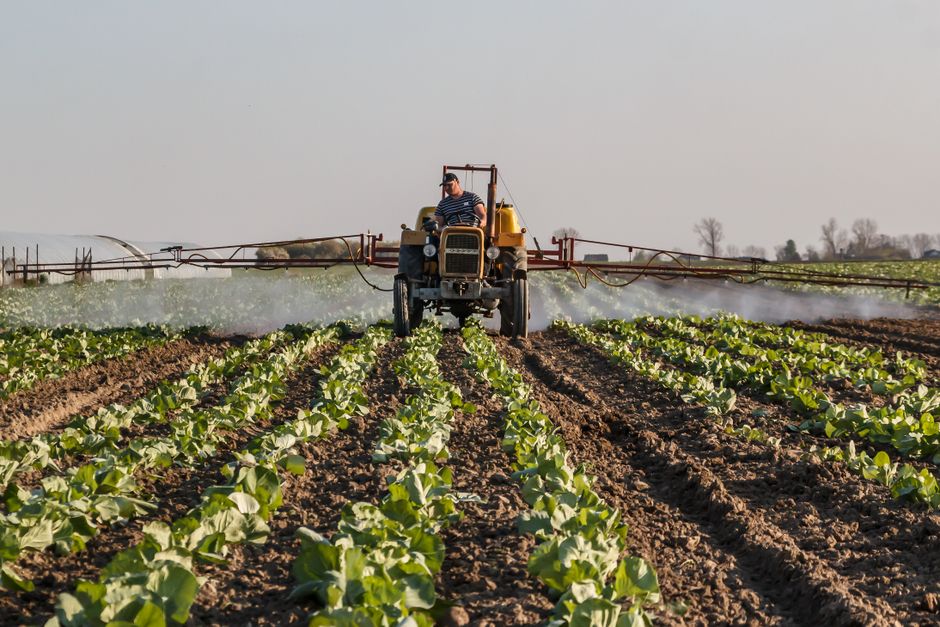
Precision agriculture relies on autonomous sprayers and fertigation systems. The constant exposure to liquid fertilizers—many of which are highly corrosive—leads to system failures and clogs. By using a competitive swarm algorithm, engineers discovered a specific HEA configuration that resists chemical pitting. This resulted in irrigation nozzles that maintain precise flow rates for twice as long as stainless steel alternatives, ensuring consistent nutrient delivery to crops.
Common Mistakes
When adopting these advanced material science strategies, even well-funded projects can stumble. Avoid these common pitfalls:
Neglecting Cost-to-Performance Ratios: It is easy to design the “perfect” alloy that is impossible to manufacture at scale. Ensure your algorithm includes constraints for raw material availability and processing costs.
Ignoring Scalability: An alloy that works in a 10-gram laboratory sample may behave differently when cast into a 50-kilogram industrial component. Always run “scale-up” simulations alongside your material discovery.
Over-Reliance on Digital Data: Algorithms are only as good as the data they are fed. If your training data is biased toward specific temperatures or pressures, the algorithm will fail to predict performance in extreme or unusual field conditions.
Advanced Tips
To truly push the boundaries of what is possible, consider these strategic moves:
Hybridize with Machine Learning (ML): Don’t rely solely on physics-based algorithms. Integrate ML models that track real-time field data. If a specific area of the farm has a unique soil pH, the ML model can suggest which HEA-based tool will perform best in that specific micro-environment.
Focus on Sustainability: Use your competitive algorithm to prioritize “green” elements. Optimize for HEAs that do not rely on rare-earth minerals or toxic byproducts. This aligns your product development with ESG (Environmental, Social, and Governance) goals, which is increasingly important for market positioning in the agritech sector.
For more insights on optimizing operations, visit thebossmind.com to explore our guides on technical project management and industrial innovation.
Conclusion
The intersection of competitive algorithms and high-entropy alloys represents a fundamental shift in how we approach agricultural engineering. By moving away from the “trial and error” methods of the past and embracing computational discovery, we can create machinery that is tougher, lighter, and more sustainable. As we face the challenges of a changing climate, these advanced materials provide the durability necessary to ensure food security for the future.
The path forward is clear: integrate, simulate, and innovate. For those looking to stay ahead of the curve, the competitive advantage lies in the digital design of the physical tools that feed the world.




Leave a Reply