Decentralized Identity in HCI: A Guide to Privacy & Trust
— by
Steven Haynes
Contents
1. Introduction: Defining the friction between seamless UX and data sovereignty.
2. Key Concepts: Deconstructing Decentralized Identifiers (DIDs) and Verifiable Credentials (VCs) within HCI.
3. Step-by-Step Guide: How to implement privacy-preserving identity in user flows.
4. Case Studies: Real-world applications in finance, healthcare, and digital access.
5. Common Mistakes: Why “Centralized-on-Blockchain” is a dangerous trap.
6. Advanced Tips: Zero-Knowledge Proofs (ZKPs) and selective disclosure.
7. Conclusion: The future of user-centric digital existence.
—
The Future of Trust: Privacy-Preserving Decentralized Identity in HCI
Introduction
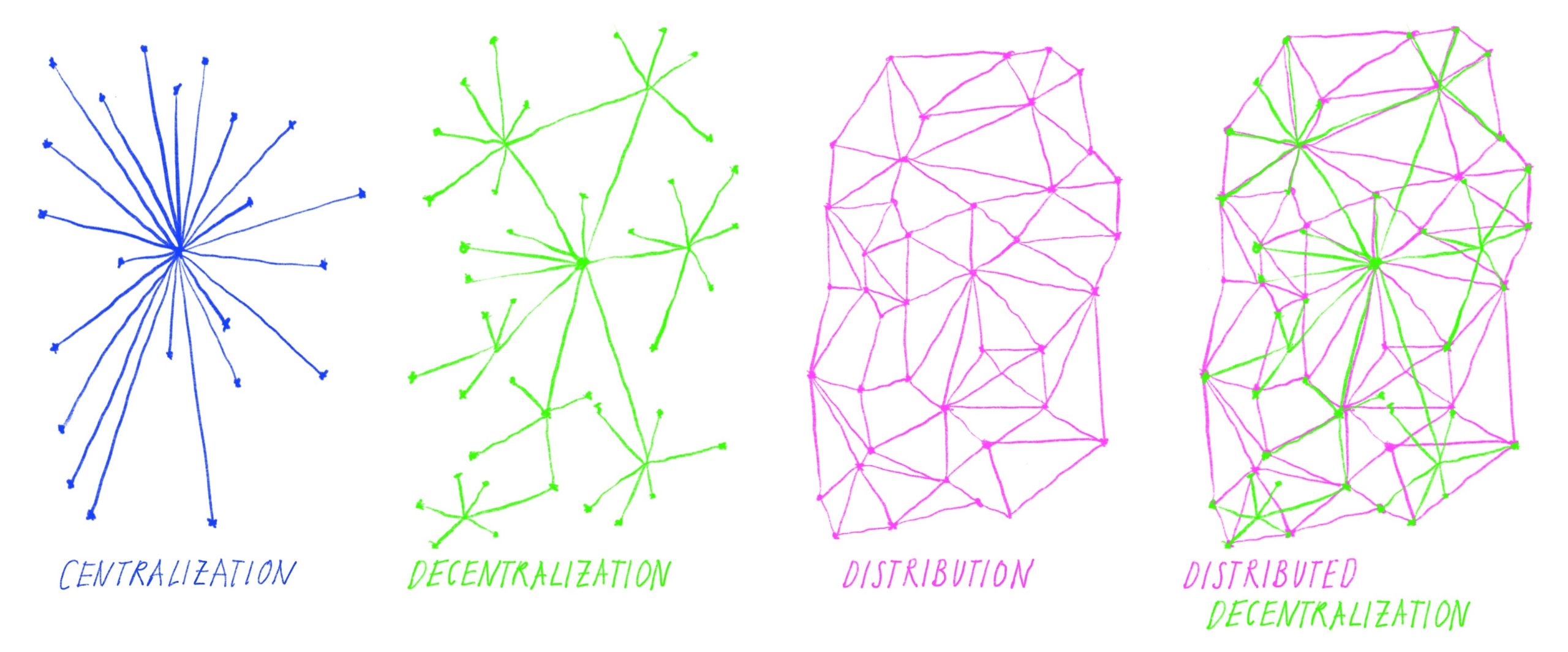
For decades, the human-computer interaction (HCI) paradigm has been built on a trade-off: to access personalized services, users must surrender their digital footprints to centralized gatekeepers. We trade our privacy for convenience, creating massive “honeypots” of data that are inevitable targets for cyber-attacks. However, a new architecture is shifting this dynamic. Privacy-preserving decentralized identity (DID) protocols are changing how humans interact with machines, allowing users to prove who they are—or what attributes they possess—without revealing their underlying raw data.
This shift is not merely technical; it is a fundamental redesign of the user experience. By moving identity from a server-side database to the user’s edge device, we empower individuals to act as the sovereign owners of their digital persona. This article explores how to integrate these protocols into modern HCI to foster trust, security, and seamless digital interaction.
Key Concepts
To understand decentralized identity in HCI, we must move beyond the traditional “username/password” model. The architecture relies on three primary pillars:
Decentralized Identifiers (DIDs): Unlike an email address or a social media handle, a DID is a URI that enables verifiable, decentralized digital identity. It is not owned by a company; it is owned by the user and registered on a distributed ledger or a peer-to-peer network.
Verifiable Credentials (VCs): These are digital versions of physical credentials—like a passport, a degree, or a driver’s license. A user holds these credentials in a digital wallet. When an interaction requires verification, the user presents a “proof” of the credential, not the document itself.
Selective Disclosure: This is the core HCI innovation. If a website asks for your age, you do not need to show your birthdate. You simply provide a cryptographic proof that “User is over 18.” The machine verifies the truth of the statement without ever seeing the sensitive data.
Integrating decentralized identity into an application requires a shift in the user journey. Follow these steps to ensure privacy remains the foundation of your interface:
Map the Identity Requirement: Identify exactly what data is needed for the interaction. If you only need to verify that a user is a member of a specific organization, do not ask for their full name or email address.
Adopt a Wallet-First Design: Shift the authentication flow to a mobile-native digital wallet. The user should scan a QR code or tap an NFC tag to initiate a connection, rather than typing credentials into your UI.
Establish Trust Anchors: As a service provider, you must be able to verify the signature of the issuer (e.g., a university issuing a diploma). Ensure your backend is configured to read the public registry where the issuer’s keys are stored.
Execute the Handshake: The application sends a “Presentation Request” to the user’s wallet. The user reviews the request and cryptographically signs it. Your system receives the verification proof, not the original data.
Minimize Data Persistence: If your system does not need to remember the user’s identity after the session, do not store it. Use the DID for the session duration and discard the link, effectively creating a “stateless” identity interaction.
Examples and Case Studies
1. Age-Gated Digital Content: A streaming platform wants to ensure users are over 18 without collecting personal ID cards. By using a decentralized identity protocol, the platform requests a “Verified Age” credential. The user’s wallet provides a Zero-Knowledge Proof (ZKP). The platform gets a “True” confirmation, and the user remains completely anonymous.
2. Healthcare Access: Patients often struggle to share records across providers. With VCs, a patient holds their medical history in a private wallet. When visiting a new specialist, the patient grants temporary, granular access to specific medical records. The provider sees the data, but the patient retains the “revoke” button, ensuring they always control who accesses their history.
3. Secure Enterprise Logins: Instead of relying on vulnerable 2FA via SMS, employees use their mobile device to sign a challenge-response. The DID protocol ensures that the employee’s unique, cryptographic key never leaves their device, mitigating the risk of phishing and credential stuffing attacks.
Common Mistakes
Storing PII on the Blockchain: A common misconception is that identity data should be “on-chain.” This is a security nightmare. Only the DIDs (pointers) and public keys should be public. Sensitive PII should never touch a public ledger.
Forcing User Complexity: If the UX requires the user to manage complex cryptographic keys, adoption will fail. Use biometrics (FaceID/TouchID) to abstract the key-signing process so the user feels like they are just “unlocking” their phone.
Ignoring Revocation: Systems often forget that credentials may need to be revoked (e.g., a lost license). Ensure your protocol supports a “Revocation Registry” so the system can verify that a presented credential is still valid.
Advanced Tips
To truly excel in building privacy-preserving systems, look toward Zero-Knowledge Proofs (ZKPs). ZKPs allow you to prove the validity of a statement without revealing the data that supports it. For instance, you can prove you have a balance of over $1,000 in a bank account without disclosing the actual balance or the account number.
Additionally, consider the User Experience of Recovery. If a user loses their phone, they lose their DID. Implement “Social Recovery” or “Multi-Sig” wallet patterns where a user can designate trusted friends or secondary devices to help them regain access to their identity without relying on a centralized authority to reset a password.
The goal of privacy-preserving identity is to make the technology invisible. When the user feels empowered rather than burdened, you have succeeded in creating a high-trust, high-utility HCI environment.
Conclusion
Privacy-preserving decentralized identity is the missing layer in our digital infrastructure. By moving from a “collect-everything” model to a “verify-only-what-is-needed” model, we can solve the paradox of modern HCI: how to provide highly personalized services without compromising the fundamental right to privacy.
As we move forward, the competitive advantage will go to organizations that respect user sovereignty. By adopting DIDs and VCs, you are not just protecting your users from the next data breach; you are building the foundation for a more transparent, secure, and user-centric web. Start by auditing your current data collection requirements and identifying where Zero-Knowledge proofs can replace raw data requests. The transition to a decentralized identity future begins with one interaction at a time.



Leave a Reply