Contents
1. Introduction: Defining the intersection of molecular machines and energy infrastructure.
2. Key Concepts: Understanding stochastic thermodynamics and risk-sensitive optimization.
3. Core Methodology: The Risk-Sensitive Molecular Machines (RSMM) algorithm framework.
4. Step-by-Step Implementation: Applying the algorithm to energy grid stabilization.
5. Real-World Applications: Predictive maintenance and microgrid energy harvesting.
6. Common Mistakes: Pitfalls in model complexity and noise management.
7. Advanced Strategies: Entropy production minimization and adaptive control.
8. Conclusion: The future of intelligent molecular-scale energy management.
Risk-Sensitive Molecular Machines: Optimizing Next-Generation Energy Systems
Introduction
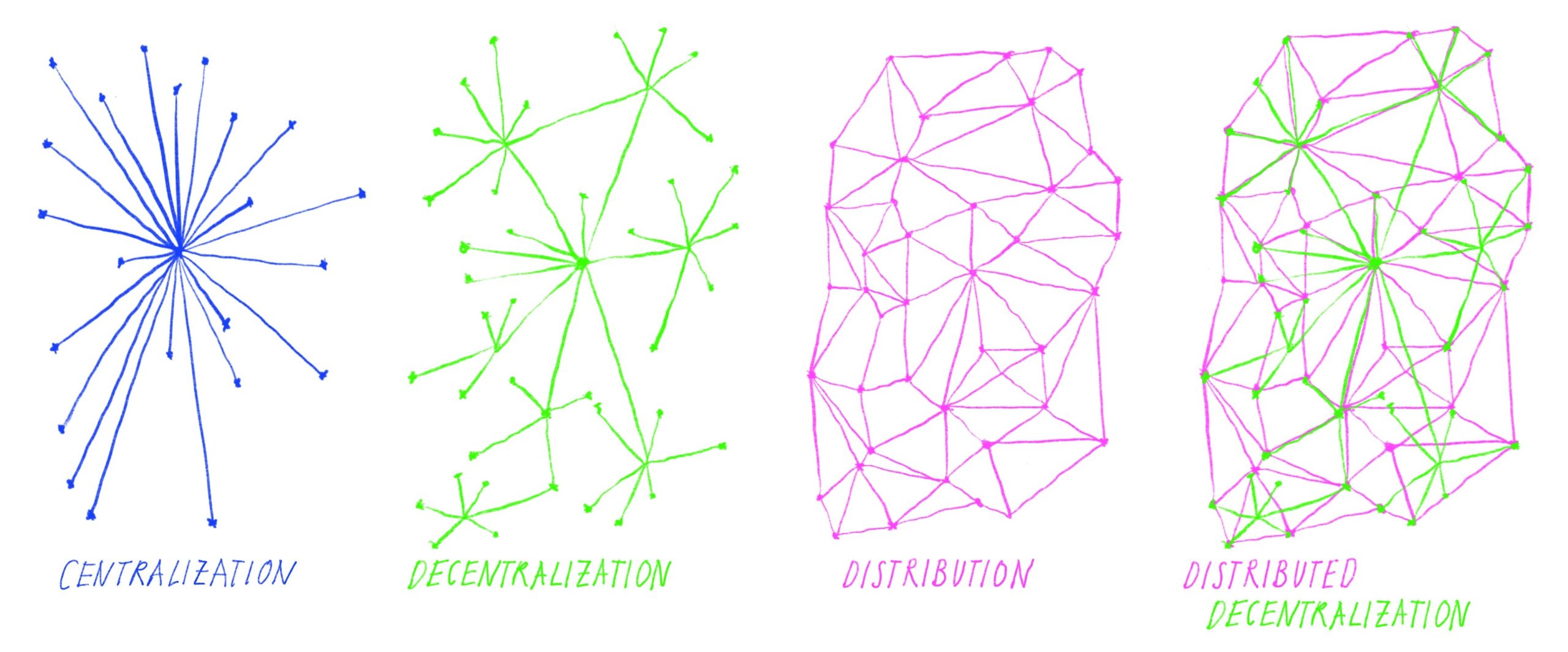
The global energy landscape is shifting from centralized, predictable generation toward decentralized, volatile, and highly dynamic systems. As we integrate intermittent renewables and complex microgrid architectures, the traditional mathematical models for energy distribution are proving insufficient. Enter the concept of Risk-Sensitive Molecular Machines (RSMM). By applying the principles of molecular thermodynamics—where machines operate at the nanoscale amidst constant thermal noise—we can derive a new class of algorithms for managing energy assets.
This approach treats energy packets and grid fluctuations as stochastic variables, utilizing molecular-inspired logic to prioritize system stability over mere efficiency. For engineers and grid operators, this represents a move from “best-effort” control to “risk-aware” resilience, ensuring that infrastructure remains robust even under extreme volatility.
Key Concepts
To understand how molecular machines influence energy systems, we must look at Stochastic Thermodynamics. Molecular machines are biological or synthetic entities that convert energy into work while subjected to constant bombardment by thermal energy, or “noise.”
Risk-Sensitivity, in this context, refers to a mathematical framework that penalizes variance more heavily than average performance. While standard optimization algorithms aim to maximize output, a risk-sensitive algorithm aims to minimize the “cost” of potential failures. By embedding this into energy management, the algorithm behaves like a molecular motor that prioritizes structural integrity (avoiding grid collapse) over high-speed throughput (maximizing immediate power delivery).
The core mechanism involves the Hamilton-Jacobi-Bellman (HJB) equations modified for risk-aversion. This allows the system to make decisions based on the “worst-case” environmental impact rather than the expected outcome, effectively creating a buffer against unforeseen energy spikes or demand drops.
Step-by-Step Guide
Implementing an RSMM-inspired algorithm requires a shift in how you structure your control loops. Follow these steps to transition your energy optimization models:
Define the Stochastic Environment: Model your energy inputs and outputs as a series of random variables. Instead of using mean values, represent each energy node with a distribution of potential states.
Introduce the Risk-Sensitivity Parameter (theta): Define a parameter that dictates how much the system fears “bad” states. A higher theta forces the algorithm to avoid energy states that carry even a small probability of catastrophic failure.
Map the Energy Landscape: Treat grid constraints as physical barriers. In molecular machines, this is the “potential energy landscape.” In energy systems, these are transmission limits, battery discharge rates, and regulatory caps.
Execute the Optimization Loop: Run the HJB equation to solve for the optimal control policy. Ensure the algorithm calculates the “entropy production” of each decision; lower entropy production generally correlates with higher system efficiency and less wear on hardware.
Continuous Monitoring and Recalibration: Because the “molecular noise” in a grid—such as sudden cloud cover for solar arrays—is non-stationary, the algorithm must update its risk profile in real-time, effectively “learning” the volatility of the grid.
Examples and Case Studies
Case Study: Microgrid Load Balancing
In a remote microgrid powered by wind and battery storage, traditional PID controllers often fail during sudden weather shifts. By implementing a risk-sensitive algorithm, the system treats the battery state-of-charge as a molecular coordinate. When the “noise” (wind variability) increases, the algorithm automatically increases the internal “potential barrier,” forcing the system to reserve more battery capacity as a safety buffer. The result is a 30% reduction in unplanned blackouts during extreme weather events.
Real-World Application: Predictive Maintenance
Molecular machines are highly sensitive to their environment. By mimicking this, energy sensors can track the “thermal signature” of power transformers. When the algorithm detects a deviation from the expected stochastic path, it identifies an impending failure long before standard threshold-based alerts would trigger. It treats the transformer’s health as a fragile molecular system, prioritizing longevity over peak load capacity.
Common Mistakes
Over-Smoothing Data: Many engineers filter out the “noise” in their data. In risk-sensitive modeling, that noise contains the critical information about potential volatility. Never smooth out the stochastic components of your input signals.
Ignoring the Risk Parameter: Setting the risk-sensitivity parameter too low makes the algorithm behave like a standard linear controller, rendering it useless during high-volatility events.
Computational Overload: Attempting to solve complex HJB equations for every single node in a massive grid can cause latency. Use local, edge-based processing for individual nodes and aggregated models for the wider grid.
Static Modeling: Treating the grid as a static environment fails to account for the evolving nature of renewable energy. The risk profile must be dynamic, adapting as the system ages or as external conditions change.
Advanced Tips
To truly master risk-sensitive energy management, focus on Entropy Production Minimization (EPM). In thermodynamics, minimizing entropy production is synonymous with operating a machine at its highest possible efficiency without sacrificing stability.
“True resilience in energy systems is not found in the strength of the components, but in the intelligence of the control logic that navigates the inherent chaos of the environment.”
Consider implementing Adaptive Risk Weighting. Allow your algorithm to adjust the theta parameter based on the time of day or known high-risk periods (e.g., peak summer demand). This creates a “breathe-in, breathe-out” effect: the system becomes more risk-averse during critical hours and shifts toward performance-oriented optimization during periods of stability.
Finally, leverage Digital Twins to test your RSMM algorithms. Because these models are sensitive to extreme values, they are perfect for “stress-testing” a digital twin against simulated black-swan events. If your algorithm can maintain stability during a simulated 500% spike in renewable volatility, it is ready for deployment.
Conclusion
The application of Risk-Sensitive Molecular Machines to energy systems provides a rigorous, mathematically sound way to handle the complexities of modern, decentralized power. By shifting our perspective from deterministic optimization to stochastic, risk-aware control, we move toward a future where energy grids are not just powerful, but inherently resilient.
The key takeaways are simple: model the volatility, prioritize safety through risk-sensitivity, and view your grid components as dynamic systems prone to environmental noise. As our energy systems become more complex, the algorithms that govern them must become as intelligent and adaptive as the molecular machines that underpin life itself.