Meta-Learning Cellular Robotics: The Future of Distributed Ledger
— by
Steven Haynes
Contents
1. Introduction: Defining the convergence of biological intelligence and decentralized infrastructure.
2. The Meta-Learning Imperative: Why static algorithms fail in dynamic, decentralized swarm environments.
3. Architectural Pillars: Integrating Neural Architecture Search (NAS) with Directed Acyclic Graphs (DAGs).
4. Step-by-Step Implementation: A workflow for deploying meta-learning agents in a DLT environment.
5. Real-World Application: Predictive maintenance and autonomous logistics in supply chain networks.
6. Common Pitfalls: Addressing latency, consensus overhead, and model poisoning.
7. Advanced Strategies: Federated meta-learning and zero-knowledge proof verification.
8. Conclusion: The future of autonomous, self-optimizing decentralized infrastructures.
***
Meta-Learning Cellular Robotics: Architecting the Future of Distributed Ledgers
Introduction
The convergence of swarm robotics and Distributed Ledger Technology (DLT) represents one of the most significant shifts in computational infrastructure. As we move away from centralized, monolithic systems, we face a new challenge: how do we manage thousands of autonomous agents—cellular robots—that must operate in unpredictable, high-stakes environments? The answer lies in meta-learning.
Meta-learning, or “learning to learn,” allows robotic systems to adapt their internal logic to novel tasks without requiring massive retraining cycles. When embedded within a distributed ledger, these robotic swarms achieve a level of resilience and autonomous coordination previously thought impossible. This article explores how to standardize the integration of meta-learning into cellular robotics, creating a self-healing, decentralized intelligence layer.
The Meta-Learning Imperative
In a traditional cellular robotics setup, each unit is programmed with static behavioral heuristics. If the environment shifts—such as a change in warehouse topography or a disruption in communication—the entire swarm becomes inefficient or fails. Meta-learning solves this by enabling the robot to treat the “learning process” as the objective function.
By leveraging DLT as the backbone, the swarm shares its experiences in an immutable and verifiable manner. This creates a collective intelligence where a lesson learned by a single robot in a peripheral node is rapidly propagated and validated across the ledger, allowing the rest of the swarm to “learn” the new condition without individual trial-and-error.
Architectural Pillars
To standardize meta-learning for cellular robotics on a ledger, we must focus on three core architectural components:
Weight-Agnostic Neural Networks (WANNs): These allow robots to perform tasks based on architecture rather than weight optimization, making them more portable across heterogeneous hardware.
State-Action-Reward (SAR) Logging: Every decision made by a cellular unit is hashed and stored on the ledger. This creates an audit trail for reinforcement learning models.
Consensus-Driven Model Updates: Instead of trusting a central update, nodes participate in a federated learning process where model parameters are updated only after a Byzantine Fault Tolerance (BFT) consensus is reached.
Define the Base Meta-Model: Develop a model initialized with MAML (Model-Agnostic Meta-Learning) capabilities. This initial model should be capable of rapid adaptation to new environment variables.
Deploy the Ledger Smart Contract: Create a smart contract that manages the “Global Model State.” This contract acts as the referee, ensuring only verified, high-performing model weights are propagated to the swarm.
Establish Local-to-Global Sync: Configure each robot to periodically push its local gradient updates to the ledger. Use off-chain processing (like Layer-2 scaling) to prevent the ledger from becoming a bottleneck.
Implement Verification Logic: Use zero-knowledge proofs to verify that the local model updates were generated based on actual sensor data, preventing malicious actors from poisoning the global model.
Execute Policy Deployment: Once the global consensus threshold is reached, individual cellular units pull the updated policy weights from the ledger to adjust their local behavior.
Examples and Real-World Applications
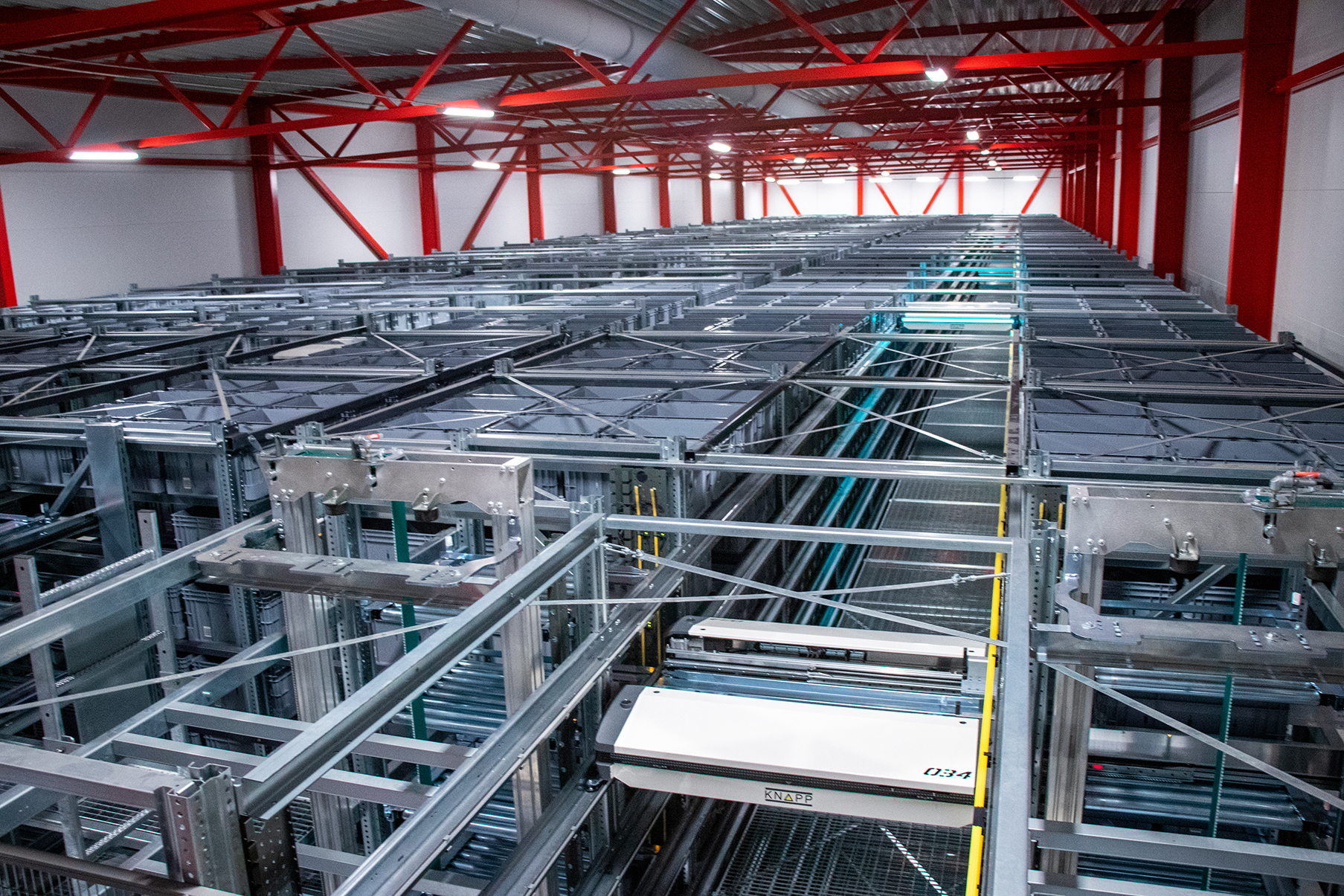
Consider an autonomous warehouse logistics network consisting of hundreds of small, cellular robots. In a standard setup, a physical obstruction (like a spill or a fallen crate) would require manual reprogramming or centralized pathfinding updates.
With meta-learning integrated via DLT, the first robot to encounter the obstruction utilizes its meta-learning algorithm to navigate the new path. It logs the successful navigation sequence to the ledger. Nearby robots, observing the ledger update, ingest the new “maneuver policy” as a meta-update. They don’t just copy the path; they learn the pattern of navigating around obstacles, allowing them to handle future, similar obstructions more efficiently without further input.
Common Mistakes
High Consensus Latency: Attempting to force every single robot movement through an on-chain consensus. Correction: Use state channels or sidechains for high-frequency updates and reserve the main ledger for periodic model parameter synchronization.
Ignoring Data Heterogeneity: Assuming all robots have identical sensor arrays. Correction: Use normalizing layers in your meta-learning model to account for varying hardware specifications within the swarm.
Lack of Poisoning Protection: Failing to implement reputation scores for nodes contributing to the model. Correction: Integrate a reputation-based weighting system where contributors with a history of accurate, verified data have higher influence over the global model.
Advanced Tips
To push your implementation further, explore Federated Meta-Learning (FML). By keeping the raw sensor data on the physical device and sharing only the model gradients, you significantly reduce bandwidth requirements and enhance data privacy. This is critical for industrial applications where proprietary operational data cannot be exposed to the public ledger.
Additionally, consider Incentivized Exploration. Use tokenomics to reward robots that successfully find “edge cases”—scenarios where the current meta-model performs poorly. By providing a financial incentive for robots to explore and report on difficult environments, you accelerate the meta-learning cycle and build a more robust, battle-tested model.
Conclusion
Meta-learning cellular robotics represents the logical evolution of decentralized automation. By anchoring swarm intelligence to a distributed ledger, we move away from the fragility of centralized control and toward a resilient, self-optimizing ecosystem. The key to successful implementation lies in balancing the speed of local adaptation with the integrity of global consensus.
As these technologies mature, the standard for “intelligent” infrastructure will no longer be how well a system follows its initial programming, but how effectively it uses its collective history to prepare for the unknowns of tomorrow. Start by building modular, weight-agnostic agents, and use the ledger not just as a database, but as a dynamic, evolving brain for your swarm.


Leave a Reply