Federated Fusion Control: The Future of Decentralized Robotics
— by
Steven Haynes
Contents
1. Introduction: Defining the shift from centralized to distributed intelligence in robotics.
2. Key Concepts: Understanding Federated Fusion Control (FFC) vs. Traditional Centralized Control.
3. Step-by-Step Guide: Implementing a federated architecture for swarm or multi-robot systems.
4. Real-World Applications: Warehouse automation, autonomous vehicle fleets, and drone swarms.
5. Common Mistakes: Addressing latency, data heterogeneity, and security vulnerabilities.
6. Advanced Tips: Optimizing local model updates and communication bandwidth.
7. Conclusion: The future trajectory of decentralized robot coordination.
***
Federated Fusion Control: The Future of Decentralized Robotics
Introduction
For decades, robotics has relied on centralized architectures—a “brain” that processes all sensory input and issues commands to peripheral actuators. While effective for single-unit systems, this approach hits a performance wall as we scale. When dozens or hundreds of robots operate in a shared environment, centralized control suffers from latency, single-point-of-failure risks, and bandwidth saturation. Federated Fusion Control (FFC) emerges as the solution, allowing robots to learn and act locally while sharing only the essential “intelligence” (model weights or control parameters) across a network.
Key Concepts
Federated Fusion Control is a paradigm shift that combines Federated Learning (FL) with Distributed Control Theory. In a traditional system, a robot sends raw sensor data to a central cloud server to update its navigation or object-recognition models. In FFC, the training and control synthesis happen on the edge—on the robot itself.
The core concept is that individual robots maintain their own local control models. Instead of transmitting raw data, they periodically synchronize their “learned experiences” with a global model. This allows the fleet to benefit from the collective knowledge of every unit without ever centralizing sensitive or high-bandwidth raw data.
Key pillars of FFC include:
Local Autonomy: Each robot executes control loops locally, ensuring sub-millisecond response times.
Parameter Aggregation: Only the gradient updates or model parameters—not the raw sensor stream—are transmitted to the network.
Fusion Layers: A mathematical framework that integrates local state estimates with the globally optimized policy to resolve conflicts during collaborative tasks.
Step-by-Step Guide
Implementing a Federated Fusion Control architecture requires a structured approach to ensure the stability of the collective system.
Define Local Objective Functions: Establish the primary control objective for the individual unit (e.g., collision avoidance, energy efficiency, or path following).
Implement On-Device Training: Deploy a lightweight neural network or control model on the robot’s onboard processor (e.g., NVIDIA Jetson or similar edge compute).
Establish Synchronization Protocols: Define the heartbeat for model updates. Robots should push model weights to a central aggregator only when specific performance thresholds or time intervals are met.
Integrate Fusion Logic: Use a fusion layer to compare the local model’s output with the global policy. If the global policy suggests a path that conflicts with the local sensor data, the fusion layer must prioritize local safety-critical constraints.
Update and Deploy: The aggregator performs a weighted average (such as Federated Averaging) and broadcasts the improved model back to the fleet.
Examples or Case Studies
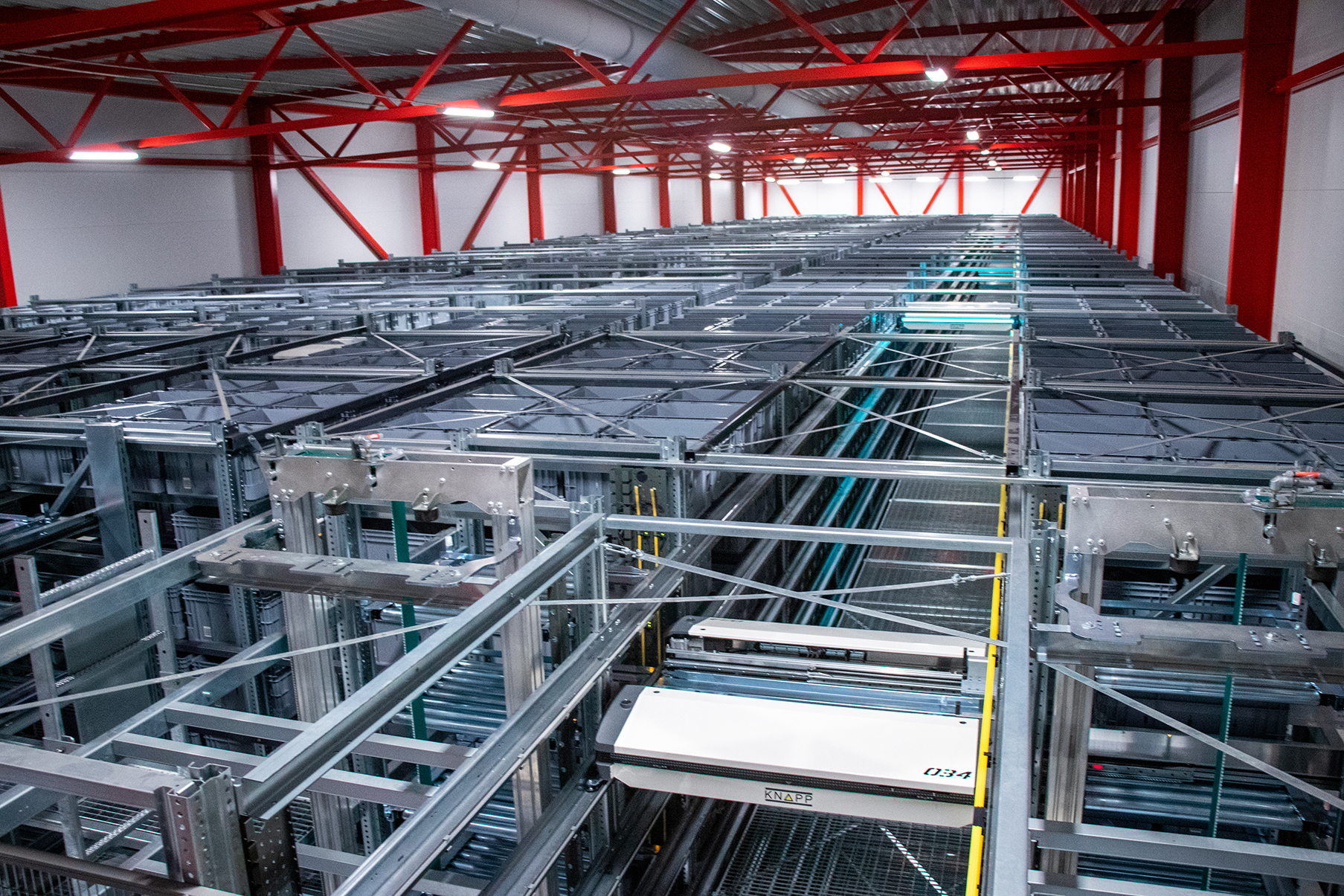
Warehouse Logistics: In a large-scale fulfillment center, hundreds of mobile robots must navigate dynamic paths. With FFC, if one robot discovers a new, efficient path or learns to navigate a specific floor obstacle, it updates its local model. That “lesson” is propagated to the rest of the fleet through model weight updates, allowing the entire warehouse to become more efficient overnight without stopping operations for a central server update.
Autonomous Drone Swarms: For search and rescue missions in GPS-denied environments, drones must share information about terrain. Using FFC, drones can fuse their local map data into a shared global policy. This allows the swarm to maintain a coherent search pattern even if individual drones lose connection to the central hub, as the control logic resides on the drones themselves.
Common Mistakes
Ignoring Data Heterogeneity: Robots often operate in different lighting, terrains, or climates. Assuming all robots face the same environmental noise leads to unstable model convergence. Always implement normalization layers in your model.
Communication Overload: Sending full model weights too frequently can saturate the wireless network. Use techniques like gradient compression or sparse updates to minimize bandwidth usage.
Security Oversight: A compromised robot could send “poisoned” weight updates to the network. Ensure your synchronization protocol includes validation checks to verify the integrity of the incoming model updates.
Latency Mismatch: If the global model update takes longer than the local control loop, the robot may act on stale intelligence. Always prioritize local safety controllers over global optimization.
Advanced Tips
To truly master Federated Fusion Control, focus on Personalized Federated Learning. Instead of forcing every robot to adopt the exact same global model, use a meta-learning approach. This allows the model to have a “base” global intelligence while maintaining a “tailored” local layer that adapts to the specific physical characteristics or tasks of an individual robot.
Furthermore, consider implementing Event-Triggered Communication. Instead of updating the global model at set times, let the robot trigger an update only when it encounters a significant, novel event. This keeps the network lean and ensures that the global model is only updated with high-value information.
Finally, leverage Differential Privacy. By adding controlled noise to the model updates before they are shared, you can ensure that the “learned lessons” are generalized, preventing the system from inadvertently “memorizing” specific, private environmental data that might be sensitive in commercial or military applications.
Conclusion
Federated Fusion Control represents the next logical step in the evolution of autonomous robotics. By moving away from the bottleneck of centralized processing and embracing the efficiency of edge-based learning, we enable a new class of resilient, intelligent, and scalable robotic systems.
The transition to FFC requires a shift in how we think about control—not as a top-down command structure, but as a collaborative, bottom-up learning process. By focusing on local autonomy, robust synchronization, and intelligent fusion, engineers can build fleets that are more than the sum of their parts, paving the way for the next generation of autonomous infrastructure.


Leave a Reply