Contents
1. Introduction: Defining the shift from static inputs to responsive neuro-technology.
2. Key Concepts: Neuroplasticity, signal latency, and the role of closed-loop feedback in BCIs.
3. Step-by-Step Guide: Implementing an adaptive BCI protocol.
4. Real-World Applications: Clinical rehabilitation and high-stakes decision-making.
5. Common Mistakes: Signal noise, cognitive fatigue, and over-calibration.
6. Advanced Tips: Integrating machine learning for predictive state-switching.
7. Conclusion: The future of human-machine symbiosis.
***
Adaptive Brain-Computer Interfaces: The Future of Human-Computer Interaction
Introduction
For decades, human-computer interaction (HCI) has relied on explicit, mechanical inputs: a mouse click, a keystroke, or a voice command. However, we are entering an era where the computer no longer waits for a command—it anticipates the user’s cognitive state. Adaptive Brain-Computer Interfaces (aBCIs) represent the frontier of this evolution, utilizing real-time neural feedback to adjust system responses based on the user’s workload, attention, or stress levels.
Unlike traditional BCIs, which often function as “digital joysticks,” adaptive protocols are dynamic. They treat the brain as a partner in a closed-loop system, constantly recalibrating their parameters to maintain optimal performance. Understanding how to build and deploy these interfaces is essential for anyone looking to bridge the gap between biological cognition and digital efficiency.
Key Concepts
To understand an adaptive BCI, one must first grasp the concept of closed-loop neuro-modulation. In a static system, the BCI is a passive receiver of brain signals. In an adaptive system, the BCI monitors the user’s neural state and modifies the environment or the interface itself to support the user’s current mental capacity.
Cognitive Load Monitoring: Using electroencephalography (EEG) or functional near-infrared spectroscopy (fNIRS), the system tracks markers of mental effort, such as the power spectral density in the alpha or theta frequency bands. When cognitive load exceeds a threshold, the system initiates an “adaptive response”—perhaps by simplifying a dashboard or filtering out non-essential notifications.
Signal Latency and Plasticity: The brain is inherently plastic. As a user interacts with a BCI, their neural patterns change to accommodate the device. An adaptive protocol must account for this “co-adaptation,” where the algorithm learns the user’s patterns while the user, in turn, learns how to modulate their own brain activity to better control the interface.
Step-by-Step Guide: Implementing an Adaptive BCI Protocol
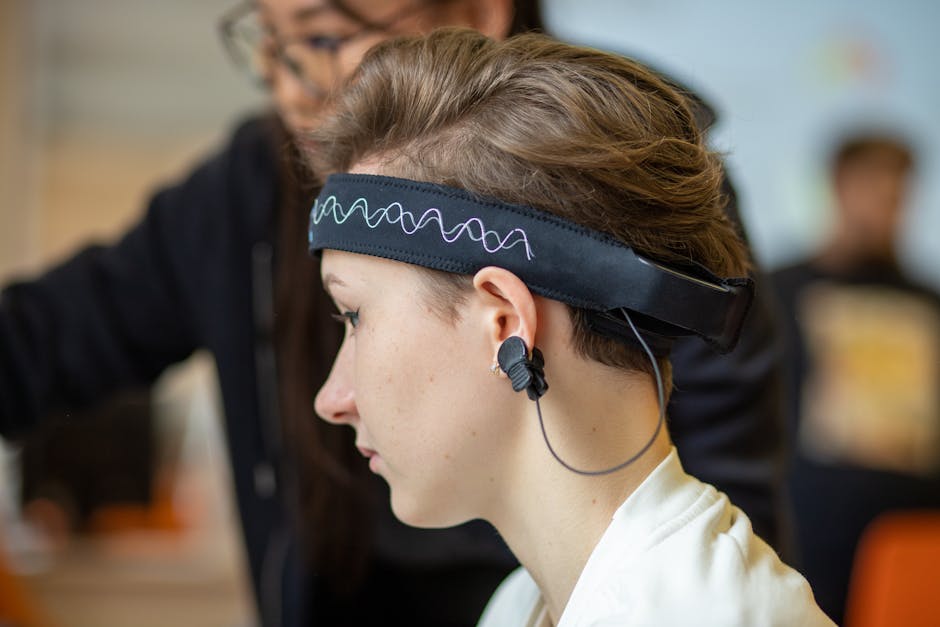
- Feature Extraction: Capture raw neural data using a BCI headset. Use Fast Fourier Transform (FFT) to convert time-domain signals into frequency-domain data, identifying specific markers like P300 event-related potentials or Mu rhythm suppression.
- State Classification: Deploy a machine learning classifier (such as a Support Vector Machine or a Convolutional Neural Network) to categorize the user’s state into predefined labels: “High Focus,” “Mental Fatigue,” or “Idle.”
- Policy Engine Definition: Create a logic layer that dictates how the system should respond to state changes. For example: If state == ‘High Fatigue’, trigger ‘Auto-Pilot Mode’ or ‘Dim UI elements’.
- Closed-Loop Implementation: Connect the policy engine to the interface software. Ensure the response latency is under 200ms to maintain the illusion of seamless integration.
- Iterative Calibration: Implement an auto-calibrating background task that periodically re-samples baseline neural activity to account for drift caused by electrode impedance changes or user fatigue throughout the day.
Examples and Real-World Applications
Clinical Rehabilitation: Stroke survivors often struggle with motor control. An adaptive BCI can detect the user’s intent to move a paralyzed limb and provide functional electrical stimulation (FES) to the muscles. The adaptive element adjusts the stimulation intensity based on the user’s neural feedback, essentially “teaching” the brain to bridge the gap between intent and physical movement.
High-Stakes Decision Support: In fields like aviation or nuclear power plant management, cognitive overload can be fatal. Adaptive BCIs can monitor the operator’s neural markers for signs of “tunnel vision” or extreme stress. If the system detects that the human is overwhelmed, it can automatically offload secondary tasks to autonomous sub-systems, allowing the operator to focus on the primary emergency at hand.
Common Mistakes
- Ignoring Signal Noise: Neural data is notoriously noisy. Many developers fail to implement robust artifact removal (such as independent component analysis to filter out eye blinks or muscle tension), leading to false positives and erratic system behavior.
- Over-Calibration: Setting the sensitivity too high creates a “jittery” interface that reacts to every minor shift in neural activity. Systems should prioritize stability and meaningful state changes over raw data sensitivity.
- Neglecting User Agency: The biggest failure in BCI design is making the user feel like a passenger. Always provide a manual override. If the machine makes a decision based on an incorrect neural reading, the user must have the ability to immediately correct it.
- Static Thresholding: Using fixed thresholds for cognitive states is a recipe for failure. Neural signals shift throughout the day. Your protocol must utilize dynamic baseline normalization to keep the classification accurate.
Advanced Tips
To move from a functional BCI to an elite-level application, integrate Predictive State-Switching. Instead of reacting to a high-fatigue state, use a Hidden Markov Model (HMM) to predict the likelihood of fatigue based on the trend of the last ten minutes of neural data. By anticipating the state change, the system can proactively transition, preventing the user from ever hitting a “wall” of fatigue.
Furthermore, emphasize Multimodal Integration. Do not rely solely on neural data. By fusing EEG data with eye-tracking (gaze behavior) and peripheral sensors (heart rate variability), you create a far more robust model of the user’s intent. When the neural data is noisy, the eye-tracker can act as a secondary validator, significantly increasing the accuracy of the interface.
Conclusion
Adaptive Brain-Computer Interfaces are fundamentally changing the nature of human-computer interaction by transforming the computer from a tool into a cognitive partner. By focusing on real-time signal classification, thoughtful closed-loop logic, and the nuances of user-system co-adaptation, developers can create interfaces that feel like an extension of the mind itself.
The path forward requires moving beyond simple “on/off” triggers and embracing the complexity of human neural states. As we refine these adaptive protocols, we are not just improving productivity; we are expanding the very capacity for human-machine collaboration in an increasingly complex world.