Discover how Cooperative Brain-Computer Interfaces (cBCIs) and neural hyperscanning are revolutionizing EdTech by creating adaptive, collective learning environments.
1. Introduction: Defining the shift from solitary learning to collaborative, neuro-adaptive education.
2. Key Concepts: Understanding Cooperative Brain-Computer Interfaces (cBCIs) and Hyperscanning.
3. Step-by-Step Guide: Implementing a cBCI framework in a classroom setting.
4. Real-World Applications: Enhancing STEM collaboration and social-emotional learning.
5. Common Mistakes: Addressing data privacy, cognitive load, and over-reliance on technology.
6. Advanced Tips: Integrating machine learning for real-time pedagogical adjustments.
7. Conclusion: The future of collective intelligence in the digital classroom.
***
Unlocking Collective Intelligence: The Cooperative Brain-Computer Interface Framework for EdTech
Introduction
For decades, the standard model of education has been profoundly solitary. Even in group projects, the individual student’s internal cognitive process remains a “black box” to the instructor. However, we are standing on the precipice of a paradigm shift. The integration of Cooperative Brain-Computer Interfaces (cBCIs) into educational technology is moving us away from passive learning toward a model of “collective intelligence,” where the synchronized neural states of a group can inform, adapt, and optimize the learning experience in real-time.
A cBCI framework does not merely monitor a single student; it captures the neural resonance between multiple learners. By measuring inter-brain synchrony, educators can identify when a group is cognitively engaged, when they are struggling to process complex concepts, and when their collaborative efforts are peaking. This article explores how to architect these frameworks to create truly responsive, neuro-adaptive learning environments.
Key Concepts
To understand cBCIs in an educational context, we must first look at Hyperscanning. This is the simultaneous recording of brain activity from two or more individuals. While traditional BCIs focus on translating individual thought into machine control, a cBCI focuses on the shared neural state.
Neural Synchrony: This refers to the alignment of brainwave patterns (such as alpha, beta, and theta oscillations) across multiple students. Research shows that when students are engaged in high-quality social interaction or collaborative problem-solving, their brain activity often begins to mirror one another. This “coupled” state is a physiological marker of effective team synergy.
Feedback Loops: A cBCI framework acts as a bridge between these neural states and the EdTech interface. If the system detects a drop in synchrony during a collaborative physics simulation, it can trigger an intervention—such as providing a visual prompt or a scaffolding hint—to re-align the students’ focus. It effectively turns the classroom into a dynamic, closed-loop system where the curriculum adapts to the collective mental state of the group.
Step-by-Step Guide
Implementing a cBCI framework requires a structured approach to hardware, software, and pedagogical design.
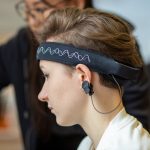
Select Non-Invasive Sensing Hardware: Utilize portable, dry-electrode EEG (electroencephalography) headsets. These should be comfortable enough for extended wear in a classroom setting, focusing on capturing frontal lobe activity associated with attention and executive function.
Establish Baseline Neural Profiles: Before collaborative tasks, record individual baselines. Understanding how a specific student processes information individually is vital for distinguishing between “productive struggle” and “disengagement” during group work.
Define Collaborative Metrics: Program the software to track specific markers of cooperation, such as Phase Locking Value (PLV) or Granger Causality, which measure how one student’s neural activity predicts or influences another’s.
Design Adaptive Interfaces: Build the learning software to respond to these metrics. For instance, if the cBCI detects low synchrony, the software might present a collaborative puzzle that requires both students to input data simultaneously to proceed.
Iterative Calibration: Use machine learning algorithms to refine the system. Over time, the AI should learn the specific “neural signatures” of successful teamwork within your specific curriculum, allowing for more precise interventions.
Examples or Case Studies
STEM Team Dynamics: In a university-level engineering course, students were tasked with troubleshooting a virtual circuit. Using a cBCI framework, the system monitored their neural alignment. When the pair hit a “cognitive plateau” (indicated by a drop in beta-band synchrony), the software introduced a hint that required them to discuss their strategy. The result was a 30% increase in successful problem resolution compared to groups using non-adaptive software.
Social-Emotional Learning (SEL): In middle school settings, cBCIs have been used to train students in conflict resolution. When the system detects neural signatures of stress or frustration in both parties, the interface pauses the digital interaction and prompts the students to engage in a guided breathing exercise or a structured communication prompt, helping them regulate their emotions before continuing the project.
Common Mistakes
Ignoring Cognitive Overload: Adding a BCI component can be mentally exhausting. If the interface requires too much conscious effort to operate, it detracts from the learning objective. Focus on passive sensing rather than active control.
Data Privacy Oversights: Neural data is the ultimate sensitive information. Failing to implement robust, anonymized, and encrypted data handling will destroy student and parent trust. Always prioritize local data processing over cloud-based neural storage.
The “One-Size-Fits-All” Trap: Not all groups exhibit the same neural markers for success. Avoid rigid thresholds. Use machine learning to personalize the “optimal synchrony” range for different student cohorts.
Over-Reliance on Technology: A cBCI is a tool, not a teacher. It should facilitate human connection, not replace the pedagogical role of the educator in fostering social rapport.
Advanced Tips
To take your cBCI framework to the next level, consider Cross-Modal Integration. Combine EEG data with eye-tracking and heart-rate variability (HRV). While EEG provides the “what” (cognitive state), eye-tracking provides the “where” (focus point), and HRV provides the “intensity” (stress level). By triangulating these data points, you can create a high-fidelity map of the learning process.
Furthermore, implement Neuro-Feedback for the Educator. Provide teachers with a “classroom dashboard” that visualizes the collective engagement levels of the room. This allows the teacher to identify which groups are drifting and move toward them with targeted support, effectively using technology to amplify—rather than replace—their observational skills.
Conclusion
The Cooperative Brain-Computer Interface framework represents the next evolution of EdTech. By transitioning from monitoring individual performance to fostering collective neural synchrony, we can create learning environments that are as responsive as they are supportive. While the ethical and technical challenges are significant, the potential to bridge the gap between individual understanding and group synergy is immense. As we refine these tools, we move closer to a future where education is not just about transferring information, but about aligning minds in the pursuit of shared discovery.
Discover how to design child-friendly cities using the 8-80 rule. Learn strategies for traffic calming and urban planning to foster independent mobility for kids.
Discover how to integrate meta-learning into cellular robotics using DLT for self-optimizing, autonomous swarm intelligence in dynamic, high-stakes environments.
Discover why lifelong learning is the ultimate career survival strategy. Learn how to master skills, avoid common traps, and stay relevant in a changing economy.
Learn how federated learning and bioelectronic sensors create privacy-focused, adaptive learning environments that optimize student performance and engagement.
Discover how meta-learning accelerates 2D materials discovery. Learn to implement AI frameworks to predict properties of graphene, TMDs, and MXenes efficiently.