1. Introduction: Defining the shift from individual robot autonomy to swarm intelligence and the role of cooperative control.
2. Key Concepts: Graph theory in robotics, consensus algorithms, and multi-agent system (MAS) dynamics.
3. Step-by-Step Guide: Implementing a cooperative control framework (Topology definition, state agreement, and distributed law design).
4. Examples/Case Studies: Warehouse automation (AMRs) and precision agriculture (drone swarms).
5. Common Mistakes: Ignoring communication latency and neglecting scalability in network topology.
6. Advanced Tips: Event-triggered control and resilience in adversarial environments.
7. Conclusion: The future of decentralized robotics.
***
Cooperative Complex Network Control Theory: The Foundation of Robotic Swarms
Introduction
For decades, the field of robotics focused on the “lone wolf” paradigm: a single, highly sophisticated machine performing a complex task. However, the future of industrial, logistical, and exploratory robotics lies in the collective. Cooperative complex network control theory provides the mathematical and structural framework required to orchestrate dozens, or even thousands, of autonomous agents to behave as a single, intelligent entity.
This is not merely about coordination; it is about emergence. By leveraging cooperative control, we move away from centralized architectures—which are prone to single-point failures—toward decentralized systems that are resilient, scalable, and highly efficient. Whether you are designing autonomous mobile robots (AMRs) for a warehouse or a fleet of drones for environmental monitoring, understanding the underlying network theory is the difference between chaotic motion and orchestrated performance.
Key Concepts
To master cooperative control, you must view the robotic fleet not as a collection of machines, but as a dynamic graph. In this graph, each robot is a node, and the communication links between them are edges.
Graph Theory and Topology
The network topology determines how information flows through the fleet. A directed graph allows for one-way information sharing, while an undirected graph implies bidirectional communication. The connectivity of this graph dictates whether the swarm can achieve consensus. If the graph is “connected,” every robot can eventually receive information from every other robot, which is a prerequisite for collective stability.
Consensus Algorithms
The core of cooperative control is the consensus algorithm. A consensus protocol is a set of rules that governs how agents adjust their state (position, velocity, or heading) based on the states of their neighbors. The objective is for the entire network to converge to a common value or a predefined formation without needing a central “brain” to command every individual.
Multi-Agent System (MAS) Dynamics
MAS dynamics describe the physical behavior of each agent. In cooperative control, we treat each robot as a dynamical system, typically represented by differential equations. The challenge is ensuring that the local control law—which manages individual motor output—is coupled with the network consensus law, which manages group behavior.
Step-by-Step Guide: Implementing a Cooperative Framework
Building a cooperative system requires a systematic approach to ensure stability and goal-oriented behavior. Follow these steps to implement a decentralized control architecture.
Define the Communication Topology: Determine the constraints of your hardware. Will robots communicate via Wi-Fi, mesh radio, or visual line-of-sight? Establish a communication adjacency matrix that defines which robots are allowed to “see” each other’s data.
Select the Consensus Protocol: Choose a protocol based on your performance requirements. For position tracking, use a standard linear consensus algorithm. If your robots have differing capabilities, implement a weighted consensus protocol where more reliable agents have a higher influence on the group state.
Formulate the Local Control Law: Integrate the consensus output into the robot’s local controller. This is usually done using a Proportional-Derivative (PD) loop where the error term is the difference between the robot’s current state and the consensus-calculated target state.
Establish Safety Constraints: Implement “potential field” functions to ensure collision avoidance. This acts as a repulsive force between robots that overrides the consensus algorithm when the distance between agents drops below a critical threshold.
Validation via Simulation: Before deploying to physical hardware, test your network in a simulator like ROS (Robot Operating System) with Gazebo. Use these simulations to stress-test the network under varying latency conditions.
Examples and Case Studies
Warehouse Automation: The AMR Swarm
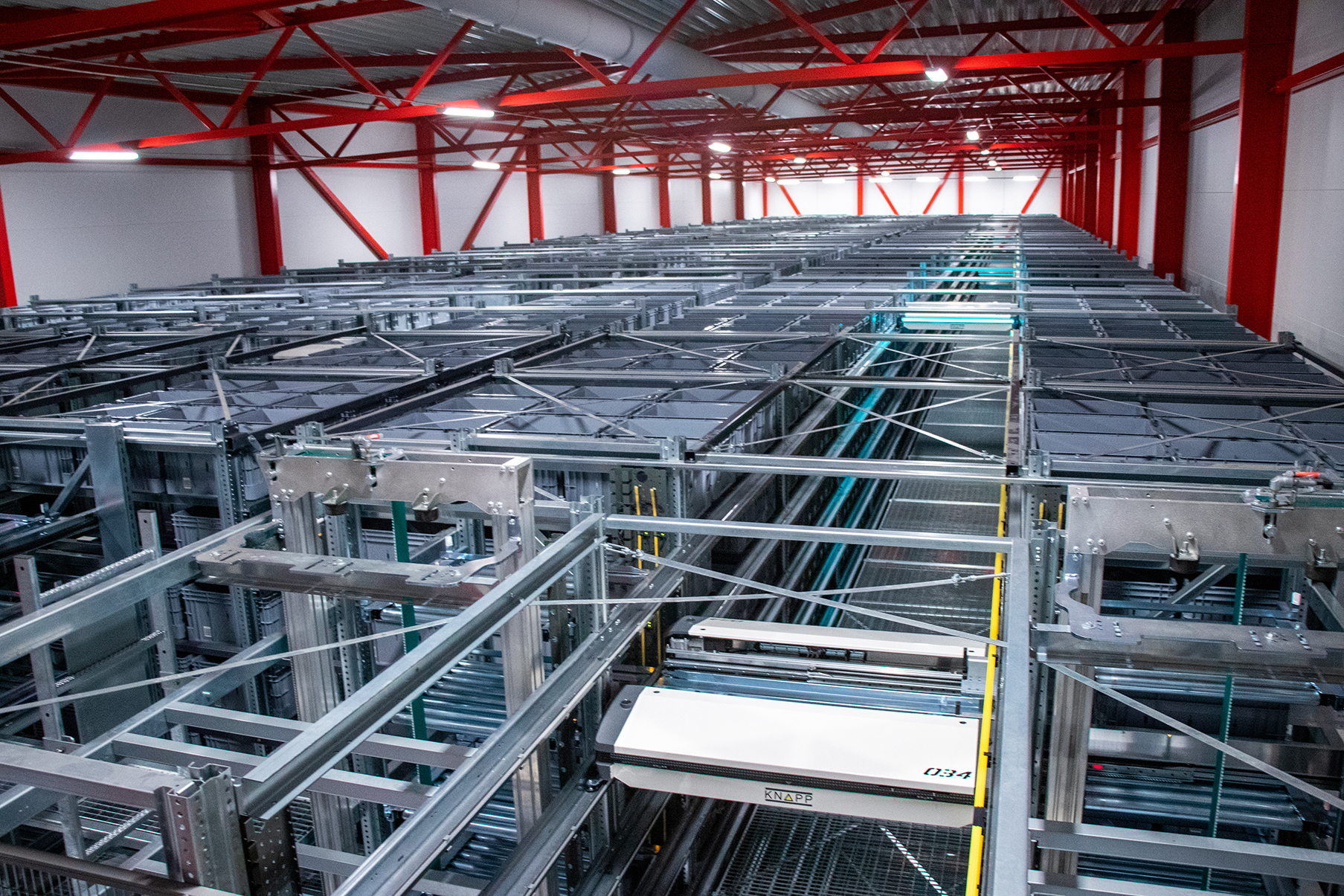
In modern e-commerce fulfillment centers, hundreds of Autonomous Mobile Robots (AMRs) must navigate the same floor without a master controller. By applying cooperative network control, these robots act as a distributed network. If one robot detects a blockage in an aisle, it propagates this “cost” information to its neighbors. The neighbors then autonomously recalculate their paths, effectively optimizing the flow of the entire warehouse in real-time.
Precision Agriculture: Drone Networks
In large-scale farming, drone fleets use cooperative control to map vast fields. Instead of pre-programming every flight path, the fleet uses a “coverage control” algorithm. Each drone is programmed to maximize the area it covers while maintaining a specific distance from its neighbors. If one drone loses power and drops out, the network topology shifts, and the remaining drones automatically redistribute their coverage zones to fill the gap.
Common Mistakes
Ignoring Communication Latency: In real-world systems, information is not instantaneous. If your control loop assumes zero delay, the system will become unstable and oscillate. Always include time-delay compensation in your mathematical models.
Overlooking Network Scalability: Many engineers design control laws that work perfectly for three robots but fail for thirty. Ensure your algorithms are “decoupled” from the total number of agents—meaning each agent only needs local neighbor data, not global network data.
Neglecting Connectivity Maintenance: A common failure mode is a robot driving out of range of its neighbors. Your control law must include a “connectivity-keeping” term that prevents robots from moving so far away that they break the graph’s connection.
Advanced Tips
To push your robotics projects to the next level, look into Event-Triggered Control (ETC). Traditional control systems send data at a fixed frequency, which consumes significant bandwidth and battery power. ETC systems only broadcast information when the change in an agent’s state exceeds a certain threshold. This significantly reduces the communication burden on the network.
Additionally, consider Resilience in Adversarial Environments. In scenarios where you cannot guarantee the integrity of every node (e.g., a hacked drone or a faulty sensor), implement “Fault-Tolerant Consensus.” This involves algorithms that can identify and ignore “outlier” data from malicious or malfunctioning agents, ensuring the rest of the swarm remains stable.
Conclusion
Cooperative complex network control theory is the bridge between robotic hardware and intelligent, swarm-level behavior. By moving from centralized commands to distributed consensus, engineers can create systems that are not only more capable but also inherently more robust.
The strength of the swarm is not found in the sophistication of the individual, but in the elegance of the connections between them.
As you begin implementing these concepts, prioritize stability and scalability. Start with simple consensus, validate through rigorous simulation, and gradually introduce the advanced layers of event-triggered control and fault tolerance. The future of robotics is not in building better individual machines, but in mastering the mathematics of the collective.




Leave a Reply