Self-Evolving Autonomous Logistics: The Future of Supply Chains
— by
Steven Haynes
Contents
1. Introduction: Defining the shift from static logistics to Self-Evolving Autonomous Logistics (SEAL).
2. Key Concepts: Understanding the fusion of Multi-Agent Systems (MAS), Reinforcement Learning (RL), and Digital Twins.
3. Step-by-Step Guide: Implementing a self-evolving architecture (Data ingestion, predictive modeling, autonomous execution, and feedback loops).
4. Case Studies: Real-world applications in global supply chains and hyper-local fulfillment.
5. Common Mistakes: Over-reliance on centralized control and data silos.
6. Advanced Tips: Edge computing and collaborative swarm intelligence.
7. Conclusion: The future of resilient, self-correcting supply chains.
***
The Blueprint for Self-Evolving Autonomous Logistics Architectures
Introduction
For decades, logistics has functioned as a rigid, top-down structure. Planning was manual, adjustments were reactive, and efficiency was capped by the cognitive limits of human managers. Today, the integration of Artificial Intelligence (AI) has shifted the paradigm toward Self-Evolving Autonomous Logistics (SEAL). This is not merely about automating a warehouse; it is about creating an architecture that learns, adapts, and evolves its own logic in response to shifting global variables.
In an era of volatile supply chains and unpredictable consumer demand, static systems are failing. A self-evolving architecture treats the entire logistics network as a living organism. By leveraging autonomous decision-making engines, these systems minimize downtime and maximize throughput without constant human intervention. Understanding how to build this architecture is no longer an academic pursuit—it is a competitive necessity.
Key Concepts
To architect a self-evolving system, one must move away from traditional “if-then” programming. Instead, the focus shifts to three core pillars:
Multi-Agent Systems (MAS): In a SEAL environment, every asset—from a delivery drone to a warehouse pallet—acts as an autonomous agent. These agents negotiate resources, optimize routes, and manage capacity in real-time, communicating with each other to solve bottlenecks before they manifest.
Reinforcement Learning (RL) Feedback Loops: The “self-evolving” aspect comes from RL. The system performs an action, receives a reward or penalty based on performance metrics (e.g., speed, cost, energy consumption), and updates its internal policy. Over time, the system discovers optimizations that no human engineer could have programmed.
Digital Twin Synchronization: A self-evolving system requires a high-fidelity digital twin that mirrors the physical logistics network. By running simulations within this twin, the AI can stress-test new strategies in a virtual environment before deploying them to the physical fleet, ensuring safety and reliability.
Step-by-Step Guide
Building a self-evolving logistics architecture requires a structured approach to data ingestion and autonomous governance.
Unified Data Fabric Construction: You cannot evolve what you cannot measure. Integrate IoT sensors, ERP systems, and external market APIs into a single, real-time data stream. This creates the “ground truth” necessary for the AI to learn.
Deploying the Autonomous Controller: Implement a centralized AI orchestrator that oversees regional sub-agents. The orchestrator sets the high-level goals (e.g., “reduce cost by 5%,” “prioritize delivery speed”), while the sub-agents handle tactical execution.
Establishing the Simulation Sandbox: Create a persistent Digital Twin. Every decision the AI makes should first be validated in the simulation. If a simulation results in higher efficiency, the policy is promoted to the live environment.
Continuous Policy Optimization: Enable the system to perform A/B testing on its own logic. The AI should be allowed to experiment with minor operational adjustments (e.g., changing warehouse slotting algorithms) to see if they yield better results.
Human-in-the-Loop Governance: Implement “guardrails.” Even in an autonomous system, humans must define the ethical and financial constraints within which the AI is permitted to evolve.
Examples and Case Studies
Global Retail Fulfillment: A major retailer implemented a self-evolving system for its last-mile delivery. Instead of fixed routes, the AI analyzes weather patterns, traffic data, and local events to re-route drivers dynamically. By allowing the system to learn from its own failures, the retailer saw a 14% reduction in fuel consumption and a 20% increase in on-time delivery rates within the first six months.
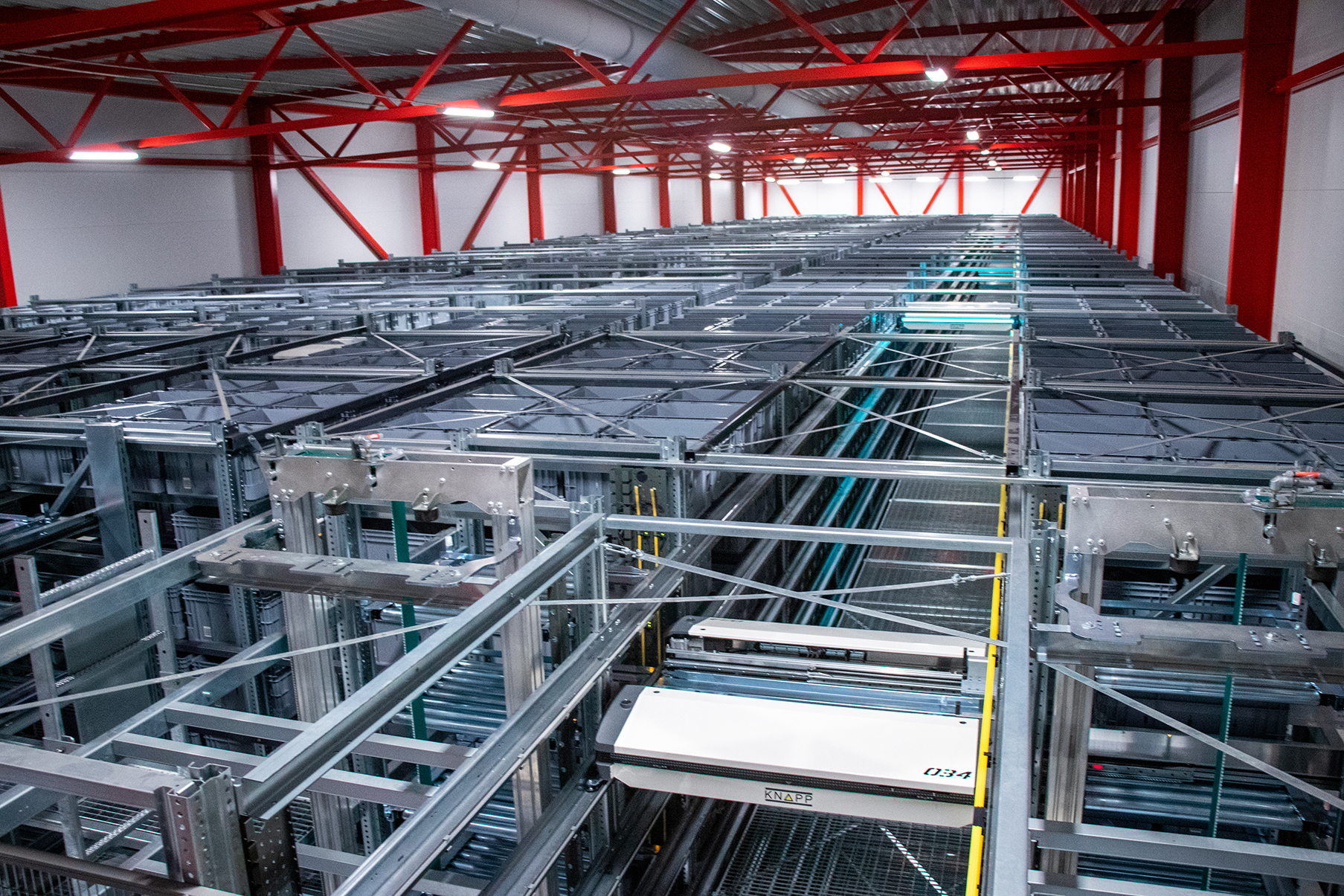
Automated Warehouse Swarms: In a high-volume fulfillment center, autonomous mobile robots (AMRs) often face congestion at docking bays. By deploying a swarm-intelligence architecture, the robots began “negotiating” their paths and arrival times. The system evolved to create a “fluid” traffic flow, where robots self-organized into lanes, effectively increasing throughput by 30% without adding a single new machine.
Common Mistakes
Over-Centralization: Attempting to force all decisions through a single master AI creates a single point of failure and massive latency. Effective logistics must be decentralized; allow local agents to make local decisions.
Data Silos: If the warehouse management system cannot communicate with the transportation management system, the AI cannot evolve a holistic strategy. The architecture must be interoperable.
Ignoring “Black Swan” Events: Developers often train models on historical data. A self-evolving system must be stress-tested against anomalous data (e.g., global pandemics, port closures) to ensure it doesn’t “overfit” to normal conditions.
Lack of Transparency: If the AI changes its operational strategy but the human managers don’t understand *why*, the system becomes a black box that is impossible to manage or audit.
Advanced Tips
To take your architecture to the next level, focus on Edge Intelligence. By placing the AI processing power directly on the physical assets (trucks, robots, conveyors), you reduce the latency of the decision-making loop. When an asset detects a problem, it should be able to trigger a corrective action immediately without waiting for a signal from a remote cloud server.
Furthermore, consider Collaborative Swarm Intelligence. Instead of just optimizing your own network, look for ways your AI can communicate with the AI of your shipping partners or suppliers. When multiple companies share data in a secure, federated learning environment, the entire logistics ecosystem becomes more resilient, capable of predicting shortages and rerouting inventory before an issue even hits the consumer.
Conclusion
Self-Evolving Autonomous Logistics is the final frontier of supply chain management. By moving away from rigid, human-coded processes and toward architectures that learn, adapt, and refine their own operational policies, businesses can achieve a level of efficiency and resilience that was previously thought impossible.
The goal of autonomous logistics is not to remove the human, but to elevate the human from the role of “logistics operator” to “logistics architect.”
Start by building the data foundations, implementing decentralized agent-based control, and fostering a culture of continuous simulation. As your system begins to evolve, you will find that the most valuable asset in your warehouse isn’t the hardware—it’s the intelligence that learns how to use it better every single day.


Leave a Reply