The Architecture of Resilience: Implementing Decentralized Backup Protocols with Sharded Distributed Hash Tables
Introduction
In an era where data is the most valuable corporate asset, traditional centralized backup systems are becoming a liability. Relying on a single server, a private cloud, or a local data center creates a single point of failure. If that infrastructure is compromised by ransomware, hardware failure, or geopolitical instability, your data—and your business continuity—vanishes.
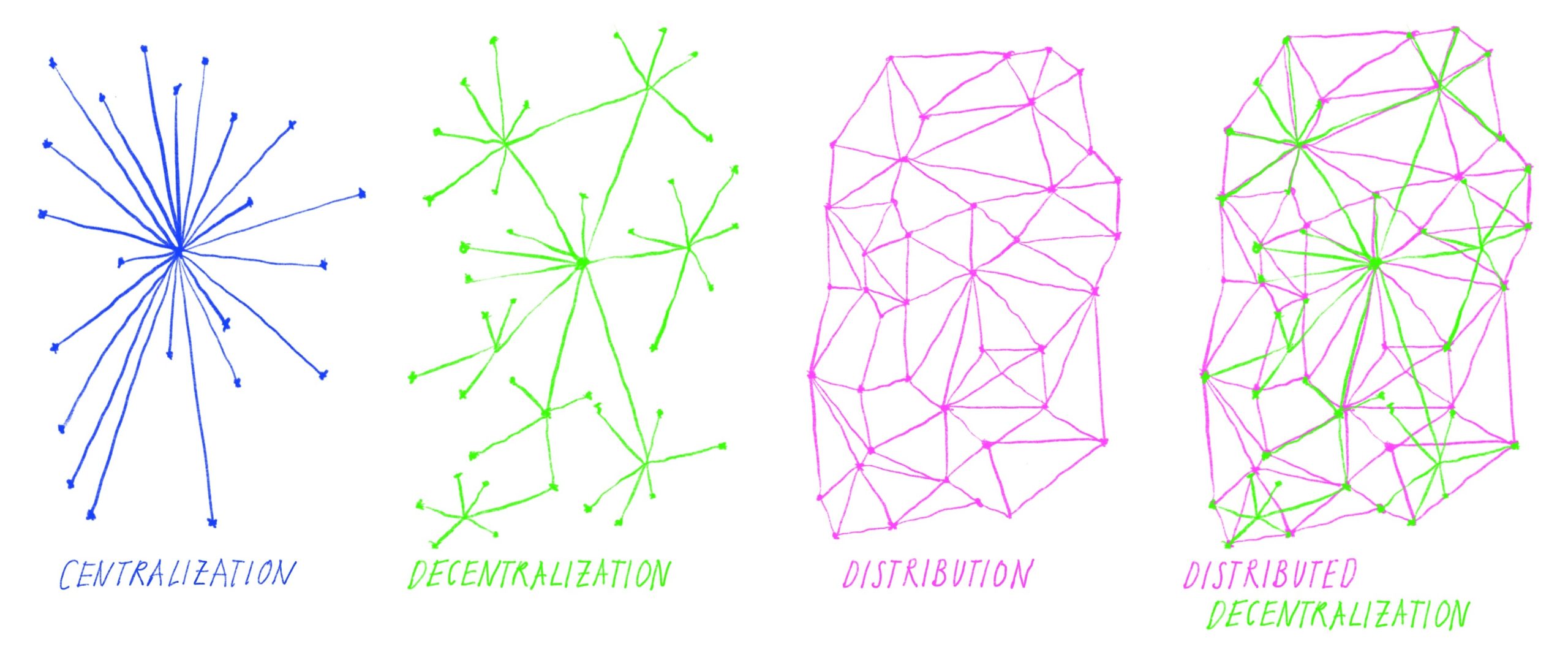
The solution lies in decentralized storage architectures. By leveraging a Sharded Distributed Hash Table (DHT), organizations can move away from monolithic storage toward a resilient, self-healing network. This approach breaks data into cryptographic fragments and distributes them across a global network of nodes, ensuring that no single entity holds the complete key to your information. This article explores how to architect these protocols to ensure maximum data availability and security.
Key Concepts
To understand decentralized backup, you must first grasp the mechanics of Sharding and Distributed Hash Tables (DHTs).
Sharding: This is the process of breaking a large dataset into smaller, manageable chunks, known as shards. In a high-security environment, these shards are often encrypted and erasure-coded. Erasure coding allows for data reconstruction even if a subset of the total shards is lost or inaccessible.
Distributed Hash Tables (DHTs): A DHT is a decentralized system that provides a lookup service similar to a hash table. Instead of a central server mapping keys to values, the mapping is distributed across all nodes in the network. Each node is responsible for a specific portion of the “keyspace.” When you need to retrieve a file, the DHT protocol routes your request to the node storing the relevant shard without requiring a central directory.
Content Addressing: Unlike traditional systems that use location-based addressing (e.g., “File A is at IP 192.168.1.5”), decentralized backups use content addressing. A file is identified by its cryptographic hash. If the content of the file changes, the hash changes, ensuring immutable version control and preventing data tampering.
Step-by-Step Guide
Implementing a decentralized backup protocol requires a shift in infrastructure strategy. Follow these steps to build a robust, sharded storage pipeline.
Define the Erasure Coding Parameters: Determine your redundancy threshold. For example, using an m-of-n scheme, you might split a file into 10 shards (n) and require only 4 (m) to reconstruct the file. This provides high durability with minimal overhead.
Implement Client-Side Encryption: Never send raw data to the network. Encrypt your shards locally using AES-256 or similar standards before distribution. This ensures that even if a node operator inspects their storage, they only see randomized ciphertext.
Initialize the DHT Peer Nodes: Deploy a series of nodes that will serve as the storage layer. These nodes should run the DHT protocol (such as Kademlia) to manage the routing table of available storage providers.
Shard and Distribute: Use a middleware layer to process your data. The data is sharded, encrypted, and then pushed to the DHT. The DHT maps the content hash to the specific node IDs that hold those shards.
Establish a Periodic Audit Protocol: Implement “Proof of Retrievability” (PoR) or “Proof of Spacetime.” These automated cryptographic challenges verify that the nodes are still holding your shards without requiring you to download the entire file to check.
Set Up Automated Rebalancing: If a node goes offline, the network must detect the missing shards and trigger a re-replication process to maintain your desired redundancy level on other active nodes.
Examples and Case Studies
The practical application of these protocols is already changing industries. Consider the following use cases:
“Decentralized storage effectively eliminates the ‘vendor lock-in’ that plagues traditional cloud backups, allowing enterprises to maintain sovereignty over their data while utilizing excess global storage capacity.”
Enterprise Archival Storage: A large financial firm uses a sharded DHT to store cold-storage compliance logs. By distributing these logs across geographically dispersed nodes, they satisfy regulatory requirements for physical data separation without the cost of maintaining multiple private data centers.
Media and Content Distribution: A video production studio shards high-resolution raw footage across a decentralized network. Because the data is sharded and content-addressed, editors in different regions can pull shards from the nearest nodes, significantly reducing latency compared to fetching a massive file from a single central server in a different continent.
Common Mistakes
When transitioning to decentralized backups, avoid these common pitfalls that can undermine your security and performance:
Ignoring Node Churn: In a decentralized network, nodes come and go. Failing to account for this “churn” by setting an insufficient redundancy factor will result in data loss. Always over-provision your shard count.
Centralized Key Management: If you encrypt your data but store the decryption keys on a central server, you have effectively recreated the single point of failure you were trying to escape. Use a decentralized secret management system or a hardware security module (HSM).
Miscalculating Retrieval Latency: Decentralized networks are excellent for durability but can introduce latency. If your backup protocol requires rapid, real-time access, ensure that your DHT is optimized for “proximity-aware” routing to keep shards geographically close to your primary operation nodes.
Neglecting Data Integrity Checks: Assuming that data remains unchanged is dangerous. Bit rot can occur on any storage medium. You must implement automated, background scrubbing protocols that check hash integrity periodically.
Advanced Tips
To optimize your decentralized backup protocol, focus on these advanced strategies:
Proximity-Aware Routing: Configure your DHT to prioritize nodes with lower network latency. While the data is decentralized, the lookup process for the shards should happen as close to the user as possible to maintain performance during restoration.
Incentive Layers: If you are running a private consortium network, consider implementing a tokenized or reputation-based system to incentivize nodes to maintain high uptime. Nodes that consistently pass proof-of-retrievability challenges should be prioritized for higher-value data storage.
Versioned Content Addressing: Instead of overwriting files, use content-addressed versioning. When a file is updated, generate a new hash. The DHT will store the new version as a separate entry, creating an immutable, tamper-proof audit trail of every backup iteration.
Conclusion
Backup protocols built on sharded distributed hash tables represent the next evolution in data resilience. By decoupling data from specific physical locations and central authorities, you create a system that is inherently resistant to localized outages, cyberattacks, and hardware failure.
To succeed, you must move beyond the “set it and forget it” mentality. Success requires careful configuration of erasure coding, rigorous encryption standards, and proactive auditing of node performance. As data volumes continue to explode, the ability to distribute, secure, and verify your assets across a decentralized architecture will become a critical competitive advantage.
Start small by moving non-critical cold storage to a decentralized architecture. Monitor the performance, refine your redundancy settings, and gradually migrate your mission-critical data. The future of data persistence is not in a single vault, but in the distributed intelligence of the network.