Introduction: Defining WebAssembly (Wasm) beyond the browser.
Key Concepts: The “Sandbox” architecture, binary format, and the WASI (WebAssembly System Interface) standard.
Step-by-Step Guide: Setting up a Wasm runtime (Wasmtime) and executing a module.
Real-World Applications: Edge computing, plugin systems, and cloud-native microservices.
Common Mistakes: Overlooking cold-start optimization and memory management pitfalls.
Advanced Tips: Leveraging AOT (Ahead-of-Time) compilation and component model integration.
Conclusion: The future of portable, secure logic execution.
WebAssembly: Building Secure, Portable Execution Environments
Introduction
For decades, developers faced a persistent trade-off: choose between the high performance of native code or the portability of virtualized environments. WebAssembly (Wasm) has effectively shattered this dichotomy. While it originally gained fame for bringing near-native speed to web browsers, its true potential lies in its ability to provide a secure, portable, and lightning-fast sandbox for running logic anywhere—from edge servers to cloud-native backends.
In an era where software supply chain security is paramount, Wasm offers a unique “deny-by-default” security model. By decoupling code from the underlying operating system and hardware, Wasm execution environments allow developers to run complex, high-performance logic with total isolation. Understanding how to leverage these environments is no longer just a “web” skill; it is a critical competency for modern systems architecture.
Key Concepts
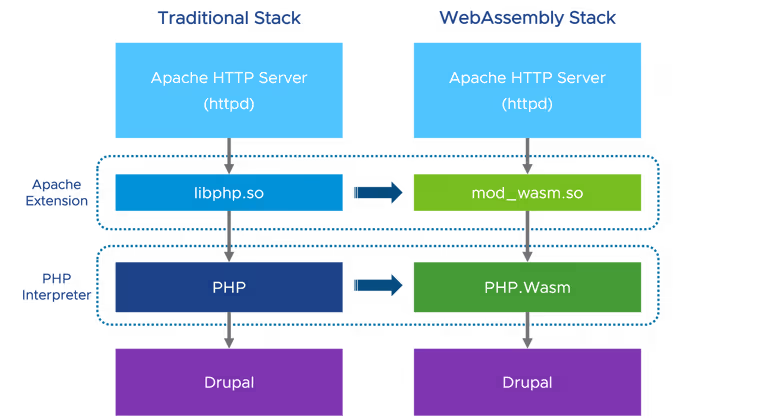
At its core, WebAssembly is a binary instruction format for a stack-based virtual machine. However, the “execution environment” is what turns this format into a powerful tool for backend development.
The Sandbox Architecture: Unlike traditional containers (like Docker), which virtualize the OS kernel, Wasm virtualizes the execution of the application code itself. Wasm modules do not have access to the host file system, network, or memory unless explicitly granted through specific capabilities. This creates a fine-grained security boundary that is significantly lighter than a full virtual machine.
WASI (WebAssembly System Interface): Because Wasm was designed for the browser, it initially lacked a way to interact with the “real world” (files, sockets, clocks). WASI provides a standardized set of APIs that allow Wasm modules to perform system-level tasks in a platform-independent way. If your code compiles to Wasm and uses WASI, it can run on Linux, macOS, or Windows without modification.
Linear Memory: Wasm provides a contiguous array of raw bytes as its memory. This memory is completely private to the module. It cannot access the host’s memory space, and the host can only access the Wasm module’s memory through defined interfaces. This prevents entire classes of vulnerabilities, such as buffer overflows, from affecting the host system.
Step-by-Step Guide: Running Your First Wasm Module
To understand the power of Wasm, we will use Wasmtime, a leading standalone Wasm runtime, to execute a module.
Install the Runtime: Start by installing Wasmtime on your development machine. For Unix-based systems, you can typically use the command: curl https://wasmtime.dev/install.sh -sSf | bash.
Choose a Language: Write a simple function in a language that supports Wasm, such as Rust or C. For example, in Rust, use cargo-wasi to compile your code to the wasm32-wasi target.
Compile to Wasm: Use your compiler to generate a .wasm binary. This binary contains your logic in a platform-agnostic format.
Execute in the Sandbox: Run the module using the runtime: wasmtime your_module.wasm.
Apply Security Constraints: Use runtime flags to restrict access. For example, wasmtime --dir=. your_module.wasm allows the module to access only the current directory, demonstrating the principle of least privilege.
Real-World Applications
The versatility of Wasm execution environments has led to its adoption in several high-impact fields:
“WebAssembly is the next evolution of cloud-native computing, providing the security of containers with the speed of bare-metal execution.”
Edge Computing: Platforms like Cloudflare Workers and Fastly Compute use Wasm to run user logic at the edge of the network. Because Wasm modules have near-instant startup times (measured in microseconds), they can execute code in response to a request without the overhead of spinning up a container.
Extensible Plugin Systems: Applications like Envoy Proxy use Wasm to allow developers to write custom filters for network traffic. This allows users to extend the functionality of the proxy without needing to recompile the core codebase or risk the stability of the entire server.
Secure Multi-tenancy: In SaaS environments, Wasm allows developers to run untrusted code from third-party customers within the same process. Each customer’s logic runs in its own isolated Wasm sandbox, ensuring that no customer can access another’s data.
Common Mistakes
While Wasm is powerful, it is easy to misuse if you approach it with a “traditional container” mindset.
Assuming Infinite Performance: While Wasm is fast, it is not always faster than native code. The overhead of crossing the boundary between the host and the Wasm module (the “shim” layer) can add latency if your application makes thousands of small calls back and forth.
Ignoring Memory Management: Wasm manages its own linear memory. If you pass large data structures between the host and the Wasm module, you must serialize and deserialize that data. Frequent copying can create a performance bottleneck.
Over-privileged Modules: Giving a Wasm module broad access to the host file system defeats the primary security benefit. Always map only the specific files or directories required for the task.
Advanced Tips
To push Wasm execution to the limit, consider these strategies:
Use AOT (Ahead-of-Time) Compilation: Most Wasm runtimes use JIT (Just-in-Time) compilation. For production workloads where startup latency is critical, use AOT compilation to convert your Wasm binary into machine-specific code before the application starts. This eliminates the “warm-up” time for the JIT compiler.
Adopt the Wasm Component Model: The Component Model is an emerging standard that allows you to link modules written in different languages together. You can write a high-performance math library in Rust and consume it in a JavaScript or Python application while maintaining strict type safety and security boundaries.
Optimize for Cold Starts: If your environment involves frequent scaling, ensure your Wasm modules are kept small. Because Wasm is a binary format, smaller modules load and parse significantly faster, which is the key to maintaining a responsive serverless architecture.
Conclusion
WebAssembly has evolved far beyond its origins in the browser. By providing a secure, high-performance, and truly portable sandbox, Wasm is fundamentally changing how we deploy and execute logic in the cloud. Whether you are building high-performance edge services, secure plugin systems, or isolated multi-tenant applications, Wasm offers a robust framework for your needs.
By mastering the principles of the Wasm sandbox, adhering to the security model of WASI, and optimizing your module interactions, you can build systems that are not only faster and more portable but significantly more secure. As the ecosystem continues to mature with tools like the Component Model, Wasm is positioned to become a foundational pillar of the next generation of software infrastructure.