1. Introduction: Defining the shift from survival mode (poverty-induced trauma) to self-actualization. 2. Key Concepts: Understanding “Scarcity Mindset” vs. “Growth Mindset” and Maslow’s Hierarchy in the context of socioeconomic mobility. 3. Step-by-Step Guide: Practical framework for psychological recalibration. 4. Examples/Case Studies: Real-world applications of cognitive reframing in post-poverty success. 5. Common Mistakes: Identifying the “survivor’s guilt” and “imposter syndrome” traps. 6. Advanced Tips: Neuroplasticity and environmental design. 7. Conclusion: Summary of the transition toward a life of purpose.
***
Beyond Survival: Transitioning from Poverty-Induced Trauma to Self-Actualization
Introduction
For millions, the experience of living in poverty is not merely a financial state; it is a psychological architecture. When your nervous system is conditioned to prioritize immediate survival—securing food, rent, and safety—your brain develops a specific set of adaptations known as the scarcity mindset. While these adaptations are brilliant for navigating danger, they often become a barrier once the external conditions of survival are met.
Moving from a state of poverty-induced trauma to self-actualization is not an automatic result of increased income. It is a deliberate, intentional psychological reconstruction. This article explores how to dismantle the survival-based internal monologue and replace it with the pursuit of purpose, autonomy, and long-term growth.
Key Concepts
To understand this transition, we must first define the two psychological poles at play: the scarcity mindset and the self-actualization drive.
The Scarcity Mindset: This is a mental state where the brain focuses exclusively on the immediate future. Research in behavioral economics shows that the constant pressure of scarcity lowers cognitive bandwidth. When you are worried about the next bill, you lose the ability to plan for the next decade. This is not a lack of intelligence; it is a lack of cognitive space.
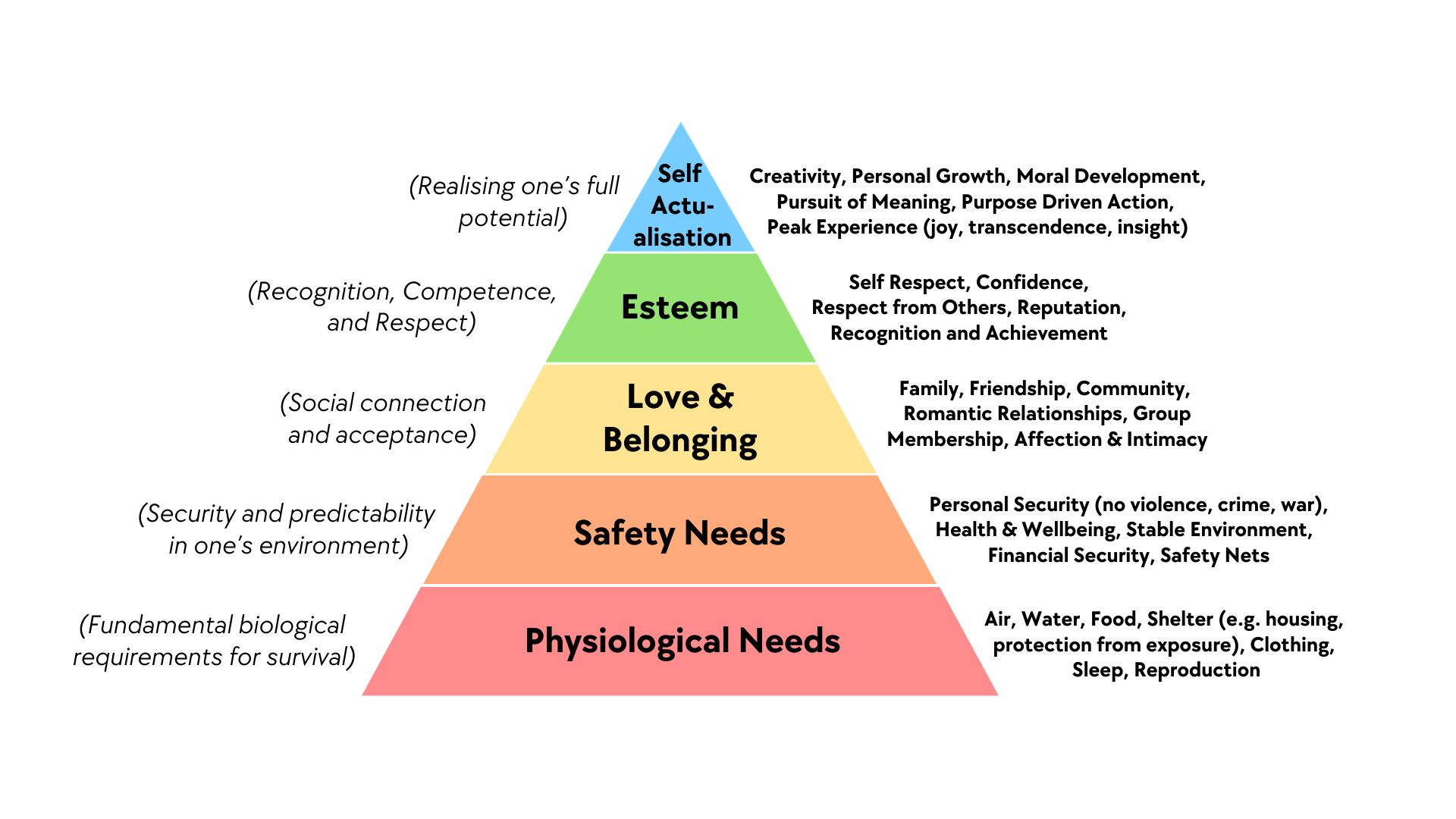
Maslow’s Hierarchy and the “Trauma Ceiling”: Abraham Maslow’s famous pyramid posits that higher-level needs—like creativity, morality, and problem-solving—can only be addressed once basic physiological and safety needs are met. However, for those who have experienced poverty, the “safety” level is often a moving target. Even when resources are present, the nervous system may continue to scan for threats, creating a “trauma ceiling” that prevents the individual from engaging with self-actualization.
Self-Actualization: In this context, self-actualization is the shift from “How do I survive this?” to “How do I contribute to the world?” It is the process of realizing one’s full potential, driven by intrinsic motivation rather than external crisis.
Step-by-Step Guide
Transitioning out of survival mode requires a systematic rewiring of your reactive habits. Follow these steps to begin your journey toward self-actualization.
Audit Your Triggers: Identify what specific situations trigger your survival stress. Is it an unexpected expense? A critical email from a boss? A dip in your bank account? Label these as “Legacy Fears”—reactions based on past experiences that no longer match your current reality.
Establish “Safety Anchors”: Since your nervous system is hyper-vigilant, you must prove to yourself that you are safe. Create tangible evidence of security: a three-month emergency fund, a structured daily routine, or a physical space that feels controlled and calm.
Practice Long-Horizon Planning: Scarcity forces short-term thinking. Counteract this by forcing yourself to set goals that are 12 to 24 months out. This forces the brain to move out of the reactive, amygdala-driven state and into the prefrontal cortex, which is responsible for executive function and planning.
Cultivate Intrinsic Motivation: Spend time exploring interests that have zero financial benefit. Whether it is reading philosophy, learning an instrument, or volunteering, these activities break the association between “action” and “survival.” You are doing things because you want to, not because you have to.
Regulate the Nervous System: Trauma lives in the body. Engage in somatic practices like deep breathing, mindfulness, or physical exercise to signal to your nervous system that it is safe to downshift from “fight or flight” to “rest and digest.”
Examples or Case Studies
Consider the transition of a first-generation college graduate. Upon landing a high-paying career, many individuals experience “Financial PTSD.” They may continue to hoard food, fear spending money on anything other than survival, or experience extreme anxiety during minor market fluctuations.
One successful entrepreneur, who grew up in extreme poverty, described his journey as “The Silent Phase.” He spent two years in a high-income bracket while living like a pauper, unable to enjoy his success because his brain was still waiting for the other shoe to drop. It wasn’t until he engaged in cognitive behavioral therapy to address his “poverty programming” that he could begin to invest in his own professional development and personal passions.
This case highlights that the external change (more money) did not solve the internal state (poverty-induced trauma). The breakthrough occurred when he stopped managing his finances and started managing his nervous system.
Common Mistakes
The path toward self-actualization is rarely linear. Many people fall into these traps:
The “I’ll Be Happy When” Fallacy: Believing that reaching a specific income level will automatically flip a switch and turn off your trauma. Achievement does not heal trauma; self-reflection does.
Survivor’s Guilt: Feeling as though your success is a betrayal of those you left behind. This leads to self-sabotage, where individuals unconsciously limit their growth to maintain emotional proximity to their past.
Over-compensating: Attempting to erase the past through extreme materialism. Using money to fill a psychological void is a common reaction that often leads to a new form of stress rather than freedom.
Ignoring the Body: Trying to “think” your way out of trauma. Your body remembers the lack of resources long after your bank account has stabilized. You must address the somatic aspect of stress.
Advanced Tips
Once you have stabilized your environment and begun to address your reactions, you can move into the deeper work of self-actualization.
Neuroplasticity and Environmental Design: Your brain is shaped by your environment. If you continue to surround yourself with high-stress, scarcity-focused narratives, your brain will continue to produce stress hormones. Curate your environment—digital and physical—to reinforce a growth mindset. Read biographies of those who overcame similar odds, join communities that value intellectual growth, and physically declutter your space to reduce cortisol levels.
The “Purpose Pivot”: Start asking, “What is the problem I am uniquely equipped to solve?” This shifts the focus from your internal needs to your external contributions. When you work toward solving a problem that is larger than yourself, you naturally move out of self-preservation and into self-actualization.
Reframing “Risk”: In poverty, risk is usually catastrophic. In self-actualization, risk is experimental. Re-label your failures as “data points.” If a project fails, it doesn’t mean you will starve; it means you have learned something new. Changing the vocabulary you use to describe your life is a powerful tool for psychological shift.
Conclusion
The transition from poverty-induced trauma to self-actualization is perhaps the most significant psychological migration a person can undertake. It requires acknowledging that the survival instincts you developed were not failures—they were heroic survival tools—but they are no longer the tools you need for the life you are building.
By auditing your triggers, intentionally planning for the long-term, and addressing the somatic reality of your past, you can create the space necessary to pursue your highest potential. Remember, you are not defined by the scarcity you survived; you are defined by the person you choose to become once the walls of survival have fallen away. Start small, be consistent with your self-regulation, and allow yourself the grace to evolve into a life of purpose.