1. Introduction: The historical tether between wage labor and social stability; why the “job-for-life” model is collapsing. 2. Key Concepts: Defining the wage-labor contract, the gig economy, automation, and the “social contract” as a mechanism for order. 3. The Erosion Drivers: Technological displacement, the shift toward precarious work, and the decoupling of productivity from wages. 4. Step-by-Step Guide: Redesigning social order (Policy, community, and individual autonomy). 5. Real-World Applications: Universal Basic Income (UBI) pilots, portable benefit models, and decentralized autonomous organizations (DAOs). 6. Common Mistakes: Relying on outdated welfare models and ignoring the psychological need for purpose. 7. Advanced Tips: Moving beyond income—focusing on “social capital” and non-market contribution. 8. Conclusion: Transitioning from an employment-based society to a contribution-based society.
***
The Post-Labor Era: Reimagining Social Order Beyond the Wage Contract
Introduction
For over a century, the wage-labor contract served as the bedrock of modern civilization. It was a simple, elegant exchange: you trade your time and labor for a consistent paycheck, which in turn provides access to housing, healthcare, retirement security, and a sense of belonging. In this framework, your “job” was your primary identity and your primary source of social order.
Today, that bedrock is cracking. The rise of the gig economy, the rapid integration of artificial intelligence, and the chronic decoupling of productivity from wage growth have rendered the traditional employment model increasingly obsolete. As the link between “having a job” and “having a life” dissolves, we are left with a fundamental challenge: if the wage-labor contract can no longer guarantee social stability, what will take its place?
Key Concepts
To understand the erosion of the wage-labor contract, we must define the pillars that are currently failing.
The Wage-Labor Contract: Historically, this was a reciprocal agreement. The employer provided stability and benefits; the employee provided loyalty and labor. This contract served as the mechanism for tax collection, pension funding, and social stratification.
The Gig Economy and Precarious Work: We are seeing a shift toward “atomized” labor. Instead of long-term contracts, labor is being commoditized into micro-tasks. While this offers flexibility, it strips away the institutional support—insurance, paid leave, and job security—that previously maintained the social fabric.
Social Order: This refers to the systems (laws, norms, and institutions) that keep a society functioning without descending into chaos. Historically, the workplace acted as a “social glue,” providing daily routine, professional networks, and a clear ladder of social mobility. When the workplace is no longer a stable anchor, the social order begins to fray, leading to increased polarization and institutional distrust.
The Erosion Drivers
The decline of the wage-labor contract is not a temporary anomaly; it is a structural transformation. Three primary forces are driving this change:
Technological Displacement: Automation is no longer limited to manual labor. Large Language Models and AI systems are disrupting white-collar knowledge work, making the “human capital” model of employment less reliable.
The Financialization of Labor: Companies are increasingly incentivized to minimize headcount to maximize short-term shareholder value. This pushes labor toward independent contracting, externalizing the risks of business cycles onto the individual worker.
The Productivity-Wage Gap: Since the 1970s, productivity has continued to climb while real wages for the average worker have stagnated. When hard work no longer guarantees a proportional increase in quality of life, the “social contract” loses its legitimacy.
Step-by-Step Guide: Building a New Social Order
Decouple Benefits from Employment: We must transition to “portable benefits.” Whether a person is a freelancer, an employee, or a creator, they should have access to healthcare and retirement savings that follow them from task to task, rather than being tethered to a single employer.
Implement Universal Basic Assets: Instead of just focusing on income, society should focus on assets. Providing universal access to high-speed internet, education, and energy ensures that even if labor markets fluctuate, the individual has the infrastructure to contribute to the economy.
Formalize Non-Market Contributions: We currently categorize caregiving, community volunteering, and artistic production as “unproductive” because they don’t generate a wage. A new social order must recognize these activities as essential contributions to the common good, perhaps through tax credits or time-banking systems.
Strengthen Local Governance: As the national “job” model fades, local community organizations become the new centers of stability. By investing in physical and digital community hubs, we can restore the social connections that the workplace used to provide.
Examples and Case Studies
The Portable Benefit Model: Countries like Estonia have experimented with “e-Residency” and digital identity systems that allow citizens to manage their tax and benefit contributions independently of a singular employer. This creates a more fluid, yet stable, relationship between the citizen and the state.
Decentralized Autonomous Organizations (DAOs): In the crypto and tech space, DAOs represent a new way of organizing labor. Instead of a top-down hierarchy, members contribute to a shared goal and are rewarded through programmable, transparent smart contracts. This removes the need for a traditional “boss” while maintaining a clear structure for cooperation.
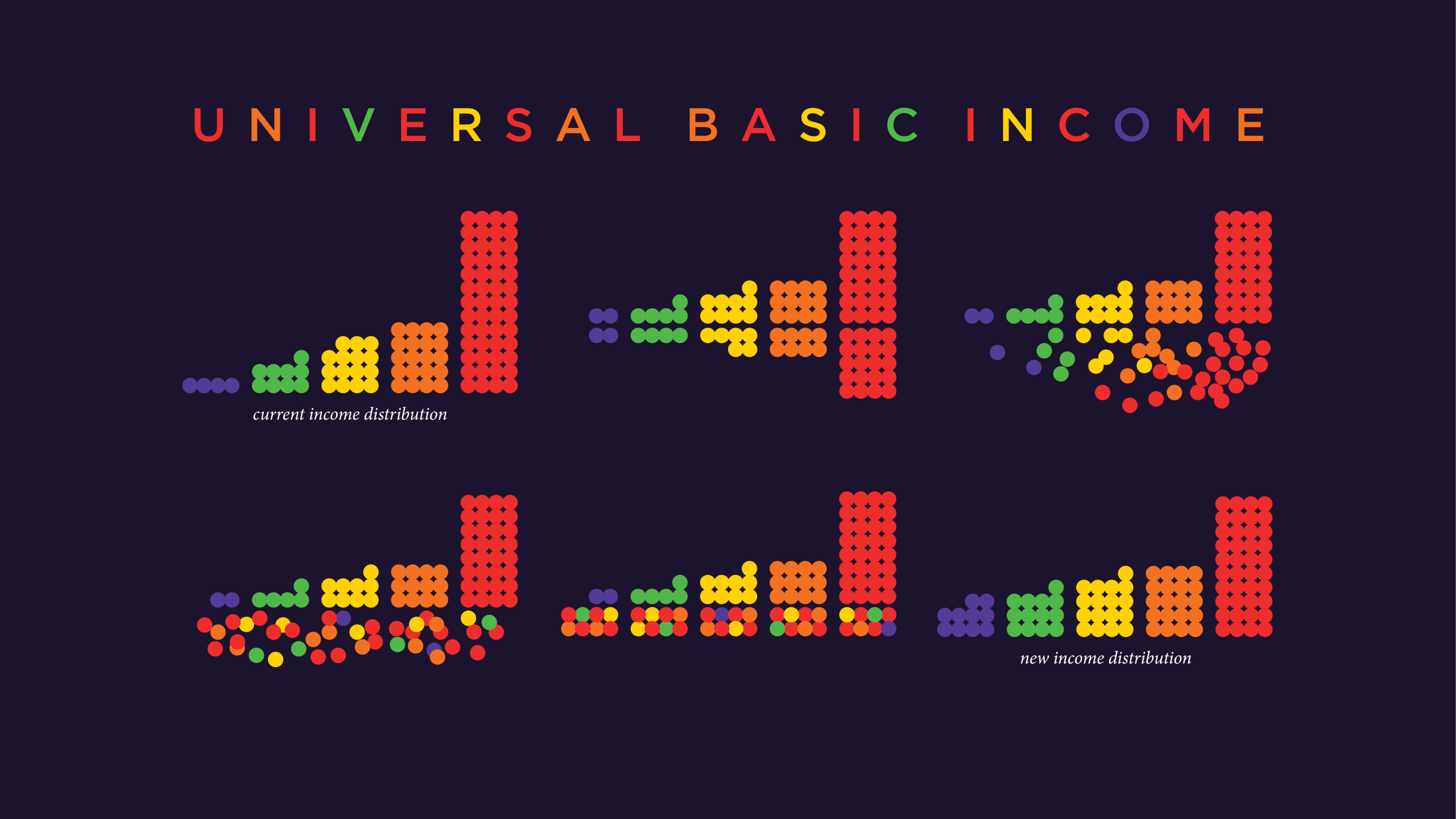
Universal Basic Income (UBI) Pilots: Trials in places like Stockton, California, and Finland have shown that when individuals have a “floor” of financial security, they do not stop working. Instead, they use that security to take risks, retrain for new careers, or engage in more meaningful, high-value labor.
Common Mistakes
Attempting to “Restore” the 1950s: Policymakers often try to bring back the old manufacturing-based wage model through protectionism. This is a mistake; we cannot regulate our way back to an era that was defined by specific, temporary technological constraints.
Ignoring the Psychological Void: A job provides more than money; it provides purpose. If we replace the wage contract with a “handout” system without creating new, meaningful ways for people to participate in society, we will face a crisis of mental health and social alienation.
Treating Technology as an Enemy: Viewing AI and automation as the “villain” leads to reactionary policies. The goal should be to harness these tools to reduce the necessity of toil, not to force human labor into roles that machines can perform more efficiently.
The goal of a post-labor society is not to eliminate work, but to eliminate the necessity of labor as the sole condition for survival and dignity.
Advanced Tips
To thrive in this transition, individuals and organizations must shift their focus from employment to contribution.
Cultivate “Social Portfolio” Wealth: In an era of instability, your network and your reputation are your most valuable assets. Invest time in building professional communities that exist outside of your current company. These networks will be your safety net when the labor market shifts.
Focus on Skill Stacking: Since no job is permanent, the “T-shaped” professional—someone with deep expertise in one area and broad knowledge across others—is the most resilient. Focus on learning systems (how things connect) rather than just learning tasks (how to execute a command).
Participate in Institutional Design: As the old order fades, there is a vacuum of power. Engage in local politics, join cooperative business models, or participate in decentralized platforms. These are the laboratories where the new social order is being built.
Conclusion
The erosion of the wage-labor contract is an inevitable byproduct of a society that has outgrown its industrial-era foundations. While this transition is unsettling, it presents an unprecedented opportunity to redefine what it means to live a meaningful life.
By decoupling survival from traditional employment, we can move toward a society that values contribution, creativity, and community over mere labor output. The future of social order will not be dictated by a paycheck, but by the strength of our connections and our ability to adapt to a world where work is a choice, not a cage. The task ahead is to build structures that support this autonomy, ensuring that as the wage contract fades, human potential flourishes in its place.