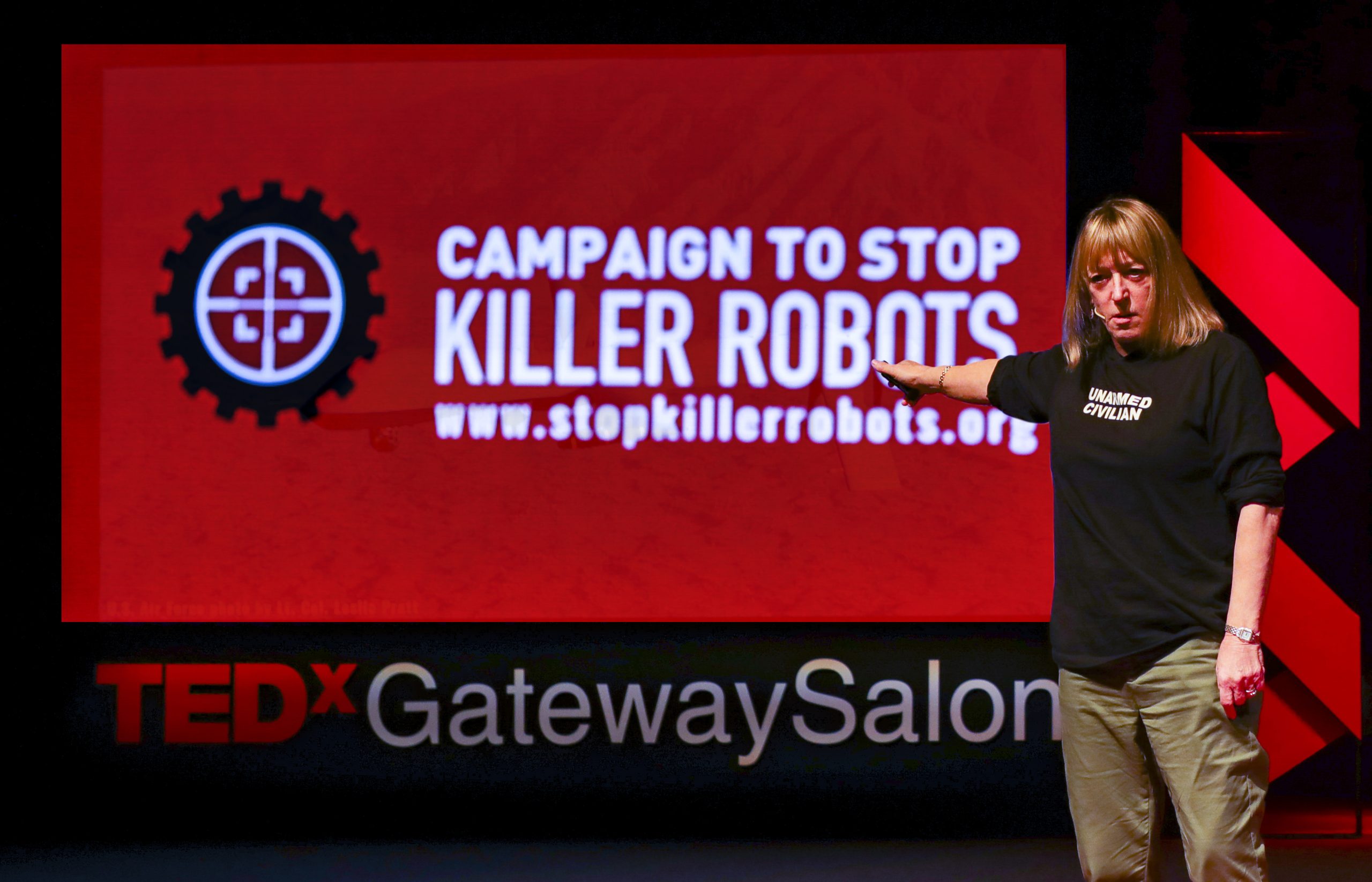
The Algorithmic Battlefield: Navigating the Ethics of Lethal Autonomous Weapons
Introduction
For decades, the concept of “killer robots” existed firmly within the realm of science fiction. Today, that narrative has shifted from speculative entertainment to a pressing geopolitical reality. Lethal Autonomous Weapons Systems (LAWS)—military platforms capable of selecting and engaging targets without meaningful human intervention—are no longer theoretical. As global powers accelerate the integration of artificial intelligence into defense, the international community faces a critical inflection point.
The ethics of these systems have moved to the center of UN-level disarmament discussions. At stake is not just the future of warfare, but the fundamental question of accountability: when a machine takes a human life, who is responsible? This article explores the moral, legal, and operational dilemmas posed by LAWS and why they are set to become the definitive disarmament challenge of the 21st century.
Key Concepts
To understand the debate, we must first distinguish between automated systems and autonomous systems. An automated system follows a pre-programmed script; it reacts to specific inputs with a fixed output. An autonomous system, by contrast, uses machine learning and sensor data to make decisions in unpredictable environments, essentially “learning” its target parameters.
The core ethical concern is the Accountability Gap. In traditional warfare, if a war crime occurs, there is a clear chain of command. If a commander orders an unlawful strike, they are held accountable under International Humanitarian Law (IHL). With LAWS, the decision-making process is a “black box.” If an algorithm misidentifies a civilian gathering as a combatant unit, the causal link between the human operator and the lethal outcome is severed.
Furthermore, there is the issue of Moral Agency. Machines lack human empathy, moral intuition, and the capacity to understand the gravity of taking a life. Proponents of a total ban argue that delegating lethal decisions to an algorithm is inherently dehumanizing and strips the victim of their dignity.
Step-by-Step Guide: Evaluating the Regulatory Framework
The international community is currently navigating a complex path toward a potential treaty. Here is how the regulatory process for emerging military technology typically functions:
Defining “Meaningful Human Control”: The first step is establishing a legal standard for human oversight. This means identifying the exact point in the kill chain where a human must intervene and provide authorization.
Establishing Technical Thresholds: Negotiators must determine which systems require total prohibition versus those that can be regulated. This involves setting benchmarks for “predictability” in AI performance.
Drafting Transparency Protocols: For any system that remains in use, there must be strict requirements for “explainable AI.” Military leaders must be able to demonstrate how a system reached a lethal conclusion.
Creating a Verification Mechanism: Any disarmament treaty is toothless without inspections. The UN must develop protocols to audit military AI software, similar to how nuclear disarmament involves site inspections.
Universalizing the Norms: The final step is moving from voluntary “best practices” to a legally binding instrument that holds signatory nations accountable for the deployment of fully autonomous platforms.
Examples and Case Studies
We already see the precursor to these systems in the form of “loitering munitions” or “suicide drones.” These platforms can hover over a battlefield, identify heat signatures, and dive into a target. While currently requiring human verification, the hardware to remove that verification exists today.
Consider the Kargu-2 drone reported in UN findings regarding the conflict in Libya. These systems demonstrated the capacity to hunt targets without a direct data link to an operator. This case serves as a real-world warning: the technology is already being used in the field, often outpacing the diplomatic efforts to contain it.
Conversely, look at the Aegis Combat System used by the US Navy. It is highly automated, capable of intercepting incoming missiles with minimal human reaction time. Defenders of AI argue that such systems save lives by responding faster than a human ever could. The challenge for UN treaties is to permit these defensive, machine-speed capabilities while strictly prohibiting offensive, autonomous targeting of human beings.
Common Mistakes
The “Technological Determinism” Trap: Many assume that because the technology is being developed, its deployment is inevitable. This ignores the historical precedent of chemical and biological weapons, which were successfully restricted through collective international action.
Equating Speed with Accuracy: A common misconception is that faster decision-making is always better. In warfare, speed without context leads to “flash wars,” where automated systems escalate conflict in seconds, leaving no window for diplomatic de-escalation.
Over-reliance on Data Sets: Developers often assume that if a system is trained on enough data, it will be “unbiased.” However, AI models frequently inherit the biases of their training data, which in a military context could lead to the disproportionate targeting of specific demographics or civilian infrastructure.
Advanced Tips
For those following this issue, it is vital to look beyond the “killer robot” headlines and focus on the Dual-Use Dilemma. Much of the AI being developed for civilian autonomous vehicles (like self-driving cars) shares identical underlying code with military target-acquisition software. Future treaties will need to be incredibly nuanced to ensure that regulating military AI does not inadvertently stifle legitimate scientific progress in robotics and computer vision.
Additionally, consider the concept of Algorithmic Deterrence. Some strategic analysts argue that the mere threat of an autonomous response might deter aggression. However, this relies on the assumption that an adversary understands the rules of the machine. If both sides are using autonomous systems, we move toward a “high-frequency war,” where the complexity of the systems makes them inherently unstable and prone to unintended, catastrophic interactions.
Conclusion
The ethics of lethal autonomous weapons represent a profound challenge to the existing international order. We are transitioning from a world where war is governed by human judgment to one where the speed of silicon may dictate the fate of nations. The goal of upcoming UN-level disarmament treaties is not to halt the march of technology, but to ensure that the “human element” remains the final authority in the taking of life.
Meaningful human control is not just a regulatory hurdle; it is a moral imperative. By establishing clear definitions, robust verification mechanisms, and a global consensus on the sanctity of human judgment in lethal operations, we can prevent an arms race that threatens to turn the battlefield into an unpredictable, autonomous machine. The future of global security depends on our ability to act before the algorithms make the decision for us.