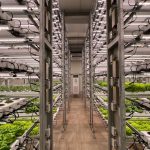
Vertical Farming: The Future of Urban Food Production & Growth
Discover why vertical farming is transforming urban food systems. Learn how controlled environment agriculture creates sustainable, high-yield produce for cities.
The Future of Food: Why Vertical Farming is Set to Dominate Urban Produce Consumption
Introduction
For centuries, the journey from seed to salad has been defined by vast horizontal landscapes, unpredictable weather patterns, and a complex, carbon-heavy supply chain. As the global population trends toward dense urban centers, the logistical burden of transporting fresh produce hundreds or thousands of miles has become both an environmental and economic liability. Enter vertical farming: the practice of growing crops in stacked layers within controlled indoor environments.
This is not merely a niche agricultural experiment. Vertical farming is rapidly evolving into a robust, scalable solution for food security. By decoupling food production from the limitations of geography and climate, urban vertical farms are positioning themselves to become the primary source of nutrition for city dwellers. Understanding this transition is essential for anyone interested in the future of sustainability, urban planning, and the food industry.
Key Concepts
At its core, vertical farming relies on Controlled Environment Agriculture (CEA). Unlike traditional farming, which is subject to the whims of droughts, pests, and seasonal changes, vertical farms manipulate environmental variables to achieve maximum yield.
Hydroponics and Aeroponics: Most vertical farms utilize water-based nutrient delivery systems. Hydroponics involves growing plants in nutrient-rich water solutions, while aeroponics mists the roots with nutrients. Both methods use up to 95% less water than soil-based farming.
LED Optimization: Light is the engine of photosynthesis. Vertical farms use high-efficiency LED arrays calibrated to specific light spectra. By providing plants with the exact wavelengths they need at different growth stages, farmers can accelerate harvest cycles—sometimes producing 10 to 15 times the yield of a traditional field in the same footprint.
The “Zero-Mile” Supply Chain: The primary value proposition is proximity. By situating growing facilities within city limits—or even inside retrofitted warehouses—the “farm-to-table” timeline is reduced from weeks to mere hours. This eliminates the degradation of nutrients and the massive carbon footprint associated with long-haul trucking.
Step-by-Step Guide: Implementing Vertical Farming in Urban Centers
Site Identification: Look for underutilized urban real estate. Retrofitting existing industrial buildings or “brownfield” sites is often more cost-effective than new construction. Factors like high ceilings, floor-load capacity, and proximity to electrical grids are critical.
System Design and Scaling: Start with a modular approach. Rather than attempting a massive facility immediately, utilize vertical racks that can be scaled as the operation proves its efficiency. Ensure the layout allows for efficient workflow, from seeding to nutrient monitoring to packaging.
Environmental Control Integration: Install automated climate control systems. You must monitor and manage temperature, humidity, CO2 levels, and pH balance of nutrient solutions. AI-driven software can now automate these processes to ensure consistent output.
Crop Selection Strategy: Focus on high-value, fast-growing crops first. Leafy greens, herbs, and microgreens are the current industry standard because they have rapid turnover cycles and high demand in urban culinary markets.
Distribution Logistics: Partner with local retailers, restaurants, and subscription-based meal services. The goal is to create a closed-loop system where the product is consumed within the same zip code where it is grown.
Examples and Case Studies
The transition is already underway in major global markets. Consider the impact of companies like Bowery Farming and Plenty in the United States. Bowery has successfully integrated its proprietary operating system into retail supply chains, ensuring that their pesticide-free greens are stocked in high-end supermarkets within hours of harvest.
“The beauty of vertical farming is that we aren’t just growing food; we are manufacturing nutrition. We have removed the uncertainty of nature, allowing us to produce consistent, high-quality yields 365 days a year, regardless of whether it is snowing in New York or in the middle of a heatwave.” – Industry Analyst Perspective
Another compelling example is found in Singapore. With limited land, the city-state has aggressively pursued vertical farming to reach its “30 by 30” goal—producing 30% of its nutritional needs locally by 2030. Through government-backed vertical farming initiatives, Singapore is transforming its skyline into a productive food source, demonstrating how dense urban environments can achieve a level of food sovereignty previously thought impossible.
Common Mistakes
Ignoring Energy Costs: The biggest hurdle for vertical farms is electricity consumption for lighting and climate control. Failing to utilize renewable energy sources or energy-efficient LED technology can render a farm economically unviable.
Over-Engineering the Facility: Many startups fail by purchasing overly complex, proprietary hardware that is difficult to repair. A “keep it simple” approach—using standard racking and open-source monitoring tools—is often more sustainable in the long run.
Neglecting Crop Economics: Attempting to grow staple crops like wheat or corn indoors is currently not economically feasible due to their long growth cycles and space requirements. Focus on high-turnover, high-margin produce to ensure cash flow.
Underestimating Sanitation: While vertical farms are cleaner than outdoor fields, they are susceptible to rapid disease spread. A single outbreak of mold or pests can destroy an entire rack. Strict biosecurity protocols are mandatory.
Advanced Tips
To truly excel in this space, move beyond standard production and focus on Nutrient Density and Customization. Because you control the environment, you can manipulate the nutritional profile of the plants. By adjusting the light spectrum or nutrient concentration, you can increase the vitamin content or enhance the flavor profile of your crops, creating a premium product that traditional farms cannot replicate.
Furthermore, integrate Data Analytics. Treat your farm as a software-as-a-service (SaaS) business. Collect data on every harvest cycle. Use machine learning to identify the precise conditions that lead to the most flavor, the fastest growth, and the highest yield. The winners in this industry will be the ones who treat agriculture as a data science problem.
Finally, focus on Circular Systems. Explore ways to use waste heat from your lighting systems to warm your facility, or capture water transpiration from plants to recycle it back into the irrigation system. A truly successful vertical farm is a closed-loop ecosystem that minimizes resource waste.
Conclusion
Vertical farming represents a paradigm shift in how we conceive of food production. It is moving from the periphery of agriculture into the heart of the urban experience. By prioritizing efficiency, proximity, and technological integration, vertical farms are solving the inherent flaws of the traditional food supply chain.
As technology costs continue to drop and urban density continues to rise, the economic case for vertical farming will only strengthen. We are approaching a tipping point where the “locally grown” label will no longer refer to a nearby field, but to a high-tech facility down the street. For investors, urban planners, and consumers alike, the message is clear: the future of food is vertical.
Discover how carbon capture and storage is evolving from an environmental liability into a lucrative global commodity market for sustainable industrial growth.
Learn how to build an open-world quantum-safe simulator to protect climate tech infrastructure from quantum decryption threats and ensure long-term data security.
Learn how to engineer fault-tolerant toolchains for autonomous vehicles to ensure safety and performance in extreme weather conditions through sensor fusion.